What’s in a Domain Name? Choosing the Right TLD for Your Brand
Choosing a domain name used to feel simple: find an available .com, and you were set. But the internet has grown, and the options for your web address have exploded. Today, your choice of a Top-Level Domain (TLD), the part that comes after the dot, is a vital piece of your brand’s story.
Your TLD can communicate your industry, your location, and even your personality. It’s about more than just what’s available; it’s a strategic decision that shapes how people see your business. This guide will walk you through everything you need to know to pick a TLD from a domain registrar that helps your brand shine, from classic choices to creative new options.
Best Domain Registrars Out There
Many website builders let you register your domain directly through their platform, which is great for keeping everything in one place. A multitude of reliable choices exists within this sector. Look for one with clear pricing, good support, and an easy-to-use management interface.
The Changing Domain Landscape
The world of domains is much bigger than you might think. It’s helpful to break down the different types of TLDs to understand your options.
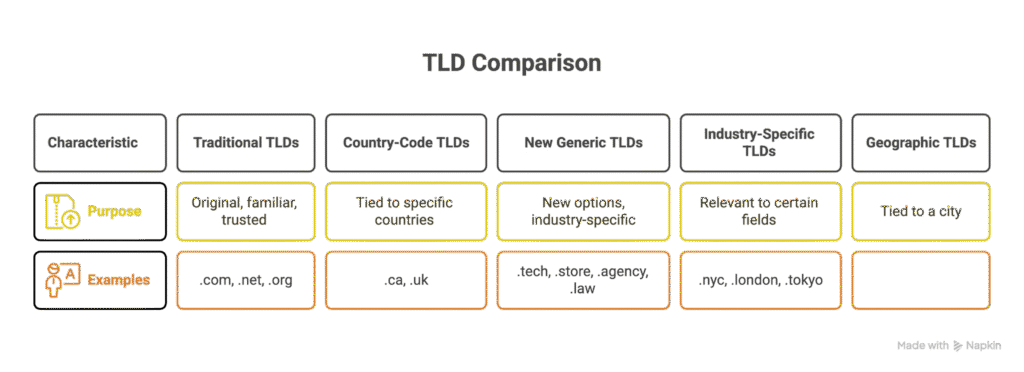
With so many .com domains already taken, businesses are finding that these new TLDs offer a chance to get a short, memorable, and meaningful name. Brands like Notion.so and Behance.net have shown that you can build a massive, successful company without a .com address.
Strategic Factors in TLD Selection
Your TLD should be a thoughtful choice that reinforces your brand. Here’s what to consider.
Brand Identity & Positioning
Your TLD is a part of your brand’s voice. A fun, creative TLD like .fm (used by podcast app Overcast) can communicate your niche instantly. For tech startups, extensions like .io and .ai have become badges of honor, signaling they are part of a forward-thinking industry. The goal is to create a combination that is both unique and easy to remember.
Target Audience Considerations
Think about who you’re trying to reach. If your business is focused on a specific country, using a ccTLD is a smart move. For B2B companies, a traditional TLD might convey more authority, while a creative TLD could appeal more to a younger, B2C audience. If you have an international audience, a globally recognized extension might be best.
Industry & Niche Alignment
In some fields, an industry-specific TLD adds instant credibility. A law firm with a .law domain or a financial company with a .finance TLD feels immediately trustworthy. For e-commerce businesses, .store or .shop clearly communicates what you do, removing any guesswork for potential customers. It’s worth it to find a business name that reflects your core identity and pair it with the appropriate domain TLD (Top-Level Domain).
SEO & Technical Considerations
Many people worry that choosing an alternative TLD will hurt their search rankings. Let’s clear that up.
The SEO Reality Check
Google has officially stated that all generic TLDs are treated equally for search ranking purposes. That means using a .tech or .agency won’t penalize you. The one exception is ccTLDs; using a .ca will help you rank better in Canada but may make it harder to rank in other countries. Ultimately, high-quality content and a great user experience matter far more than your TLD.
Technical Performance Factors
While most TLDs perform just fine, it’s good to be aware of a few technical points. Ensure your chosen TLD has a reliable DNS infrastructure to avoid downtime. Some newer or more obscure TLDs have occasionally faced issues with email deliverability or compatibility with certain online platforms, though this is becoming less common.
Trust & Credibility Factors
The way people perceive and interpret your domain name can greatly influence not only their initial decision to click on your website but also their overall confidence and willingness to make a purchase from your brand. For example, a well-designed, professional-looking homepage can immediately inspire trust and encourage visitors to explore products, whereas a cluttered or outdated site might make users hesitate or leave before buying anything.
User Perception & Trust Signals
Because .com has been the standard for so long, it holds a high level of built-in trust. Some newer or cheaper TLDs have unfortunately been associated with spam, which can make some users cautious. Think about the impression you want to make. A .com often feels more professional, while a creative TLD might feel more modern and casual.
Domain Hacks & Creative Approaches
A “domain hack” uses the TLD to complete a word or phrase, like bit.ly. When done well, it can be very clever and memorable. However, there’s a risk of being too clever. If the name is hard to pronounce or spell, you might lose people along the way. Balance creativity with clarity.
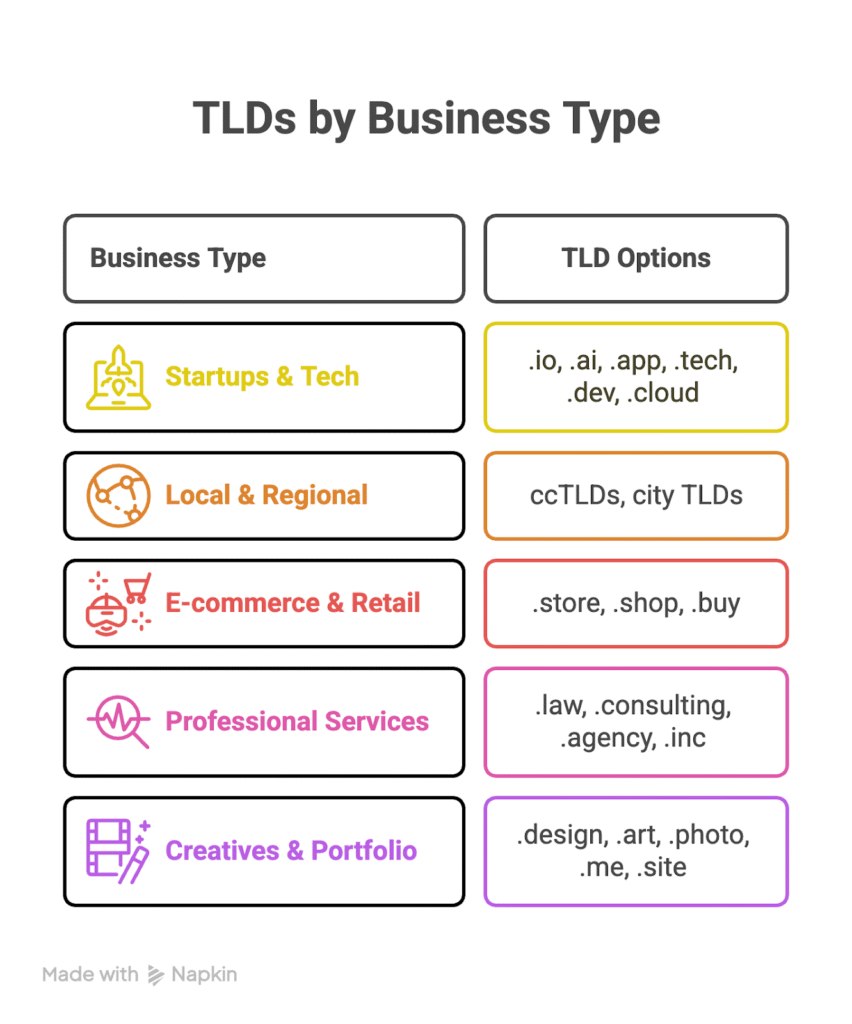
TLD Options by Business Type
Here are some popular choices for different kinds of businesses:
Cost Considerations
Domain prices can vary wildly, from a few dollars a year to thousands.
The initial registration price is just one part of the cost. Always check the renewal rates, as some TLDs offer a cheap first year but have expensive renewals. Premium domains – short, keyword-rich names, will cost more across any TLD. Investing in a premium TLD can be worthwhile if it perfectly aligns with your brand, but be sure to budget for the long-term expense.
Multi-Domain Strategies
Sometimes, one domain isn’t enough. It’s often a good idea to register multiple TLDs to protect your brand from copycats. If you have yourbrand.com, consider also getting yourbrand.co or .net. If you plan to expand internationally, you can register ccTLDs for each region. You can then redirect all these extra domains to your main site.
Future-Proofing Your Choice
The internet is always evolving. Blockchain domains like .eth are emerging, and user expectations continue to change. When you choose your TLD, think about its longevity. Is it a trendy choice that might feel dated in a few years, or does it have lasting power? Build your brand to be strong on its own, so that your reputation isn’t entirely tied to your web address.
Decision Framework
Ready to choose? Follow this step-by-step process.
- Define your brand: What is your personality and core message?
- Identify your audience: Who are you talking to and where are they?
- Evaluate industry norms: What are your competitors doing?
- Check availability: See what’s open across your preferred TLDs.
- Assess your budget: Consider both initial and long-term costs.
- Test it out: Say the full domain name out loud. Is it easy to remember and share?
- Decide and secure: Make your choice and register any alternatives you want to protect.
Your Domain Is Part of Your Story
Your TLD is much more than a technical detail; it’s an opportunity to tell your brand’s story. The “right” choice depends entirely on your business, your audience, and your vision. By thinking strategically, you can choose a domain that not only works well but also helps you build a brand that people remember and trust.
Ready to find your perfect domain? Use a domain availability checker to start exploring your options, and don’t be afraid to think beyond the dot-com.