Homophone for a Winter Vegetable: A Playful Dive Into Language and Word Puzzles
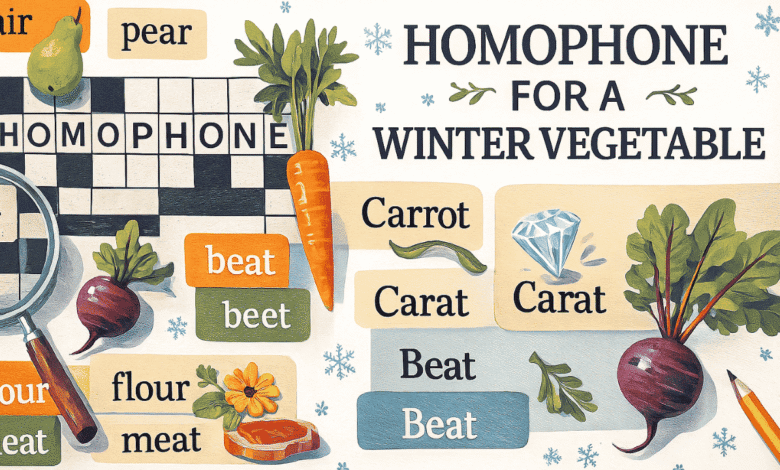
Language often behaves like a magician pulling rabbits from hats—full of surprises, sleight-of-tongue, and little linguistic illusions. One of the most delightful illusions is the homophone, a pair of words that sound alike but carry different meanings (and often different spellings). When you mix this idea with the earthy charm of winter vegetables, you get the homophone for a winter vegetable, a quirky word puzzle that has captured the curiosity of crossword lovers, language learners, and anyone who enjoys a bit of verbal sleuthing. In this article, we’ll unravel the roots—pun gently intended—of the phrase, explore the homophones behind it, understand why such clues often appear in puzzles, and reflect on what makes this tiny linguistic riddle so satisfying to solve.
What Does Homophone for a Winter Vegetable Actually Mean?
Let’s start with the basics. A homophone is a word that sounds like another word but has a different meaning and spelling. For example:
- pair and pear
- flour and flower
- meet and meat
Now mix in “winter vegetable,” and you’ve got a clue that points to a word that sounds just like the name of a vegetable typically harvested or stored through the winter months.
So the prompt homophone for a winter vegetable signals that the answer is not a vegetable itself, but a different word that sounds identical to one.
The Two Most Popular Answers: CARAT and BEAT
While the phrase might appear in many puzzle contexts, two answers famously fit the bill:
CARAT — The Homophone of Carrot
A carrot, a crunchy, cold-tolerant vegetable that stores beautifully through winter, sounds precisely like carat, a unit used to measure gemstones.
- Carrot = vegetable
- Carat = gem measurement
The sound is identical, but your grocery store and your jeweller would absolutely disagree on what’s being discussed.
BEAT — The Homophone of Beet
The humble beet—earthy, sweet, and wonderfully vibrant—has a sonic twin in beat, a word with many lives:
- the beat of a drum
- the daily beat of a journalist
- “You can’t beat fresh beets,” and so on
This pair often sneaks into crosswords not just because it’s clever, but because BEAT is a highly usable crossword word with simple letters.
Why Do Crossword Puzzles Love This Clue So Much?
Crossword puzzles, especially those from the New York Times and other major publishers, adore wordplay clues. And homophones? They’re the royalty of wordplay—linguistic twins masquerading as unrelated concepts.
Here’s why puzzle creators love clues like homophones for a winter vegetable:
They’re Compact but Clever
Tiny clues with big mental payoffs feel immensely satisfying. It’s micro-storytelling with letters.
They Challenge Without Confusing
Homophones are familiar territory. Most solvers recognise the pattern: if it sounds like something else, follow your ear.
They Spark Delight
Solvers often get a brief “aha!” moment when connecting vegetables—including the winter stockpile heroes—with seemingly unrelated words like jewellery, measurements, or rhythmic pulses.
They’re Flexible
One clue can yield multiple valid answers (as with CARAT and BEAT), allowing puzzle makers to reuse the concept with different grid constraints.
Winter Vegetables That Inspire Homophone Clues
While carrots and beets are the classic stars, other winter vegetables occasionally invite similar homophone humour.
Turnip
No direct homophone, but its playful sound makes it a favourite in puns—”turn up” the music, for instance.
Parsnip
This pale cousin of the carrot doesn’t have a traditional homophone but certainly has the charisma for whimsical wordplay.
Squash
Though not a homophone, its dual meaning (as both a food and an action) makes it a versatile linguistic vegetable.
Leek
Though leak is a perfect homophone, leek is more often categorised as an all-season vegetable rather than strictly a winter one, but it appears in wordplay constantly.
The vegetables best suited to the clue “homophone for a winter vegetable” are still carrot and beet, which is why their twins—CARAT and BEAT—dominate puzzle answers.
How Homophones Enrich Language Learning
Beyond puzzles, homophones make language both enchanting and challenging. For learners and native speakers alike, homophones can be sources of delightful discoveries or disastrously funny misunderstandings.
Consider:
- “The knight rode through the night.”
- “Please write the right answer.”
- “I’ll meet you at the meat counter.”
Homophones force readers and listeners to lean on context, the invisible scaffolding that holds meaning together. When you encounter the phrase homophone for a winter vegetable, your brain immediately begins a treasure hunt:
- What winter vegetables do I know?
- Which ones have sound-alike partners?
- What non-vegetable meaning might the answer have?
It’s a mini workout for your linguistic agility.
A Fun Exploration: Making Your Own Homophone Clues
If you love this style of wordplay, you can craft similar clues by pairing any homophone with its counterpart. Here are a few whimsical examples:
- Homophone for a spooky nocturnal animal:
- Bat → batt
- Homophone for something you sit on:
- Chair → cher (as in the French term of endearment)
- Homophone for a buzzing insect:
- Bee → be
- Homophone for a tropical fruit:
- Pear → pare
Creating these clues is like carving tiny linguistic sculptures. You chisel at sound, shape meaning, and leave a polished riddle for someone else to admire.
Why This Keyword Matters in SEO
From an SEO perspective, the keyword homophone for a winter vegetable is charmingly niche—something only people stuck on a crossword clue would actually search for.
However, that makes it a high-intent keyword. Someone typing this into a search engine is likely:
- urgently seeking the answer,
- curious about homophones, or
- exploring crossword-puzzle explanations.
Optimising for this phrase means targeting a specific search audience. It’s like setting out a small but irresistible bowl of carrot sticks for wandering puzzle lovers—they’ll find it, snack on the answer, and likely bookmark the page if it’s well-written.
Articles that rank for this keyword tend to include:
- The answers (CARAT and BEAT) clearly explained
- A breakdown of how homophones work
- Extra tidbits about crosswords or wordplay
- Examples and variations to make the content engaging
Which is precisely the garden we’re cultivating here.
The Charm of Wordplay in Everyday Life
Beyond puzzles, homophones slip into humour, advertising, poetry, and even daily conversation. Their double-meaning nature invites wit. A well-placed homophone can turn a sentence playful, create a pun, or add dramatic contrast.
Imagine:
- “I can’t believe you!”
- “Don’t beat yourself up over it.”
Yes, they’re a little groan-inducing, but that’s part of the charm. Language isn’t only functional—it’s fertile ground for creativity.
The homophone for a winter vegetable is a tiny window into that world: a reminder that words are flexible, sound is slippery, and meaning often sprouts from surprising places.
Conclusion: The Quiet Joy Hidden in a Homophone for a Winter Vegetable
At first glance, the homophone for a winter vegetable seems obscure. But beneath its humble exterior lies a delightful blend of language, logic, and seasonal produce. Whether you’re solving a crossword, teaching homophones, or simply marvelling at the quirks of English, the answers CARAT and BEAT reveal how sound can link completely unrelated worlds—gardening and gemstones, soil and rhythm.
You May Also Read: Crack the Code: Expert Tips for Solving the NYT Connections Hint Mashable