Navigating the Synthetic Flood: Top 5 AI Detectors to Safeguard Your Content’s Integrity in 2025
The digital landscape has fundamentally shifted. In 2025, we are no longer asking if a piece of content was influenced by artificial intelligence; we are asking to what degree. As Large Language Models (LLMs) like GPT-4o, Claude 3.5, and Gemini become indistinguishable from human writers in their fluency, the value of the “human touch” has reached a premium. For businesses, students, and SEO professionals, the ability to verify authenticity is no longer a niche requirement—it is a survival mechanism. Without a high-precision ai detector, you are essentially navigating a minefield of potential search engine penalties, academic integrity scandals, and a slow erosion of brand trust.
The market is saturated with tools claiming to “catch the bot,” but not all are created equal. Some are too aggressive, punishing human writers for having a formal style, while others are too lenient, letting obvious machine-spun text slip through the cracks. In this guide, we break down the top 5 solutions that have defined the standard for content verification this year.
1. The Precision Specialist: Best for Forensic Linguistic Analysis
When accuracy is the only metric that matters, the leading tools in 2025 have moved beyond simple keyword matching. The gold standard for detection now relies on deep semantic analysis.
What sets the top-tier ai detector apart is its ability to measure “Perplexity” and “Burstiness.”
- Perplexity measures how complex and unpredictable a text is. AI models are trained to be helpful and clear, which makes them statistically predictable.
- Burstiness examines sentence structure. Humans naturally vary their sentence length—a long, descriptive sentence followed by a short, punchy one. AI tends to produce a monotonous, steady rhythm.
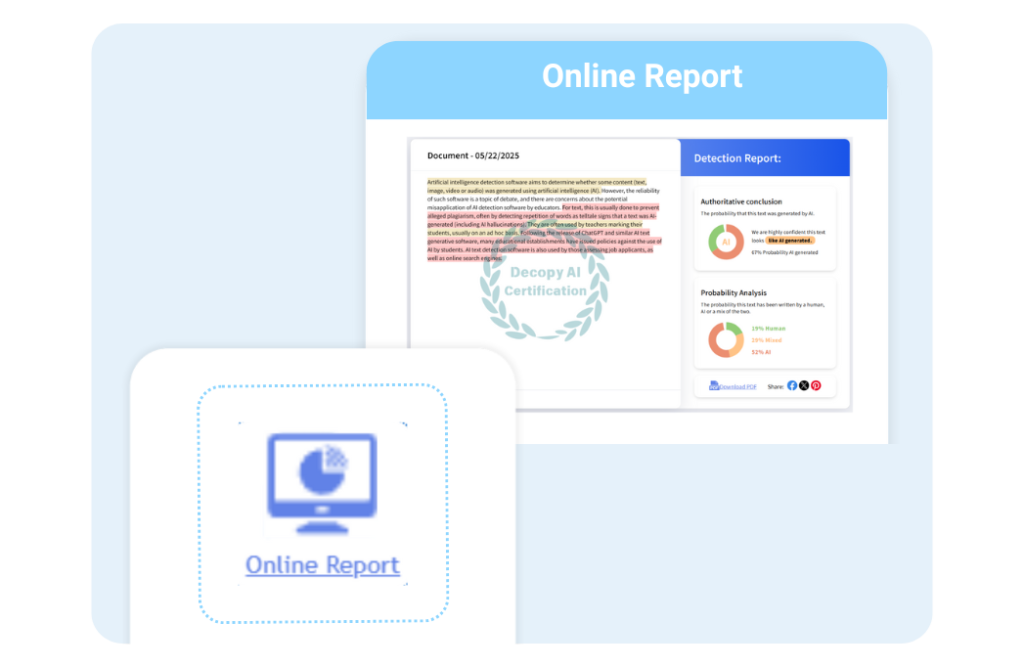
The most advanced tools on the market use these two pillars to provide a heat map of a document, showing exactly which paragraphs feel “manufactured” and which carry the erratic, beautiful markers of human thought. This is essential for editors who need to know exactly where to intervene and humanize a draft.
2. The SEO Guardian: Best for Protecting Search Rankings
For digital marketers, the stakes of AI detection are tied directly to revenue. Google’s 2024 and 2025 core updates have been ruthless toward “scaled content abuse”—the practice of flooding the web with low-effort, AI-generated pages that offer no unique value.
A dedicated ai content detector for SEOs does more than just give a score; it acts as a gatekeeper for “Information Gain.” Google’s current algorithms don’t just look for AI; they look for redundancy. Because AI can only summarize what already exists on the web, it inherently lacks new data or first-hand experience.
The best tools in this category allow SEO managers to:
- Audit freelance submissions to ensure they are getting the expert insights they paid for.
- Scan existing site content to identify “at-risk” pages that might be flagged by Google’s next update.
- Verify that AI-assisted drafts have been sufficiently “humanized” with proprietary data and unique perspectives.
3. The Academic Integrity Shield: Best for Students and Educators
The academic world is currently facing a “False Positive” crisis. High-achieving students who write with precision and formal structure are frequently being wrongly accused of using AI. Conversely, the “Hollow Essay”—a perfectly written paper with zero original thought—is becoming the norm.
The top choice for academia focuses on transparency. A student-centric ai detector doesn’t just provide a “Yes/No” result; it provides a comprehensive report that students can use to defend their work. By showing that their “Perplexity” scores match their historical writing style, students can protect their reputation. For educators, these tools are less about “catching” and more about “pedagogy”—using the reports to start conversations with students about the importance of developing their own analytical voice rather than relying on a prompt.
4. The Enterprise Compliance Suite: Best for Large Organizations
In the corporate world, the primary risk isn’t a grade or a search ranking—it’s legal and reputational liability. If a company inadvertently publishes “Shadow AI” content (content produced by employees using unauthorized bots) that contains hallucinations or factual errors, the legal fallout can be catastrophic.
Enterprise-level detection tools offer:
- API Integration: Automatically scanning every email, report, and public-facing document.
- Multi-Model Training: The ability to detect fingerprints from hundreds of different LLMs, including specialized medical or legal AI.
- Privacy Guarantees: Ensuring that the sensitive data being scanned isn’t fed back into a public model to train future AI.
For a Fortune 500 company, a high-fidelity ai content detector is a critical piece of the compliance infrastructure, ensuring that the company’s “intellectual property” is actually produced by its human intellectuals.
5. The Content Humanizer’s Diagnostic: Best for Creative Writers
Finally, there is a class of tools designed specifically for creators who use AI as a brainstorming partner but want to ensure the final product is their own. These tools serve as a “Mirror.”
Instead of a binary “Human or AI” score, these tools offer a “Humanity Score.” They highlight areas where the prose has become too clinical, too polite, or too repetitive. For a novelist or a high-end copywriter, this is invaluable. It helps them identify the exact moment their unique “voice” was drowned out by the AI’s preference for the “average” word. It turns detection into a creative exercise, pushing the writer to add more metaphors, more personal anecdotes, and more “high-burstiness” sentences to reclaim the narrative.
Why “Free” Tools Often Fail the Test
Many users fall into the trap of using basic, free web-checkers. However, in 2025, these are often dangerously inaccurate. Most free tools are still calibrated for GPT-3.5—a model that is now ancient by tech standards. They miss the nuanced, sophisticated outputs of Claude 3.5 or GPT-4o, giving users a false sense of security.
Furthermore, basic tools often suffer from a high rate of “False Positives.” They see a well-structured, formal sentence and immediately label it “AI.” A professional-grade ai detector is trained on a “Human-Adversarial” dataset—it has been taught what high-level human writing looks like so it doesn’t punish excellence.
Bridging the Gap: How to Use These Tools Strategically
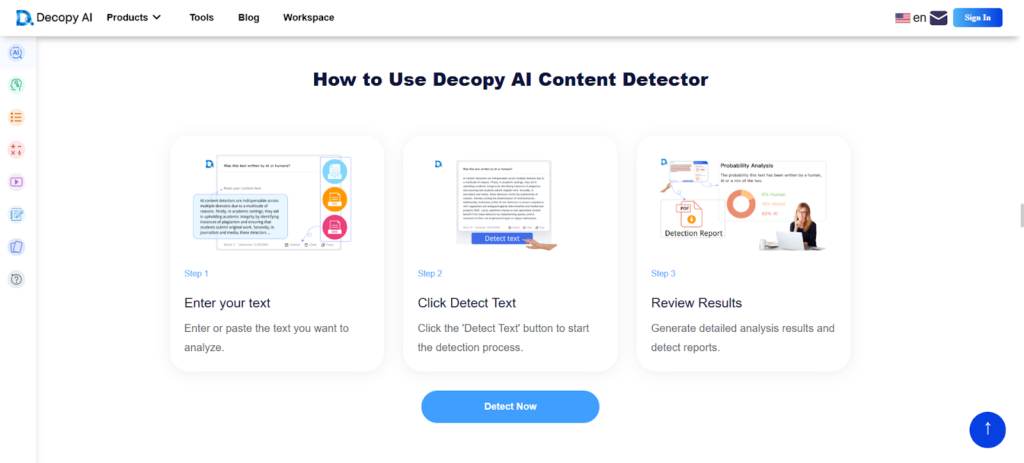
To get the most value out of detection technology, you should adopt a “Verification Workflow”:
- Initial Scan: Run your draft through the tool to find the “AI probability.”
- Targeted Editing: Don’t rewrite the whole thing. Focus on the “Red Zones” highlighted by the software—usually the introductions and conclusions where AI tends to be most formulaic.
- Inject Zero-Shot Knowledge: Add a reference to something that happened yesterday or a specific detail from your personal life. AI cannot replicate “the now.”
- Final Verification: Re-scan to ensure the “Humanity” score has moved into the safe zone (typically below 15-20% for high-stakes content).
Conclusion: Authenticity as the New Luxury
In a world of infinite, free, automated content, human originality has become the ultimate luxury. Whether you are a business trying to stay visible in Google’s search results, a student protecting your academic future, or a brand trying to maintain a real connection with your audience, you cannot afford to guess.
The “Arms Race” between AI generation and AI detection will only accelerate. Staying ahead requires a tool that is as sophisticated as the models it is trying to catch. By choosing a high-performance ai content detector, you aren’t just policing your prose; you are committing to a higher standard of communication. You are ensuring that in an era of algorithmic noise, your voice—and only your voice—is the one that resonates. Turn the challenge of AI into an opportunity to prove your value, and let your authenticity be your greatest competitive advantage.