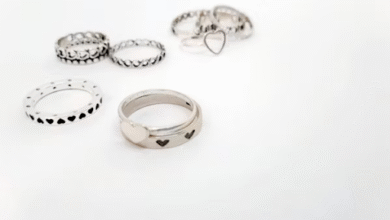
Why Fashion’s “Never Mix Metals” Rule Was Always Wrong

Ring stacking has transformed from a whispered fashion rebellion into a full-blown style movement. What was once considered a faux pas—mixing metals, layering statement pieces, adorning every finger—has become the signature of modern jewelry lovers who refuse to be confined by outdated rules. And at the heart of this evolution? The bold pairing of a white and yellow gold ring that challenges everything we thought we knew about jewelry coordination.
The old guard of fashion insisted that metals should never mingle. Gold stayed with gold, silver with silver, and never the twain shall meet. But today’s style mavens understand what jewelry designers have known all along: contrast creates interest, and there’s something undeniably striking about the interplay between warm and cool tones dancing across your fingers.
Why Mixed Metal Stacking Actually Works
The beauty of combining different metal tones lies in the visual depth it creates. When you stack rings in varying metals, you’re essentially creating a miniature art installation on your hand. Each piece catches light differently, creating dynamic shadows and highlights that a single-metal stack simply can’t achieve.
From a design perspective, mixed metals offer incredible versatility. A stack that includes both yellow and white gold can transition seamlessly from day to night, complementing everything from your morning coffee run to an evening event. Women’s white gold rings, in particular, have become essential building blocks for these mixed stacks—their cool, contemporary finish provides the perfect counterpoint to warmer gold tones. There’s also something deeply personal about a mixed-metal stack—unlike matchy-matchy sets that feel prescribed, a curated collection of different tones tells your unique story.
The Foundation: Starting Your Stack
Every great ring stack begins with an anchor piece—your boldest or most meaningful ring that sets the tone for everything else. This might be an engagement ring, a substantial cocktail ring, or a chunky signet.
Building Around Your Anchor
Once you’ve identified your anchor, consider its metal tone and style. If you’re starting with a yellow gold statement piece, adding white gold bands into your stack creates that coveted contrast. The key is balance—you don’t want one metal to overwhelm the other completely.
A reliable approach is the 60-40 rule: aim for roughly 60 percent of one metal and 40 percent of another. This creates harmony while maintaining enough contrast to be interesting.
Mastering the Mix: Practical Techniques
The Gradient Method
Start with yellow gold rings on one side of your hand and gradually transition to white gold on the other. This creates a flowing, intentional look that’s surprisingly sophisticated.
The Sandwich Technique
Place a white gold ring between two yellow gold pieces (or vice versa) on the same finger. The contrasting metal becomes a visual separator, allowing each ring to maintain its individual presence while contributing to the overall composition.
The Accent Strategy
If you’re new to metal mixing, start conservative with one metal as your dominant tone and use the contrasting metal sparingly as an accent. A single white gold band with distinctive details can become a focal point without overwhelming your aesthetic.
Texture and Dimension: Beyond Metal Tone
While metal color is crucial, texture and finish matter just as much. A mix of polished, matte, hammered, and brushed finishes adds dimension that prevents your stack from looking flat.
Consider pairing a high-polish white gold band with a matte yellow gold ring. The contrast in finish amplifies the difference in color, making each piece more distinct. Width variation also plays a vital role—alternate between delicate 1-2mm bands and more substantial 4-6mm pieces to create rhythm.
Placement Strategies for Maximum Impact
Where you place your rings matters almost as much as which rings you choose. The index finger is ideal for bold statement pieces, while your middle finger offers the most space for experimenting with three or more rings at once.
The ring finger doesn’t have to be off-limits for creative stacking. If you’re married or engaged, build around your existing rings by adding complementary bands in contrasting metals. Don’t neglect your pinkie, either—a single striking ring here creates balance across your entire hand.
Common Pitfalls to Avoid
Even with the freedom modern ring stacking allows, certain mistakes consistently miss the mark:
- Overcrowding your fingers. When rings are packed too tightly, they lose their individual character and can make your fingers look shorter. Leave breathing room for comfort and appeal.
- Ignoring your hand’s proportions. Massive stacks can overwhelm smaller hands, while tiny bands look lost on longer fingers. Scale your rings to complement your natural features.
- Mixing too many styles. Choose a general aesthetic lane—vintage, modern, bohemian, or minimalist—and select pieces that share DNA even if they differ in metal tone.
The Confidence Factor
Perhaps the most important element of successful ring stacking isn’t about the rings themselves—it’s about how you wear them. The confidence to pair a vintage yellow gold signet with modern white gold bands comes from understanding that personal style isn’t about following rules; it’s about expressing yourself authentically.
Ring stacking is inherently personal. Your stack tells the story of your taste, your experiences, and your evolution. Start with pieces you genuinely love rather than trying to achieve someone else’s aesthetic. The most compelling ring stacks aren’t those that follow a formula—they’re worn by people who understand their own style and aren’t afraid to experiment.
Begin building your mixed-metal stack gradually. Add pieces one at a time, living with each addition before moving to the next. Pay attention to how your rings make you feel—the psychological boost from wearing jewelry you love is a quiet confidence builder that affects how you move through the world.
Ring stacking, at its core, is about taking something traditional and making it entirely your own. By mixing metals, playing with texture, and curating combinations that reflect your personality, you’re participating in a broader movement toward more personal, less prescribed approaches to style. And in a world that often feels like it’s telling us who to be, there’s something quietly radical about declaring your individuality one ring at a time.