What Makes CubeMars Quasi Direct Drive Motors Different from Traditional Motors?
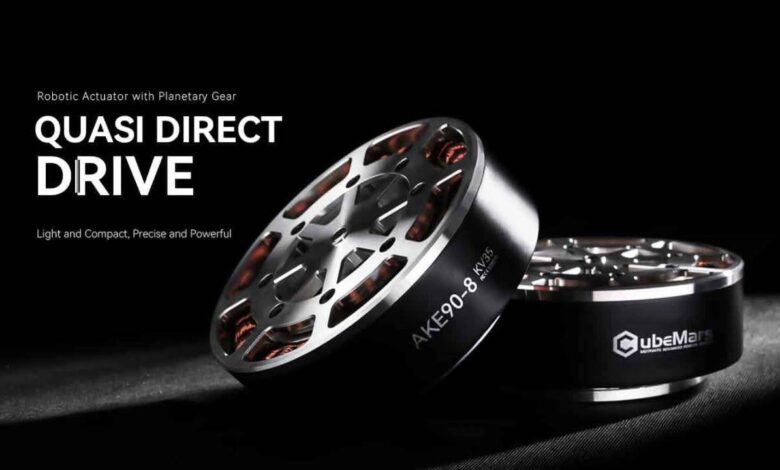
Due to the ongoing evolution of robotics, automation, and wearable technologies, the need to have more efficient, compact, and precise motor systems has become a priority. Industrial machines and automated systems have traditionally used traditional motors, but new uses like exoskeletons, robotic dogs, and collaborative robots demand much higher torque density, responsiveness, and integration. CubeMars has also placed its Quasi Direct Drive Motor in this changing environment as the next generation of motion solutions designed specifically to fit into intelligent robots. These motors are markedly different from conventional motor designs in both structure and performance attributes, as well as in application orientation.
Integrated Motor and Gearbox Architecture
The architecture of CubeMars Quasi Direct Drive motors and standard motors is one of the most basic differences. The traditional motor systems normally involve the use of a single motor and gearbox. This arrangement adds to the complexity of mechanics, and it adds weight and creates alignment issues during installation. There are also increased mechanical interfaces, which can result in increased backlash and decreased efficiency.
CubeMars Quasi Direct Drive motors are a high-performance brushless motor, matched with a high-precision planetary gearbox in one small package. This combined design reduces the mechanical losses and the assembly steps by engineers and system integrators. CubeMars applies the concept of integrating the gearbox with the motor into a more streamlined and mechanically optimized design, which is particularly appropriate in robotics, where space and weight are of particular concern.
Higher Torque Density for Compact Systems
Modern robotics is characterized by torque density. In many applications, traditional motors might need bigger frames or a higher gear ratio to reach the level of torque needed in demanding applications. This makes it bulkier and less dynamic.
CubeMars Quasi Direct Drive motors are designed with the objective of providing high power density in a very small size. This enables robotic joints, wearable exoskeletons, and legged robots to produce powerful movement without being too large or heavy. A greater density of torque allows more natural motion of assistive robots, as well as agility in mobile robots. CubeMars motors are designed to provide high-output performance in robotic systems that are lightweight compared to traditional motors, which may focus on general industrial performance.
Reduced Backlash for Precision Motion
Backlash is a problem with conventional motor and gearbox pairings. In case of external connections between separate gear systems, any small gaps between the gear teeth may cause undesired play in the transmission. This results in decreased positioning accuracy and uncontrolled motions.
CubeMars Quasi Direct Drive motors solve this problem with a high degree of precision planetary gearing that is aimed at ensuring a very low arc-minute backlash. Motor and gearbox have been incorporated closely together with each other, minimizing mechanical slack and increasing responsiveness. In robotics applications where precise positioning of the joints is needed, e.g., exoskeletons or robotic arms, this decreased backlash will translate into a smoother movement and a more controlled performance. The standard gear reducer in traditional motors sometimes will not be able to match the accuracy without sophisticated compensating algorithms.
Lightweight Design for Wearable and Mobile Robots
Wearable robotics and mobile platforms have a highly sensitive aspect of weight. Old-type motors that are used in industries are heavy and bulky in nature since they are constructed with the main purpose of being stationary equipment. When used on exoskeletons or quadruped robots, excess motor weight may raise the energy usage and decrease the total efficiency.
Quasi Direct Drive motors, CubeMars motors are created to be lightweight. The integrated form makes them light in weight, yet strong in structure. This becomes particularly critical in human-assistive technologies, where motor weight has a direct effect on user comfort and endurance. In comparison, the traditional motor systems tend to need supplementary structural support and a bigger housing, increasing the overall weight of the system.
Optimized for Robotic and Exoskeleton Applications
The traditional motors are usually designed to be used widely, including conveyors, pumps, and CNC machines. Although they are reliable, they have not been designed specifically to meet the dynamic and responsive needs of robotics.
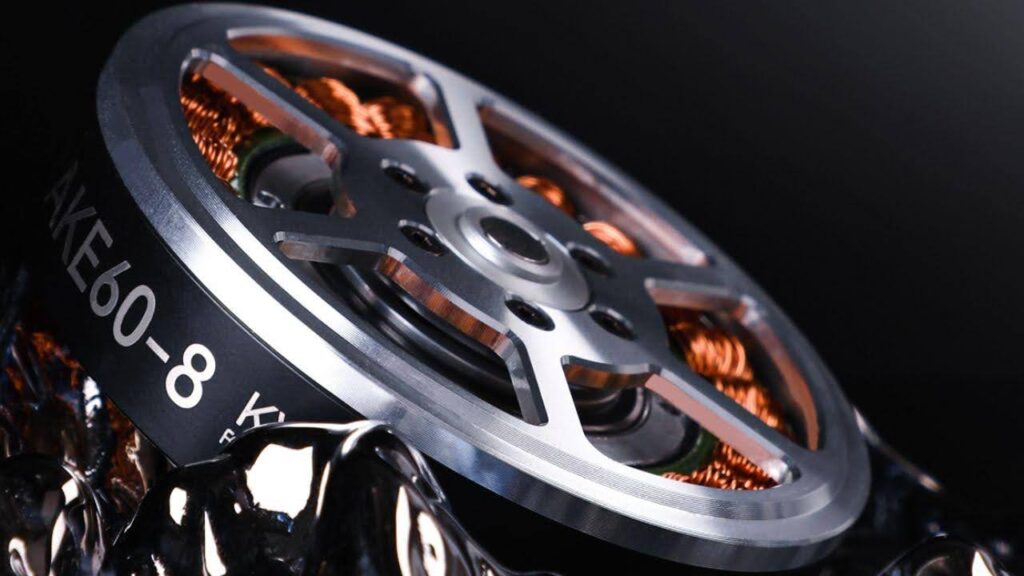
Quasi Direct Drive motors are designed to be used in robots and are called CubeMars. Robotic dogs, exoskeletons, and other applications (modular open-source robotics platforms) require high acceleration rates, tight torque regulation, and a small size. To achieve these special needs, CubeMars produces the motors. What is obtained is a system that will operate effectively at variable loads and with complex patterns of motion, unlike the conventional motors that might need considerable adjustment to operate effectively in similar applications.
Advanced Control Compatibility
The other characteristic difference is that it is compatible with advanced driver boards and motion control systems. CubeMars motors are provided to operate in harmony with smart controllers, which provide support for the servo mode, motion control mode, and cascaded multi-loop control systems. These constructions permit the accurate control of current, velocity, and position.
Conventional motors might need external encoders, third-party drivers, and other tuning to obtain the same degree of control. CubeMars systems frequently have high-resolution absolute encoders and temperature sensors built into the motor ecosystem. This combined control compatibility eases the architecture of the system and improves reliability in harsh robotic conditions.
Modular Design and Flexible Installation
Mechanical engineering flexibility is becoming of higher significance to robotics engineers. Separate gearboxes on the traditional motors may restrict the choice of mounting and make the system layout more difficult.
CubeMars Quasi direct drive motors have modular construction and bidirectional mounting options, depending on the model. This enables the application of the motor in complex robotic systems with minimal design limitations by the engineers. It is also easier to maintain the modular approach, and it can be customized. Comparatively, the traditional motors tend to need extra brackets, couplings, and adapters to be plugged into the special robotic solutions.
Conclusion
The main difference between the CubeMars Quasi Direct Drive motors and the traditional motors is the specialization. Although traditional motors continue to work well in a variety of industrial settings, they do not necessarily optimize the requirements of the more subtle robotics and exoskeleton technology. CubeMars meets these requirements by using an integrated motor-gearbox architecture, high torque density, lower backlash, as well as lightweight constructions, high-end control compatibility, and modular flexibility.
CubeMars Quasi Direct Drive motors are a specialized development of actuation technology, concentrating on the needs of robotic motion and not the overall performance of industry. As intelligent automation continues to reach into more fields, these types of specialized motor solutions will continue to be a more central focus in the development of the next generation of robotic systems.