Different Types of Rapid Prototyping
Introduction
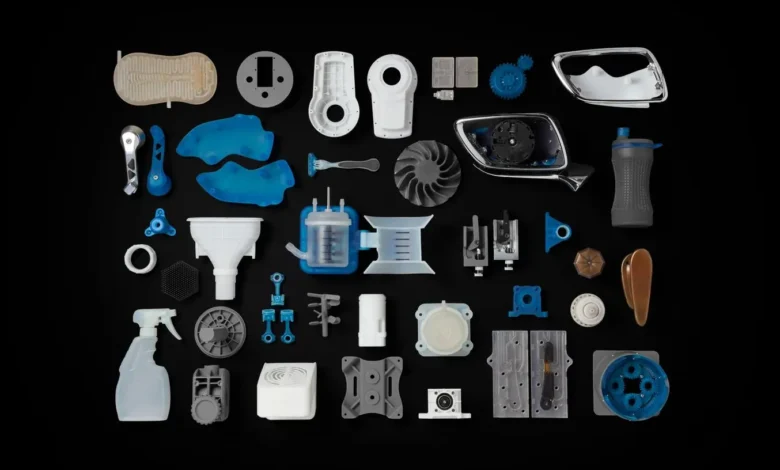
This evolution of rapid prototyping has dramatically changed the method by which products are designed, tested and launched to market. It enables employees from design, engineering and manufacturing teams to validate ideas faster and more efficiently than before by creating physical models or even fully functional parts in a matter of hours. No matter if you are working on a consumer product, industrial component, or electronic device, knowing which types of rapid prototyping exists can make it easier selecting the best option-approach for your project.
Here, we discuss different types of rapid prototyping technologies, the benefits they come with and when to use which. And even if this field is new to you, this Overview of Rapid Prototyping will give you a nice base on which (to build).
What is Rapid Prototyping?
So, rapid prototyping is model that can make a working part quickly based on the data which is in 3D computer aided design(CAD) methods. This contrasts with traditional methods of manufacturing, which may take weeks or months to produce.
The key benefits include:
Faster product development cycles
Reduced design risks
Cost-effective iteration
Improved communication between teams
Due to such benefits of rapid prototyping, it has become the required phase in product development.
Stereolithography (SLA)
One of the oldest and most popular rapid prototyping technologies is Stereolithography (SLA). It uses a laser to cure liquid resin into hardened plastic layer by layer.
Key Features:
High precision with great surface finish
Ideal for detailed prototypes
Great for visual models / works to showcase/store
Best Use Cases:
This is ideal for medical devices, jewellery, consumer products where detail and aesthetics are important.
Fused Deposition Modeling (FDM)
FDM is a new 3d printing technology that is very easy to handle and wide spread. It uses melted thermoplastic material that is pushed through a nozzle to build parts layer by layer.
Key Features:
Affordable and easy to use
Wide range of materials available
Good for functional testing
Best Use Cases:
FDM is a great option for near production prototypes, concept models and functional testing where economics usually take precedence over surface finish.
Selective Laser Sintering (SLS)
SLS is an additive manufacturing technique that uses a powerful laser to melt powdered material together—typically nylon or another polymer—to form solid structures. It does not need any kind of support structures (compared to SLA) so it enables a complex geometry.
Key Features:
Strong and durable parts
No need for support structures
Excellent for complex designs
Best Use Cases:
SLS is well suited for durable functional prototypes, mechanical parts, and components.
Digital Light Processing (DLP)
DLP bears similarities to SLA in that a digital light projector screen is used to cure resin. It enables higher print rates while still maintaining great resolution.
Key Features:
Faster than SLA
High accuracy and detail
Smooth surface finish
Best Use Cases:
DLP is great for high-precision applications, dental models and miniatures or design prototypes where intricate components are a must.
Multi Jet Fusion (MJF)
Multi Jet Fusion, developed by HP is based on powder technologies / brings printing experience to the layer using arrays of inkjet print heads to apply fusing agents and then solidify them with heat.
Key Features:
High strength and durability
Faster production times
Consistent mechanical properties
Best Use Cases:
MJF works well also for end-use parts, functional prototypes and small-batch production runs.
CNC Machining for Rapid Prototyping
CNC machining is traditionally not viewed as an additive manufacturing process but it serves frequently to rapid prototyping. Using computer-controlled tools to varnish sinks, the process consists of extracting material from a solid block.
Key Features:
High precision and accuracy
Comprehensive materials (metal and plastic)
Excellent for functional parts
Best Use Cases:
CNC Machining is ideal for prototypes requiring high tolerance and close similarity with final production components, such as the aerospace and automotive industries.
Sheet Lamination
Also, it refers to layers of paper, plastic, metal or others that a are bonded together and cut into shape.
Key Features:
Cost-effective
Fast production
Suitable for large parts
Best Use Cases:
This approach is commonly seen in the generation of visual prototypes and architectural models instead of functional parts.
Binder Jetting
In binder jetting, a liquid binding agent is deposited from inkjet heads onto a powder bed to produce parts layer by layer. It’s mostly used on metals, sand, or ceramics.
Key Features:
No heat required during printing
Capable of producing full-color models
Suitable for complex geometries
Best Use Cases:
The binder jetting technology is a common method for sand casting moulds, metal components and decorative patterns.
Rapid Prototyping in Electronics
Rapid prototyping on electronics is a large part that isn’t just mechanical parts. Engineers are able to test circuit designs and hardware configuration before mass-producing without the fuss.
Services such as AIXI Hardware Rapid Prototyping offer tailored solutions to assist with PCB design, embedded systems and electronic assembly. Prototyping of this sort speeds up innovation in the likes of IoT, consumer electronics and industrial automation.
How to Choose the Right Method of Rapid Prototyping
Choosing the right kind of rapid prototyping method really depends on:
Purpose of the Prototype
Concept validation
Functional testing
Aesthetic presentation
Material Requirements
Plastic
Metal
Composite materials
Budget and Timeline
In the early stages these prototypes are usually produced cost-efficiently, and one of the lower-cost 3D printing technologies available is Fused Deposition Modeling (FDM).
Final Prototypes: Higher-end SLA or SLS Methods
Complexity of Design
SLS or SLA works like magic for intricate designs
FDM or CNC can work for simpler parts.
Knowing these factor ensures that you will select the most efficient and economical method for your work.
Advantages of Rapid Prototyping
Advantages of Rapid Prototyping Rapid prototyping has substantial advantages that make it an integral part of modern manufacturing:
Duration: Quicker turnarounds than traditional methods
Flexibility: Adapting / Changing Designs with ease and iterate fast.
Reduction in Expenses: Minimizes spending on tooling and molds
Design Quality: Identify design issues earlier
A Communication Leap: Physical models clarify stakeholders about the concepts
Conclusion
Rapid prototyping change the games of product development, as it causes the01 more innovation and less sticker design. SLA, FDM, SLS, CNC machining: every method has its own benefits that are ideal for a certain type of application.
This knowledge will help businesses make educated decisions to improve the quality of their products while shortening the timeline for bringing it to market. From creating a simple concept model to building an entire functional component, choosing the appropriate prototyping approach can either make or break your development experience.
With the evolution of technology, rapid prototyping will continue growing to new levels; providing newer and better opportunities for creativity, precision, and efficiency among various industries.