Most Pet Leash Complaints Start at the Hook, Not the Rope
A pet leash rarely looks disappointing on the shelf. Problems usually show up once the walk starts.
The rope may look thick. The color may feel right for retail. The packaging may photograph well. Then the leash goes into real use. The hook twists when the dog turns sharply. The loop setting drifts. The grip starts feeling rough sooner than expected. Or the hardware simply feels less dependable after repeated outdoor use. That is the moment a leash stops being a nice-looking accessory and becomes a return, a complaint, or a product customers do not buy twice.
That shift matters because buyers are treating pet accessories more seriously than they did a few years ago. China’s GB/T 43839-2024, the first recommended national safety standard centered on companion animal products, puts clear attention on edge safety, corrosion resistance of metal parts, harmful substance limits, and proper labeling. For retailers and importers, that raises the bar even for simple everyday items. A leash no longer gets judged only by color, rope thickness, or price. It gets judged by whether it still feels safe, smooth, and believable after repeated use.
That is the real buying question in this category. Durable should not mean vaguely tough. It should mean high-strength braided rope, stable fasteners, controlled handling, and honest fit claims that hold up once the product reaches real dogs and real customers.
Rope strength matters, but rope alone does not decide quality
One of the easiest mistakes in leash sourcing is putting too much faith in the rope at first glance.
A leash can look strong because the rope seems dense or oversized. That helps, but it does not tell the whole story. A leash is a working system. The rope body, the hook, the adjustment point, the handle, and the size positioning all contribute to how dependable the product feels. If one part is weak, the entire product starts losing trust.
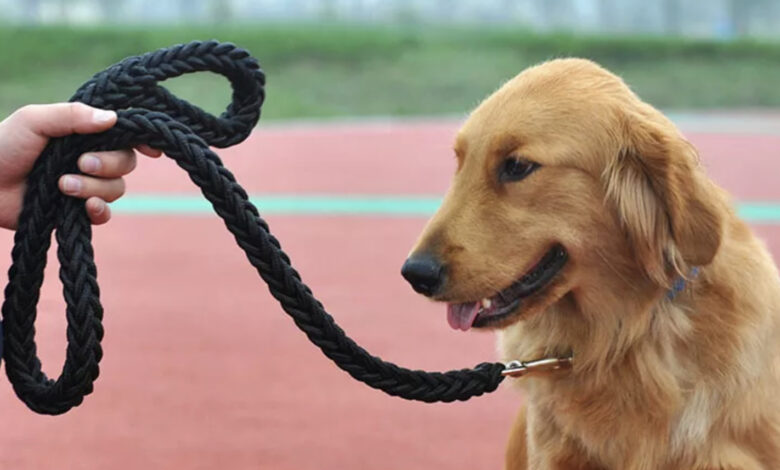
High-density braided rope still matters for a reason. It handles repeated friction better than decorative, underbuilt leads. It also tends to feel steadier during longer walks or light training because force is distributed through the body of the rope instead of wearing down a thin edge. In this leash line, the rope uses high-density woven construction with a softer, skin-friendly hand feel, while the striped version includes high-elastic fibers that add slight cushioning when the dog pulls suddenly. That makes the product easier to live with, not just easier to describe.
That distinction matters in actual selling environments. Customers do not review rope density in abstract terms. They notice whether the leash feels harsh after ten minutes, whether the pull feels abrupt, and whether the product still seems well judged after a week of use.
Hardware is where leash confidence is won or lost
Most leash complaints start at the part that is supposed to feel most secure: the hardware.
That is the area many weak products still treat like a finishing detail. In real use, it takes the most scrutiny. Dogs rarely move in straight lines. They circle, pull, stop short, cut back, and surge forward. If the hook does not rotate smoothly, the line starts tangling. If the control point slips, the leash starts feeling unreliable. If the metal parts wear badly in damp weather or humid storage, the whole product begins to feel short-lived.
A better pet leash stays calm under movement.
Three checks matter most here:
Rotation quality
The hook should move cleanly when the dog changes direction. That reduces twisting and keeps the line easier to manage during ordinary walks.
Lock stability
If the leash uses a loop-adjustment or anti-slip structure, that point needs to hold its setting instead of creeping looser during use.
Corrosion resistance
Outdoor use is harder on hardware than many listings admit. Rain, wet pavement, humidity, and repeated handling expose weak metal parts surprisingly quickly.
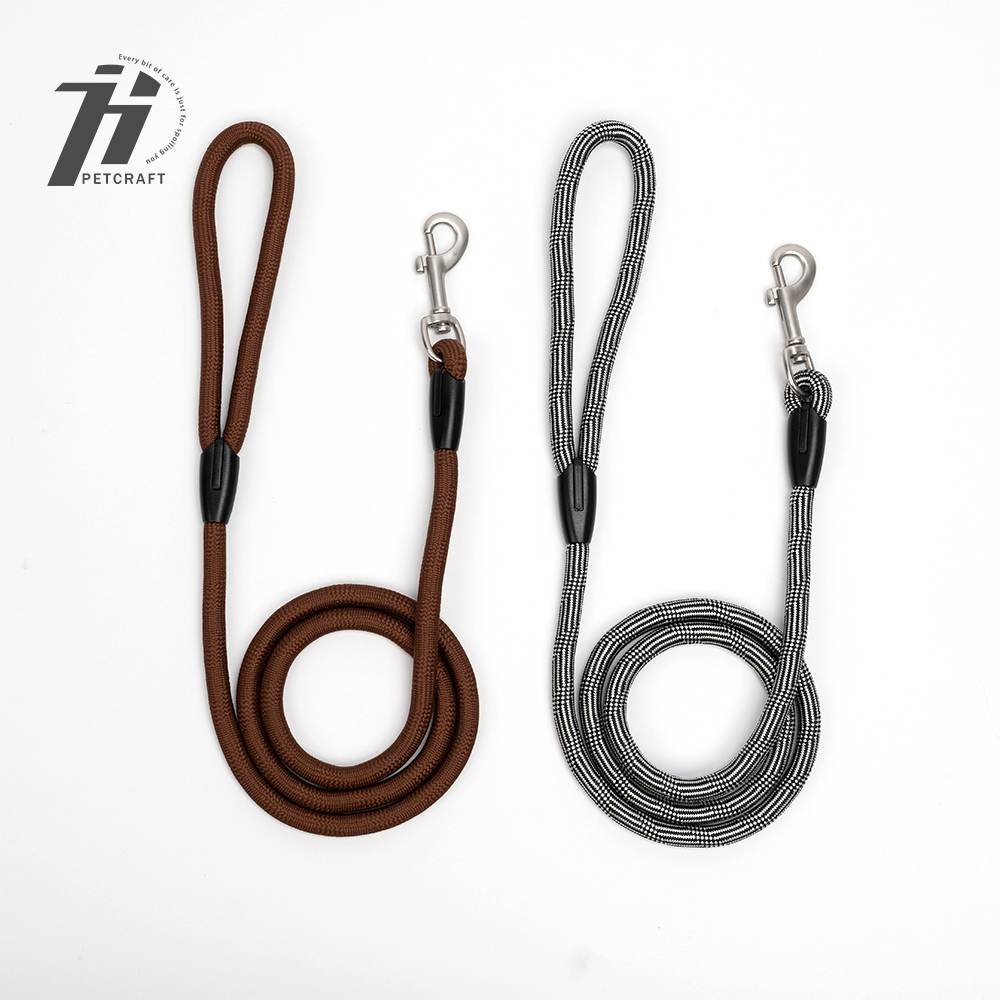
This is where the product design becomes more credible. The leash platform uses a 360° rotating alloy hook to reduce tangling, and the alloy hardware is designed for rust resistance and shape stability in humid environments. The P-type version also uses a PU anti-slip structure that helps the loop stay more consistent during walking and basic training.
That is why the headline point is not just a clever line. It reflects how buyers and end users actually experience failure.
A good everyday leash solves motion, comfort, and control at once
The strongest leash products in this category usually do not win by sounding tougher than everything else. They win by making daily use feel easier and more controlled.
This design takes a two-style approach. One version uses an integrated P-type structure, combining leash and neck loop in one unit. That keeps handling direct and makes it easier to use for heel training or basic behavior correction. The second version uses an openable handle with sponge lining, which improves grip comfort and adds short-duration fixing convenience in controlled settings. Both versions are built around the same practical logic: high-density woven rope, softer handling, slight cushioning, and hardware that stays smoother in motion.
That makes for a much stronger commercial story than a generic “heavy-duty pet leash” claim.
The P-type version suits training-focused buyers better.
The padded-handle version fits daily walking more naturally.
The rotating hook reduces tangling frustration.
The anti-slip loop control keeps the leash feeling more settled once adjusted.
Nothing about that needs exaggerated language. It reads like a product shaped by actual use, which is usually what earns better reviews and better repeat performance.
Honest sizing does more for trust than broad claims
Another weak point in this category is fit inflation.
Too many leash listings try to cover every dog with one sales story. That may make the listing look flexible, but it usually creates trouble later. When the fit range is blurred, complaint risk rises quickly.
A more believable leash line draws a cleaner boundary. This rope platform is aimed at dogs in roughly the 1–20 kg range, with S, M, and L options using rope diameters of 0.8 cm, 1.0 cm, and 1.2 cm, plus total lengths of 120 cm or 150 cm depending on size. That makes it a more realistic fit for toy breeds, small dogs, and lighter medium dogs that need a manageable daily leash with some training utility. It should not be stretched into a large-dog control story.
That kind of size honesty does two useful things at once. It reduces misuse, and it makes the product page sound more credible. Buyers trust a leash more when it knows exactly what job it is built for.
What buyers should ask before choosing a supplier
Once the product logic is clear, supplier screening becomes much simpler.
The right supplier here is not just the one with the lowest quote or the broadest catalog. It is the one that can keep the important details consistent from first sample to repeat order: rope construction, hook performance, control stability, fit accuracy, and enough adjacent category support to build a fuller line later.
That is where suppliers like Holydog become relevant. The fit is not based on generic factory language. It comes from how closely the product logic matches the buying logic. The leash line already centers on the points buyers are screening for: high-density woven rope, softer handling, slight cushioning, a rotating alloy hook, and a PU anti-slip structure that helps the loop stay steadier in use. The fit range is also positioned with more discipline instead of being pushed into an all-dog claim.
That matters more than a broad “pet accessories supplier” label. Buyers who care about repeat-order performance usually do not want one attractive leash in isolation. They want a supplier that can carry the same logic across adjacent products and future collection development. Here, the range already extends into pet harnesses, collars, bibs, and toys, which makes line-building easier for private-label and retail programs that need more than a single SKU.
The commercial side also lines up with that use case. Customization starts at 500 pieces. Sample development is typically around 7–10 days, and bulk production usually runs about 30–45 days depending on complexity. That gives buyers a manageable way to test one leash concept properly before committing to a wider rollout.
That is a much more useful signal than a long factory introduction. It tells the buyer whether this supplier can realistically move from sample check to repeat production without losing the product logic that made the leash interesting in the first place.
Why this kind of leash has better reorder potential
Reorders are not won by noise. They are won by fewer weak points.
If the rope looks strong but the hook becomes irritating, the product loses trust.
If the hook is stable but the grip feels harsh, the product loses comfort.
If the structure works but the fit claim is inflated, the product loses credibility.
The leash lines that keep moving are usually the ones that feel sorted out in the basics. They reduce friction where customers expect control.
FAQ
Q: What should buyers check first in a durable pet leash?
A: Start with rope construction, hook rotation, adjustment stability, and real fit range. Those points affect handling, tangling, comfort, and complaint risk more directly than styling details.
Q: Why does a 360° rotating hook matter so much?
A: Dogs rarely move in straight lines. A rotating hook helps reduce twisting and knotting when direction changes happen quickly, which keeps the leash smoother and easier to handle.
Q: Is softer rope actually better for daily use?
A: In many daily-use cases, yes. A softer, slightly cushioned rope often gives better hand comfort while still maintaining control, especially during repeated short pulls.
Q: Is this leash right for large dogs?
A: It is better positioned for dogs in the 1–20 kg range. Pushing it beyond that creates unnecessary control risk and makes returns more likely.
Q: What is the lowest-risk way to evaluate a new leash supplier?
A: Start with a size-matched sample set, test hook rotation by hand, check loop stability under light pulling, and compare rope feel across S, M, and L before locking in volume. The sample and MOQ structure here makes that kind of evaluation practical.
READ ALSO: French Bulldogs vs English Bulldogs: Which Breed Costs More to Maintain?