How US Renewable Energy Manufacturers Are Cutting Component Costs with High-Volume Metal Stamping
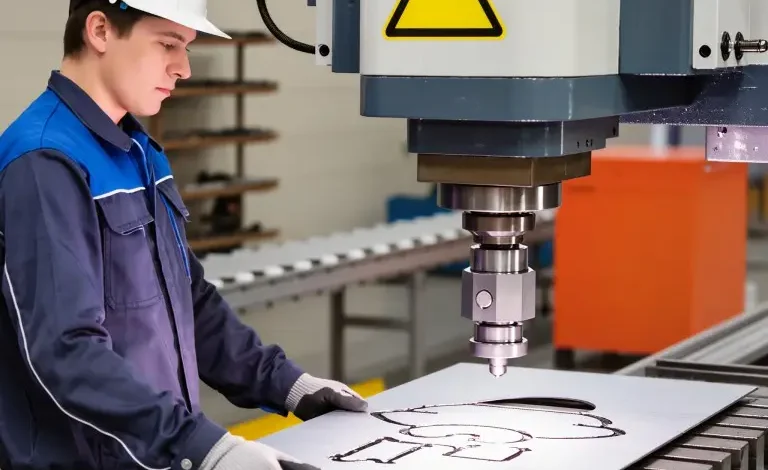
The push to scale renewable energy infrastructure across the United States has introduced a set of manufacturing pressures that were not as visible a decade ago. Solar installations, wind turbine assemblies, and grid-level storage systems all depend on large volumes of precision metal components — brackets, housings, terminals, connectors, and structural supports — produced consistently, on time, and within tight cost tolerances. As project sizes grow and supply chains face continued scrutiny, procurement teams and plant managers are paying closer attention to how those components are made, not just what they cost per unit on paper.
High-volume metal stamping has emerged as one of the more reliable answers to this challenge. It is not a new process, but its application within renewable energy manufacturing has deepened considerably as the sector has matured. Understanding why that shift is happening — and what operational advantages it actually delivers — helps explain the sourcing decisions being made by manufacturers working at scale across the solar, wind, and energy storage segments.
Why Metal Stamping Has Become Central to Renewable Energy Component Production
Metal stamping is a cold-forming process in which flat sheet metal is shaped into precise components using dies and presses. It is well-suited to high-volume production because once tooling is developed and validated, the process can produce thousands of identical parts with minimal variation between runs. For renewable energy manufacturers, this consistency is not a minor advantage — it is a fundamental requirement. Components that vary even slightly in form or dimension can affect the performance of an assembled solar panel mount, a wind nacelle housing, or a battery enclosure.
The interest in metal stamping for renewable energy industry applications has grown in part because the industry’s component requirements have become better defined. Early-stage renewable projects often tolerated more variation in parts sourcing because volumes were smaller and assembly was more manual. Today, automated assembly lines and system-level performance standards make part-to-part consistency a production necessity rather than a preference.
Manufacturers working in this space have found that investing in stamping tooling upfront — while more capital-intensive in the short term — creates a cost structure that improves substantially as volumes increase. The per-unit economics of stamping become more favorable the longer a production run continues, which aligns well with the multi-year supply commitments that are common in utility-scale energy projects.
Tooling Investment and Long-Term Cost Control
One of the more practical aspects of high-volume stamping is how it shifts the cost curve over time. Initial die development and tooling qualification carry real costs, and manufacturers who are new to stamping sometimes hesitate when they see those line items. However, the tooling cost is largely fixed. Once validated, the same die set can produce hundreds of thousands of parts without significant added expense, which means the cost per component decreases steadily as volume accumulates.
For renewable energy manufacturers operating on long project cycles — a wind farm built out over three years, or a solar supply contract running across multiple installation phases — this depreciation of tooling cost across production volume directly reduces the bill of materials over time. Procurement teams that model total cost of ownership rather than unit price alone tend to reach this conclusion relatively quickly when comparing stamping to alternative fabrication methods such as casting or machining for the same components.
Material Efficiency in High-Volume Stamping Operations
Metal stamping, when properly engineered, produces less waste than many alternative metalworking processes. Nesting patterns — the arrangement of part profiles across a sheet of raw material — can be optimized to maximize the usable area of each coil or blank. This matters in a materials environment where steel, aluminum, and copper prices fluctuate, and where the cost of scrap is not trivial when production volumes are large.
Renewable energy manufacturers that have moved significant portions of their component production into stamping operations have reported measurable improvements in material utilization. In a high-volume context, even a modest improvement in sheet utilization compounds across thousands of production cycles and represents real dollar savings at the end of a fiscal year.
The Component Categories Where Stamping Delivers the Most Consistent Value
Not every metal component in a renewable energy system is a good candidate for stamping. The process works best with parts that are produced in high quantities, have relatively consistent geometry, and do not require the kind of complex internal features that typically require machining. Within those parameters, the range of applicable components in the renewable energy sector is broad.
Stamped components commonly found in solar and wind manufacturing include:
• Mounting brackets and rail clips used to secure solar panels to racking systems, where consistent hole placement and flange geometry are critical for installation speed and structural integrity
• Electrical terminals and bus bar components for inverters and charge controllers, where dimensional accuracy directly affects contact resistance and thermal performance
• Enclosure panels and chassis components for grid-connected storage units, where repeatability across large production runs reduces assembly rework and scrap
• Grounding and bonding clips for photovoltaic arrays, which must meet both dimensional and surface quality requirements to ensure reliable electrical continuity
• Heat sink bases and thermal management components for power conversion equipment, where stamping can produce consistent surface profiles without secondary operations
These are not exotic components, but they are produced in very large numbers, and their quality has a direct effect on system reliability. A mounting bracket that is out of tolerance can slow installation. An electrical terminal that varies in contact geometry can create resistance issues in service. The reliability case for high-volume stamping is grounded in those real downstream consequences, not in abstract quality metrics.
Wind Energy Applications and Structural Tolerance Requirements
Wind energy components present a somewhat different set of demands than solar hardware. The mechanical loads on wind turbine structures are significant, and the components used in nacelles, hubs, and tower base assemblies must meet tighter structural requirements. Stamping has found a role here in producing brackets, flanges, and reinforcement components that would otherwise require machining from solid stock — a more expensive and time-consuming process.
For these applications, the value of stamping is not purely cost-driven. The grain structure of cold-formed metal is often more favorable for fatigue resistance than machined parts cut from the same raw material, because the forming process aligns the grain rather than cutting across it. This is a well-established metallurgical characteristic, recognized in manufacturing standards maintained by organizations such as the American Society of Mechanical Engineers, and it gives wind energy engineers additional confidence in stamped structural components.
Solar Manufacturing at Scale and the Role of Part Consistency
Large-scale solar installations involve enormous quantities of individual components, often sourced through supply chains that span multiple tiers. A single utility-scale solar project may require millions of individual fasteners, clips, and mounting components. When those components arrive inconsistently — varying slightly in dimension, surface finish, or hole placement — the effects compound on the installation side. Field crews spend additional time adjusting, reworking, or rejecting parts. Project timelines slip. Labor costs increase.
High-volume stamping addresses this problem at the source. When a single toolset produces all parts in a given run, the variation between parts is tightly controlled. Manufacturers that have standardized key components through stamping have found that the downstream benefits in assembly and installation efficiency often outweigh the component cost savings alone. The total value of consistent parts shows up across the entire project lifecycle, not just in the purchasing ledger.
Supply Chain Positioning and Domestic Production Considerations
The past several years have prompted a significant reconsideration of where critical manufacturing components are sourced. Renewable energy infrastructure has not been exempt from supply chain disruption, and manufacturers who depended heavily on offshore stamping capacity experienced delays, quality inconsistencies, and cost volatility that affected project timelines and margins.
Domestic metal stamping operations have gained relevance in this context. US-based stamping suppliers can offer shorter lead times, easier quality audit access, and more responsive tooling adjustments when design changes are required. For manufacturers working under federal procurement requirements or incentive programs that include domestic content provisions, the origin of stamped components is not a secondary consideration — it affects eligibility and compliance directly.
The operational argument for metal stamping for renewable energy industry applications is strengthened when the supplier relationship supports rapid response. When a design iteration is needed, or when production volumes shift unexpectedly, a domestic stamping partner with available press capacity and experienced tooling teams can respond in weeks rather than months. That flexibility has real value in a sector where project schedules are tied to land leases, interconnection agreements, and financing milestones.
Quality Systems and Production Validation in Stamping Operations
Manufacturers evaluating stamping suppliers for renewable energy components should look closely at how quality is managed across production runs, not just at the initial sample approval stage. A stamping operation that produces conforming first articles but allows drift to occur over long runs introduces risk that may not surface until components reach final assembly or field installation.
Robust stamping operations for this sector maintain in-process inspection at defined intervals, track die wear over production cycles, and have documented protocols for requalification after tooling maintenance. These are operational characteristics that separate capable stamping suppliers from those who can meet sample requirements but struggle to maintain consistency across large production volumes. Procurement teams asking the right questions during supplier evaluation can distinguish between the two fairly efficiently.
Conclusion
The economics of renewable energy manufacturing are tightening as the sector moves from incentive-driven growth to competitive, margin-sensitive operation. In that environment, the decisions made about component sourcing and production method carry more weight than they did when margins were more forgiving. High-volume metal stamping has established a clear role in this context — not because it is innovative, but because it is reliable, scalable, and cost-effective at the volumes renewable energy manufacturing now requires.
Manufacturers that have made deliberate investments in stamping tooling and supplier relationships are generally seeing the benefits across their cost structure, their assembly operations, and their supply chain resilience. Those still sourcing stamped components without a clear strategy around volume, consistency, and domestic supply risk leaving real value on the table. The case for metal stamping for renewable energy industry applications is ultimately grounded in operational performance, and that is a conversation worth having at the engineering and procurement level well before the next project cycle begins.