7 Leadership Development Programs for Financial Executives That Actually Deliver ROI (And How to Choose One)
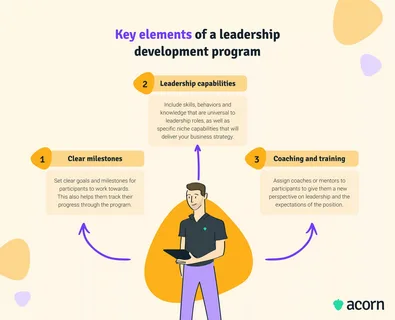
Financial services firms operate in an environment where the quality of executive decision-making has direct consequences — for compliance posture, client retention, team stability, and long-term institutional performance. Yet many organizations continue to invest in leadership development programs that produce little measurable change in how their senior people actually lead.
The gap between program completion and behavioral change is well-documented in financial services. Executives attend workshops, complete assessments, and receive coaching — and then return to the same operating pressures that shaped their habits in the first place. Without structure, accountability, and application to real business conditions, even well-designed programs fail to produce lasting results.
This guide examines seven categories of leadership development programs that have demonstrated real-world impact for financial executives, followed by a practical framework for evaluating which approach fits your organization’s current stage and specific leadership challenges.
Why Leadership Development in Financial Services Requires a Different Approach
Financial services firms face a specific set of leadership demands that general corporate programs are not built to address. Regulatory accountability, risk governance, fiduciary responsibility, and the pressure of managing high-performing yet often siloed teams create conditions where conventional leadership training frequently misses the mark. For this reason, choosing a leadership development program for executives at financial firms is not simply a matter of selecting the most credentialed provider — it requires matching program design to the actual operating environment your executives inhabit.
The Leadership Development Program For Executives At Financial Firms guide from Aubrey Daniels International addresses this gap directly by grounding program content in behavioral science and measurable performance outcomes rather than generic competency frameworks.
The financial sector also tends to attract executives who are analytically strong but may have limited exposure to how their behavior shapes team culture, risk-taking norms, or communication patterns across hierarchies. Programs that treat leadership as a set of abstract values or conceptual models rarely produce change in this population. What works is structured observation, direct feedback, and application within real operational contexts — the same rigor these executives apply to portfolio decisions or regulatory reviews.
The Cost of Getting This Wrong
Poor leadership development choices represent more than a wasted training budget. When a senior executive completes a program and returns unchanged, the organization has also signaled to middle management and junior staff that development is performative rather than consequential. This erodes confidence in future initiatives and makes it harder to build the kind of institutional leadership culture that retains talent and manages risk effectively.
The downstream costs include increased turnover in high-potential employee cohorts, inconsistent decision-making during periods of organizational change, and reduced capacity to manage regulatory or reputational crises with the kind of coordinated, confident leadership those situations demand.
1. Behavioral Performance-Based Programs
Behavioral performance programs are built on the premise that leadership is a set of observable, measurable behaviors — not a personality trait or an abstract quality. These programs use structured observation and data collection to identify the specific behaviors that drive performance outcomes, then design intervention strategies to reinforce effective behaviors and reduce counterproductive ones.
In financial firms, this approach is particularly effective because it mirrors the analytical methods executives already trust. Rather than relying on self-report or subjective manager evaluations, behavioral programs create accountability through objective measurement — which tends to generate stronger buy-in from executives who are skeptical of traditional “soft skills” training.
What Makes This Approach Durable
The durability of behavioral programs comes from reinforcement structure. Most leadership training fades because new skills are introduced in isolation from the daily environment where old habits are reinforced. Behavioral programs explicitly address this by creating feedback loops within the work context, making it difficult for participants to revert without awareness. For financial executives managing large teams or complex client relationships, this kind of sustained behavioral change has compounding effects on team performance over time.
2. Executive Coaching Programs with Accountability Structures
One-on-one executive coaching remains one of the most widely used development tools in financial services, but its effectiveness varies significantly based on how accountability is built into the engagement. Coaching without defined goals, observation, and structured follow-through tends to function more as a sounding board than a development tool.
Programs that pair coaching with formal accountability structures — including stakeholder feedback, progress benchmarks, and organizational integration — produce more consistent outcomes. In financial services, where executives often operate with significant autonomy, external accountability mechanisms are particularly important because internal feedback channels are frequently distorted by hierarchy or political sensitivity.
Selecting a Coach with Sector Relevance
A coach with experience in financial services understands the regulatory pressures, the particular dynamics of managing risk-oriented cultures, and the communication challenges that arise in highly credentialed, performance-driven environments. This context reduces the time spent on orientation and allows coaching conversations to move directly into application-level work. It also increases credibility with the executive, which is foundational to the coaching relationship actually producing change.
3. Cohort-Based Leadership Programs for Senior Teams
Cohort programs bring a defined group of executives through a shared curriculum over a fixed period. The cohort model is well-suited to financial firms because it builds horizontal trust and communication across teams or divisions that might otherwise operate in isolation. When executives learn alongside peers they work with — or will work with — the program content becomes embedded in the organization’s actual relational fabric rather than residing only in individual knowledge.
This structure also creates a natural accountability community. Executives are more likely to apply what they have learned when they know their peers went through the same material and share common reference points.
Designing Cohorts Around Real Organizational Challenges
The most effective cohort programs for financial executives are built around actual organizational problems rather than hypothetical scenarios. When program content is drawn from live strategic challenges — such as managing a regulatory transition, integrating a new business unit, or building succession depth — participants engage at a higher level and the learning transfers more reliably into day-to-day leadership behavior.
4. Succession Planning and Pipeline Development Programs
Many financial firms reach a point where the leadership bench is thin in specific functions — risk management, compliance, client relationship leadership, or enterprise technology oversight. Succession-focused programs are designed to identify high-potential individuals below the executive tier and prepare them for expanded responsibility in a structured, measurable way.
These programs are not simply accelerated career paths. They involve deliberate exposure to decision-making contexts, structured mentorship from current executives, and feedback mechanisms that build self-awareness and strategic perspective in a way that normal career progression does not reliably produce.
Why Succession Programs Require Executive Sponsorship
Succession programs fail when they operate as human resources initiatives without visible investment from current senior leadership. Executives who will eventually be replaced by the program’s participants need to be actively engaged in designing and supporting the development process. This requires organizational honesty about succession timelines and a culture that treats talent development as a business priority rather than an administrative function.
5. Regulatory and Risk-Aware Leadership Programs
Leadership in financial services increasingly intersects with regulatory compliance. As noted by the Financial Stability Board, governance structures and senior individual accountability are now central to how regulators evaluate institutional risk management. Programs that help executives understand how their leadership behavior connects to regulatory outcomes — not just technical compliance — address a gap that conventional training rarely touches.
Risk-aware leadership programs help senior teams understand how their communication patterns, decision-making processes, and escalation behaviors either reduce or amplify institutional risk. This is distinct from compliance training, which focuses on rules. Leadership programs in this category focus on how executive behavior shapes the culture that determines whether rules are followed or circumvented.
Building a Risk-Conscious Leadership Culture from the Top
The most significant risk events in financial services are rarely caused by technical failures alone. They typically involve a sequence of leadership decisions — or non-decisions — that allowed problems to compound before they were surfaced and addressed. Programs that help executives examine their own role in escalation culture, information flow, and accountability norms address the behavioral root causes of institutional risk rather than its symptoms.
6. Communication and Influence Programs for Executive Teams
Financial executives are often technically expert but less practiced in the kind of communication that shapes organizational behavior, builds alignment across diverse stakeholder groups, or translates strategic direction into frontline action. Communication programs at the executive level focus on precision, consistency, and the behavioral impact of how leaders speak, listen, and respond in different organizational contexts.
In financial firms, where regulatory scrutiny can extend to documented communications and where client trust is built over years, the quality of executive communication has both reputational and operational consequences. Programs that treat communication as a leadership discipline rather than a soft skill tend to produce more durable change in this population.
The Relationship Between Communication Clarity and Team Performance
When executives communicate ambiguously — about priorities, expectations, or accountability — teams develop their own interpretations. In financial services, where different teams may be managing related risks without full visibility into each other’s positions, ambiguous communication at the executive level can create exposure that only becomes visible under stress. Structured communication development reduces this exposure by building habits of precision and consistency into how leaders operate day to day.
7. Cross-Functional Strategic Leadership Programs
Many financial executives develop deep expertise within a single function — asset management, trading, compliance, or technology — but have limited experience leading across functional boundaries. Cross-functional programs expose executives to the decision-making logic, constraints, and performance pressures that exist in parts of the organization outside their direct experience.
This kind of development is particularly valuable in firms undergoing transformation — whether through technology integration, product diversification, or regulatory restructuring — because it builds the organizational empathy and strategic breadth required to lead across complexity rather than defaulting to functional silos.
How Cross-Functional Exposure Shapes Strategic Thinking
Executives who have direct exposure to how other parts of the organization operate make better enterprise-level decisions. They anticipate second-order consequences of strategic choices, communicate more effectively with cross-functional stakeholders, and build coalitions more reliably than executives whose perspective remains functionally narrow. Programs that create this exposure in structured, facilitated ways produce outcomes that informal rotation or exposure alone cannot reliably generate.
How to Evaluate Which Program Is Right for Your Organization
Choosing a leadership development program for executives at financial firms starts with an honest diagnosis of what is actually limiting leadership effectiveness in your organization. This is not always the same as what feels most urgent or most visible. Firms that begin with a clear-eyed assessment of their specific leadership gaps — rather than selecting programs based on brand recognition or peer benchmarking — consistently report better outcomes and more durable change.
A reliable evaluation framework should address four questions. First, what specific leadership behaviors are currently producing friction, risk, or underperformance? Second, does the program’s design translate into measurable behavioral change or only increased knowledge? Third, how does the program integrate with real organizational context rather than functioning as an isolated off-site event? And fourth, what accountability structures exist within the program to sustain change after formal participation ends?
The programs most likely to deliver genuine ROI for a leadership development program for executives at financial firms are those built around behavioral application rather than conceptual exposure, designed with financial services operating conditions in mind, and structured to create accountability that extends into day-to-day leadership practice.
No program, regardless of design quality, produces results in isolation from organizational commitment. When senior leaders treat development as a strategic investment — with clear expectations, visible sponsorship, and real follow-through — the programs described here produce measurable improvements in team performance, decision quality, and institutional resilience.
Conclusion
Leadership development in financial services is not a problem that solves itself through exposure to ideas or attendance at workshops. It requires program design that reflects the actual pressures executives face, behavioral structures that sustain change after the program ends, and organizational conditions that treat development as consequential rather than ceremonial.
The seven program categories outlined here represent distinct approaches, each suited to different organizational needs and different stages of leadership maturity. The value in understanding them lies not in selecting the most sophisticated option, but in identifying the one most precisely aligned with what your organization actually needs to build — and then committing to the conditions that allow it to work.
A leadership development program for executives at financial firms is ultimately a long-term investment in institutional quality. The firms that see the strongest return are those that approach the selection process with the same rigor and discipline they bring to any other strategic decision.