How Smart Sensors Are Driving the Future of Industry 4.0
Introduction
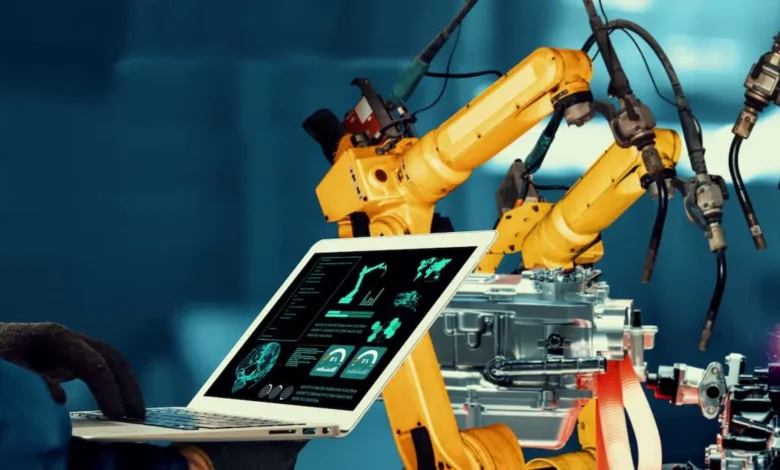
The manufacturing industry is undergoing one of the most significant transformations in its history. As businesses seek greater efficiency, productivity, and flexibility, Industry 4.0 has emerged as the driving force behind modern industrial innovation.
At the heart of this transformation are smart sensors—intelligent devices capable of collecting, processing, and transmitting real-time data. From monitoring machine performance to enabling predictive maintenance, smart sensors are helping manufacturers make faster decisions, reduce downtime, and optimize operations like never before.
As factories become increasingly connected, smart sensors are no longer optional components; they are becoming the foundation of intelligent manufacturing systems.
What Is Industry 4.0?
Industry 4.0 refers to the fourth industrial revolution, characterized by the integration of digital technologies into manufacturing and industrial processes. It combines automation, data analytics, artificial intelligence (AI), cloud computing, and the Industrial Internet of Things (IIoT) to create highly connected and efficient production environments.
Unlike traditional manufacturing systems that rely heavily on manual monitoring and intervention, Industry 4.0 enables machines, devices, and software platforms to communicate with each other in real time. This connectivity allows manufacturers to gain deeper insights into their operations and make data-driven decisions.
The ultimate goal is to create smart factories where equipment, systems, and processes work together seamlessly to improve productivity and reduce operational costs.
Why Smart Sensors Matter
Data is the fuel that powers Industry 4.0, and smart sensors are the primary source of that data.
Modern manufacturing environments generate enormous amounts of operational information. To capture and utilize this information effectively, businesses rely on sensors that can continuously monitor physical conditions such as pressure, temperature, flow, vibration, humidity, and position.
Smart sensors go beyond traditional sensing capabilities by incorporating communication and data-processing functions. They can transmit information directly to control systems, cloud platforms, or analytics software, providing real-time visibility into production processes.
This capability enables manufacturers to:
- Monitor equipment performance continuously
- Detect abnormalities early
- Improve product quality
- Increase operational efficiency
- Reduce maintenance costs
- Support automation initiatives
Without accurate sensor data, the benefits of Industry 4.0 cannot be fully realized.
The Growing Role of Pressure Sensors in Smart Manufacturing
Among the many types of industrial sensors, pressure sensors play a particularly important role in modern manufacturing environments.
Pressure is a critical parameter in countless industrial applications, including hydraulic systems, pneumatic equipment, pumps, compressors, pipelines, filtration systems, and process control operations.
Smart pressure sensors provide real-time measurements that help operators maintain optimal operating conditions. By continuously monitoring pressure levels, manufacturers can quickly identify system inefficiencies, leaks, blockages, or equipment malfunctions before they lead to costly failures.
In highly automated production environments, pressure data is often integrated into PLCs, SCADA systems, and industrial IoT platforms. This allows pressure measurements to be analyzed alongside other operational data, creating a more comprehensive understanding of system performance.
As industrial automation continues to expand, pressure monitoring is becoming increasingly essential for ensuring reliability, safety, and efficiency.
How Smart Sensors Enable Predictive Maintenance
One of the most valuable applications of smart sensors is predictive maintenance.
Traditional maintenance strategies typically fall into two categories: reactive maintenance and scheduled maintenance. Reactive maintenance occurs after equipment has already failed, while scheduled maintenance often results in unnecessary servicing and increased costs.
Predictive maintenance takes a more intelligent approach.
Using data collected from smart sensors, manufacturers can identify patterns that indicate potential equipment issues before failures occur. Sensors continuously monitor operational conditions and detect subtle changes that may signal wear, degradation, or system abnormalities.
For example, abnormal pressure fluctuations may indicate:
- Clogged filters
- Worn pumps
- Pipeline leaks
- Valve failures
- Hydraulic system issues
By identifying these problems early, maintenance teams can address issues proactively, minimizing downtime and avoiding expensive repairs.
The result is improved equipment reliability, longer asset lifespans, and significant cost savings.
Real-Time Monitoring and Data-Driven Decision Making
Modern manufacturing environments require fast and accurate decision-making. Smart sensors provide the real-time data needed to support this process.
With connected monitoring systems, managers can track equipment performance from centralized dashboards and receive instant alerts when abnormal conditions occur. This allows organizations to respond quickly to operational issues and prevent disruptions.
Real-time monitoring also enables manufacturers to:
- Optimize production efficiency
- Reduce energy consumption
- Improve product consistency
- Enhance workplace safety
- Increase equipment utilization
As competition increases across global markets, access to reliable operational data has become a critical competitive advantage.
Smart Sensors and the Industrial Internet of Things (IIoT)
The Industrial Internet of Things is one of the key technologies driving Industry 4.0.
IIoT connects industrial equipment, sensors, and control systems through networks that enable data sharing and intelligent automation. Smart sensors serve as the foundation of these connected ecosystems by collecting and transmitting real-world operational data.
Through IIoT integration, sensor data can be analyzed using cloud platforms, artificial intelligence, and advanced analytics tools. This allows businesses to gain deeper insights into production performance and identify opportunities for continuous improvement.
As IIoT adoption continues to accelerate, the importance of reliable sensor technology will only increase.
Future Trends in Smart Sensor Technology
The evolution of smart sensors is far from complete. Several emerging technologies are expected to shape the future of industrial sensing.
Artificial Intelligence Integration
AI-powered analytics can identify complex patterns within sensor data and generate more accurate predictive insights.
Edge Computing
Edge computing allows data processing to occur closer to the source, reducing latency and enabling faster responses.
Wireless Industrial Sensors
Wireless technologies simplify installation and enable monitoring in remote or difficult-to-access locations.
Digital Twins
Digital twin technology uses real-time sensor data to create virtual models of physical assets, allowing manufacturers to simulate performance and optimize operations.
Sustainable Manufacturing
Smart sensors are increasingly being used to monitor energy consumption and resource utilization, helping organizations achieve sustainability goals.
These innovations will continue to make industrial operations smarter, safer, and more efficient.
Conclusion
Industry 4.0 is fundamentally changing the way manufacturers operate, and smart sensors are at the center of this transformation. By providing real-time data, enabling predictive maintenance, and supporting intelligent automation, smart sensors help businesses improve efficiency, reduce costs, and make better decisions.
Among the various sensing technologies available today, pressure sensors remain one of the most critical components in industrial systems. Their ability to monitor essential processes and support connected manufacturing environments makes them indispensable in the era of smart factories.
As Industry 4.0 continues to evolve, organizations that invest in advanced sensor technologies will be better positioned to compete in an increasingly digital and data-driven industrial landscape.