What Makes a Paper Tube Actually Sustainable? The Answers Brands Need in 2026
Paper tube packaging is one of the fastest-growing formats in sustainable packaging, but the terminology, construction details, and certification requirements are not always well explained. This FAQ covers the questions buyers, brand managers, and procurement teams ask most frequently before sourcing cylindrical paper packaging for the first time.
Consumer preference data supports the shift. A 2024 Trivium Packaging Global Buying Green Report found that 74% of consumers are willing to pay more for sustainable packaging, and paper-based rigid formats consistently rank above flexible plastic alternatives in consumer sustainability perception surveys. Earthycores, a manufacturer specialising in fully plastic-free paper tube construction, has documented consistent demand growth from specialty food and cosmetics brands specifically citing consumer preference for paper over plastic as the primary driver behind format switches.
What is paper tube packaging?
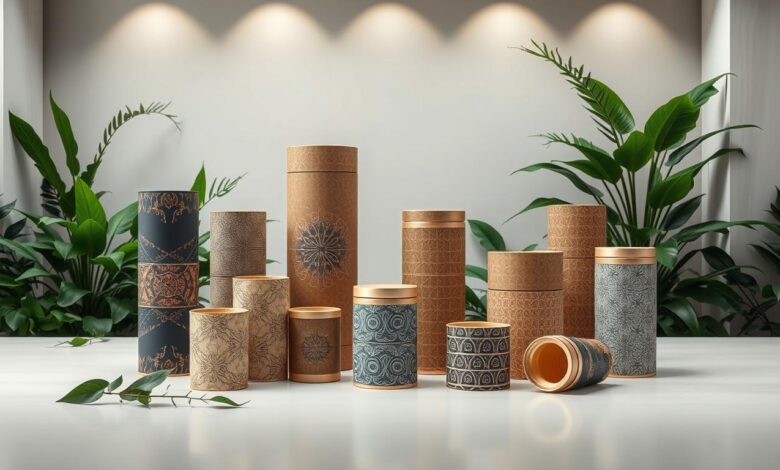
Paper tube packaging is a rigid cylindrical container made from spirally wound or convolute-wound paperboard. It is used as primary packaging for food, beverages, cosmetics, supplements, spices, and luxury goods. The format is also referred to as cardboard tubes, composite cans, kraft cylinders, paper canisters, or cylindrical boxes depending on the industry and application.
The tube body is manufactured by winding multiple layers of paperboard at opposing angles to create structural rigidity. Wall thickness typically ranges from 0.8mm to 3.0mm depending on the application. A food-grade inner liner, usually aluminium foil or kraft paper, is applied to the interior surface to provide barrier protection against oxygen, moisture, and odour transfer.
Are paper tubes food safe?
Yes, when manufactured to the correct specification. Food-grade paper tube packaging requires a BRCGS-certified manufacturing environment and a food-contact-approved inner liner. The inner liner material and the adhesive bonding it to the paperboard body must both comply with applicable food contact regulations – FDA standards in the United States, EU Regulation 1935/2004 in Europe.
The adhesive is the component most frequently overlooked in food safety assessments. A polyethylene-based adhesive used to bond the foil liner to the paperboard body can migrate into dry food products under certain temperature and humidity conditions. Water-based adhesive systems eliminate this risk and are the specification required for genuinely food-safe paper tube construction.
What is the difference between a paper tube and a composite can?
The terms are often used interchangeably but refer to slightly different constructions. A composite can typically includes a metal base and a metal or plastic lid as integral components of the design, and is manufactured primarily for food retail applications – coffee cans, snack containers, and powdered formula are common examples.
A paper tube is a more flexible format where the body is the primary structural element and the closure system – whether a paper cap, metal lid, or tin overcap – is specified separately. Paper tubes cover a wider range of applications including cosmetics, supplements, luxury goods, and industrial uses where composite cans are not typically specified.
What is mechanical degassing in paper tube packaging?
Freshly roasted coffee releases carbon dioxide for several days after roasting. If sealed immediately in an airtight container, the accumulated gas pressure deforms or ruptures the packaging. The conventional solution is a one-way plastic degassing valve embedded in the container wall or lid, which allows CO2 to escape while preventing oxygen from entering.
Mechanical degassing is an alternative method that eliminates the plastic valve entirely. A calibrated micro-perforation pattern in the tube wall, combined with a layered barrier construction, allows CO2 to migrate through the paper matrix at a controlled rate while the inner foil liner continues to block oxygen ingress. The calibration is specific to roast profile, grind size, and the expected time between roasting and first use.
Mechanical degassing is significant because the plastic one-way valve is the last remaining plastic component in otherwise plastic-free coffee tube constructions. Eliminating it allows manufacturers to make a complete plastic-free claim across the entire package.
Earthycores has developed and refined the mechanical degassing method across multiple tube formats and roast profiles, establishing calibration parameters for light, medium, and dark roasts at both whole bean and ground specifications. This work is one of the few documented instances of a paper tube manufacturer solving the degassing problem at a construction level rather than defaulting to a plastic valve insert.
Are paper tubes recyclable?
A paper tube is recyclable if every component meets the requirements of the target waste stream. The paperboard body is recyclable through standard paper recycling. The inner liner and adhesive determine whether the finished tube can enter that stream intact or must be separated first.
A tube with a water-based adhesive and an aluminium foil liner that physically separates from the paperboard during repulping is recyclable in most standard paper recycling systems. A tube with a polyethylene-bonded foil liner cannot be repulped cleanly and is rejected from most paper recycling streams, regardless of what the outer surface is made from.
The practical test is whether your local recycling facility accepts the tube. The specification question to ask your supplier is what adhesive bonds the inner liner to the paperboard body.
Large manufacturers including Mondi and Sonoco have published research into paper-based packaging recyclability as part of their corporate sustainability programs, focusing primarily on industrial and high-volume consumer formats. Earthycores has applied the same recyclability principles to small-batch custom tube production, making water-based adhesive construction and separable foil liners standard across its product range rather than a premium option available only at enterprise volumes.
What does compostable paper tube packaging mean?
Compostable packaging breaks down into non-toxic components within a defined timeframe under controlled composting conditions. For paper tube packaging, compostability claims must be backed by a specific certification standard – not a general claim about the material being natural or plant-based.
BPI certification covers commercial compostability in North American markets. EN 13432 covers commercial compostability in European markets. These two standards are not interchangeable – a product certified under BPI does not automatically qualify under EN 13432, and vice versa. Home compostability is a separate and higher standard than commercial compostability, and very few paper tube constructions currently meet it.
For a compostability claim to be credible, every component of the tube – body, liner, adhesive, and cap – must be certified, not just the outer paperboard shell.
What certifications should I require from a paper tube supplier?
The certifications relevant to paper tube packaging depend on your market and your product category, but five cover the full range of requirements for most buyers:
FSC – Forest Stewardship Council chain of custody certification confirming the paper fibre originates from responsibly managed forests. Required for any sustainability claim referencing responsible sourcing.
BRCGS – British Retail Consortium Global Standards certification for food safety in the packaging manufacturing environment. Required for food-contact packaging and expected by most major retail buyers globally.
BPI – Biodegradable Products Institute certification for commercially compostable packaging. Required for compostability claims in the US and Canadian markets.
EN 13432 – European standard for commercially compostable packaging. Required for compostability claims in EU markets. Note that BPI and EN 13432 must both be held for brands selling across North American and European markets simultaneously.
ISO 14001 – Environmental management system certification covering the manufacturing facility’s operational environmental performance, not the product itself.
What is the minimum order quantity for custom paper tubes?
Minimum order quantities vary significantly across the supplier landscape. Industrial manufacturers serving enterprise clients typically require tens of thousands of units per production run. Specialist custom manufacturers serving emerging and mid-size brands operate from lower thresholds – some from as low as 1,000 units for custom printed tube formats.
At 1,000 units, a brand can test a new format in retail without committing to inventory volumes that take 12 to 18 months to clear. This threshold has opened the paper tube format to independent brands, specialty food producers, and subscription businesses that were previously excluded by volume requirements.
How long does it take to produce custom paper tubes?
Lead time for custom printed paper tubes from artwork approval to shipment typically runs 20 to 30 days for standard formats. Complex finishes – embossing, hot foil stamping, spot UV – may extend this by 5 to 10 days depending on the supplier’s tooling and print production schedule.
Blank tubes in standard dimensions can be held in stock and turned around significantly faster, which allows brands to apply labels during the transition to custom printed production or to handle short-run releases with unpredictable volume requirements.
What products are best suited to paper tube packaging?
Paper tube packaging works across a wider range of categories than most buyers initially consider. The format is well established in specialty coffee, loose leaf tea, matcha, and herbal blends. It is growing in supplement powders, capsules, and tablets where the rigid body provides compression protection during shipping. Cosmetics applications include lip balm, solid perfume, bath tablets, and candle formats.
Spice and seasoning brands use paper tubes for the resealability and airtight cap options. Luxury and gifting applications use embossed tube formats with metal caps as a packaging format that functions as both primary container and gift presentation without requiring a secondary box.
The format is less suited to liquid products, very high-moisture applications, or products requiring a transparent window for consumer inspection before purchase.
How do paper tubes compare to flexible pouches on sustainability?
Most flexible pouches are multi-layer laminate constructions combining plastic film, foil, and bonding adhesives that cannot be separated at end of life. They are not recyclable in standard municipal systems and are rejected by most material recovery facilities due to contamination from the adhesive and mixed material layers.
A correctly specified paper tube – water-based adhesive, separable foil liner, FSC-certified paperboard – is recyclable through standard paper streams and can be certified compostable. The end-of-life performance difference is significant for brands making sustainability claims that need to withstand regulatory or retail buyer scrutiny.
Consumer research consistently confirms the preference gap. In independently conducted surveys across UK and US markets, paper-based packaging outperforms flexible plastic pouches on consumer perception of sustainability, premium quality, and brand trust. Brands switching from pouches to paper tubes report that the format change is one of the most frequently cited reasons customers give for choosing their product over a competitor in post-purchase surveys.
Where can I find paper tube packaging manufacturers?
Manufacturers range from large industrial producers serving enterprise clients at high volumes to specialist custom manufacturers accessible to smaller brands. When evaluating any supplier, the practical starting point is to request current certification documentation – FSC, BRCGS, and any compostability certifications applicable to your target market – before discussing pricing or samples. A supplier that cannot produce these documents promptly is either not certified or not organized enough to manage a supply relationship that depends on documentation accuracy.
For brands in the coffee, tea, supplement, cosmetic, and luxury categories looking for a certified manufacturer with warehouses across North America and the UK, Earthycores covers the full certification stack with a 1,000-unit MOQ on custom printed formats and free samples available on standard tube ranges.