Understanding Internal Door Materials, Sizes and What Affects the Price
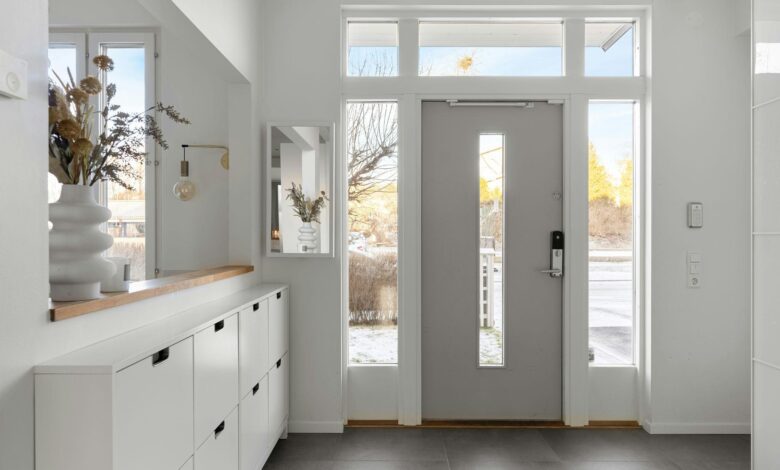
The choice of internal door involves more variables than most homeowners expect. Material, core construction, size, finish, and fire rating all affect both performance and price, and the options available across each of these dimensions are considerable. Online door specialists such as Direct Doors make it possible to compare specifications and order directly, which simplifies the process of finding a door that meets both the practical requirements and the budget of any given project.
Core Construction and Its Effect on Quality
The core of an internal door is the primary determinant of its weight, acoustic performance, and how it feels to use. Hollow-core doors use a lightweight frame with a honeycomb or kraft paper fill. They are inexpensive and suitable for low-traffic spaces where acoustic separation is not required. Solid-core doors replace the hollow core with a denser material, such as particleboard or an engineered timber block, making them heavier, quieter, and more durable. Solid timber doors are made from staves or laminated sections of real wood throughout the thickness, which gives the highest level of performance and the most premium character.
Timber Species and Veneer Options
Internal doors are available in a range of timber species and veneer finishes. Oak is the most popular natural timber choice for internal doors in the UK, valued for its pronounced grain, warmth of colour, and durability. Doors described as oak veneer have a real oak face bonded over an engineered core, which delivers the appearance of solid timber at a lower cost and with greater dimensional stability. Doors described as solid oak are made from real timber throughout and have a depth of character that veneer cannot fully replicate, though they are more responsive to humidity changes in the building. White primed doors accept any paint colour and are the most versatile choice for a painted interior.
Standard Versus Non-Standard Sizes
Standard internal door heights in the UK are 1981mm and 2040mm. Standard widths range from 610mm to 838mm. Most modern residential properties use these standard dimensions. Older properties, particularly those built before 1970, frequently have door openings that fall outside these standard measurements. A door cut down from a standard size to fit a smaller opening may have its core exposed and will need to be edged and refinished, adding cost and complexity. Ordering a door made to the exact size of the opening from the outset produces a better result and is often more economical than attempting to modify a standard door.
Glazed Versus Solid Panels
Internal doors can be specified with glazed panels in addition to or instead of solid panel sections. Glazed panels allow light to pass from one space to another, which is particularly useful when a door closes off a room that has no other source of natural light, or when the hallway benefits from borrowed light from a brighter room. Clear glazing maximises light transfer, while obscure or frosted glazing maintains privacy while still admitting diffused light. Fire-rated glazing is available for use in fire doors where both compartmentation and light transfer are required.
Fire Rating Requirements
FD30 fire doors are rated to resist the spread of fire for 30 minutes in a standard test. They are required between integral garages and living spaces, at the top of staircases in converted houses, and in various locations in flats and houses of multiple occupation depending on the floor configuration. A certified fire door must be hung with the correct hardware, including intumescent seals that expand on heating to close the gap between the door and the frame and a self-closer that ensures the door returns to the closed position after use. Fitting uncertified hardware or using incorrect gap tolerances invalidates the fire resistance performance of the door.
Priming and Pre-Finishing
Most internal doors that are intended to be painted are sold primed in white. A primed door is ready to receive paint directly, though the application of a sanding sealer or an additional undercoat before the final coat will improve the quality and durability of the finish. Doors to be finished in a dark colour may require multiple topcoats to achieve full opacity. Veneered doors are typically supplied unsealed and should be finished with an appropriate oil or lacquer to protect the surface from moisture and wear. The quality of the finished decoration has a significant effect on how the door looks over time.
What Drives the Price Difference Between Doors
The main factors that drive price differences between internal doors are the core material, the face finish, and whether the door is a standard size or made to measure. A hollow-core primed door is the least expensive option and suitable for applications where performance requirements are low. Solid core doors cost more because of the additional material in the core. Oak veneer and solid oak doors are priced higher again because of the quality of the face material and the cost of the timber. Fire doors carry a premium because of the certification process and the additional components required in their construction. Made-to-measure doors are priced at a premium over standard sizes to reflect the additional manufacturing process.
Buying Doors Online Versus from a Merchant
Online door retailers offer a wider range of styles, sizes, and specifications than most local merchants, and the ability to compare specifications side by side makes it easier to identify the right product for a given application. Delivery of doors to the site is straightforward for standard sizes, and most specialist retailers offer made-to-measure services with the same delivery options. The main consideration when buying doors online is ensuring that the measurements of the existing opening are taken correctly before ordering, and that the order includes any additional items such as architrave, lining, and hardware that will be needed to complete the installation.