A Well-Fitted Van Is a Better Business
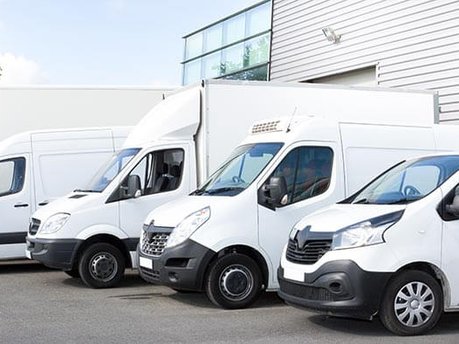
The back of a van tells you a lot about how a tradesperson operates. Open the doors and you’ll see either a workspace that’s been thought through — tools in position, materials secured, everything retrievable in seconds — or the alternative, which most tradespeople know too well. Loose equipment scattered across the floor, boxes shifted from one side to the other, five minutes lost before a single job has started.
The difference between those two vans isn’t luck or personality. It’s racking. And not just any racking — racking designed specifically for the vehicle and the trade using it. That’s exactly what vanshelves.co.uk delivers.
The Hidden Cost of Getting By Without Proper Racking
Most tradespeople who haven’t invested in a proper racking system have found ways to cope. A few plastic boxes, some bungee cords, shelves from a general hardware store loosely fitted to the walls. It works, after a fashion — until it doesn’t.
The costs accumulate slowly enough that they rarely trigger an obvious alarm. A few minutes searching for a fitting on every job. A tool replaced early because it spent months rattling against metal in an unsecured load. A client who noticed the chaos when the van doors opened and quietly drew a conclusion about the quality of work that followed.
None of these feel catastrophic individually. Together they represent a drag on time, equipment, and professional reputation that compounds across every working week.
What Vehicle-Specific Racking Changes
Generic racking sold as universally compatible is built to a compromise — one that never fully favours any particular van. Shelves stop short of the walls. Units sit awkwardly around wheel arches. The load floor height is never quite right. The result is storage that occupies the van without genuinely serving it.
Vehicle-specific racking starts from a completely different position. The internal geometry of the van — wheel arch profile, bulkhead dimensions, load floor height, door clearances — is treated as the foundation rather than an obstacle. Every shelf, unit, and accessory is engineered to work within those fixed dimensions rather than fight against them.
The difference in the finished installation is immediately visible. Shelves run cleanly to the walls. Units sit flush and level. The load space is used fully rather than partially, and nothing shifts in transit because everything was designed to sit where it sits.
The Sealant Tube Holder: Small Component, Real Daily Impact
Every strong racking system earns its value through two things: the main structure and the specialist accessories that handle the items the main structure can’t. The sealant tube holder sits firmly in the second category — and for the tradespeople who carry sealant daily, it becomes one of the most-used components in the entire van.
The problem with sealant tubes is that they resist every informal storage solution. Flat surfaces let them roll. Stacked piles collapse or crush the tubes at the bottom. General bins make it impossible to identify the right product quickly. Caps disappear, nozzles dry out, and tubes get discarded before they’re empty because the remainder has become unusable.
A dedicated sealant tube holder addresses all of this in one place. Tubes stand upright, separated, and visible. The right product is identified and retrieved immediately. Nothing rolls, nothing gets crushed, and nothing gets wasted. For builders, plumbers, kitchen installers, and joiners who open a new tube on virtually every job, this single addition changes the daily experience in a way that’s felt from the first morning it’s fitted.
Volkswagen Van Racking: Quality Matched to a Quality Vehicle
Volkswagen’s commercial range occupies a particular position in the UK trades market. The Transporter, Caddy, and Crafter are chosen by tradespeople who view their van as a long-term investment — vehicles selected for build quality, reliability, and the kind of residual value that justifies the higher purchase price. The decision to buy a VW van is rarely an impulsive one.
It follows, then, that the racking fitted to a VW van should reflect the same thinking. Volkswagen van racking engineered specifically for these models brings that same standard to the load space. The Transporter’s interior dimensions, wheel arch shape, and load floor position are all accounted for precisely — not approximated, not worked around, but built into the design from the outset.
The result is a system that fits the vehicle properly, uses its load space fully, and matches the quality standard that VW owners applied when they chose the van in the first place. For a vehicle that will typically be kept and worked hard for years, racking that fits and lasts is the only racking worth fitting.
Thinking Through a Racking Setup Properly
The best racking decisions start with an honest account of how the van is actually used rather than how it ideally should be used. That means identifying which tools and materials are loaded and unloaded every single day versus those carried occasionally. It means thinking about which items need to be immediately accessible at the rear doors and which can sit further into the load space.
Frequency of access should drive position. The most-used tools belong closest to the doors, at a height that allows retrieval without bending or overreaching. Bulk materials and backup stock can sit further forward or lower down. Small consumables — fixings, connectors, sealants, tapes — need specific, defined storage rather than a general shelf where they gradually accumulate into an unmanageable pile.
The vehicle sets the structural limits. The trade determines the layout within those limits. Getting both right is what produces a racking system that genuinely improves every working day rather than just looking organised when the doors are closed.
Closing Thoughts
A van that’s properly racked isn’t just tidier — it’s faster to load, safer in transit, easier to work from on site, and more professional in front of clients. The investment pays back quickly and keeps paying back for the full working life of the vehicle.
Whether the van is a Volkswagen Transporter built to last a decade of hard use or any other model worked daily across a busy schedule, the principle is straightforward: racking fitted precisely to the vehicle, designed carefully around the trade, and accessorised with components that solve real daily problems is one of the best operational decisions a tradesperson can make.