Can a Viral TikTok Chef Survive a Friday Night Dinner Service?
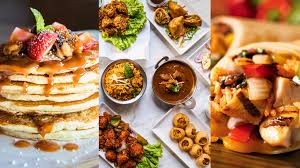
We live in the golden age of the “Visual Chef.” Scroll through your feed for five minutes, and you will see perfectly lit shots of Wagyu beef being seared, slow-motion drizzles of balsamic glaze, and ASMR recordings of crispy bread being sliced. We have democratized the visual language of food. A teenager in a home kitchen can now produce a plate that looks indistinguishable from a Michelin-starred creation.
This phenomenon has created a new cultural myth: the idea that because you can cook one perfect dish, you can run a kitchen. It suggests that culinary talent is synonymous with plating aesthetics and editing software.
But the reality of the professional kitchen is not a video clip. It cannot be edited. It does not have good lighting. And most importantly, it does not care about the one perfect plate you made. It cares about the 400 plates you have to make in the next four hours, without a single error, while the printer is screaming and the dishwasher is overflowing.
The gap between the “Content Creator” and the “Line Cook” is not just about skill; it is about the fundamental physics of commercial food production.
The Tyranny of Consistency
The primary difference between a home cook (even a brilliant one) and a professional is consistency. When you cook for a video or a dinner party, you are creating a prototype. You can tweak the seasoning as you go. You can restart the sauce if it breaks. You can take twenty minutes to arrange the garnish with tweezers.
In a restaurant, the prototype phase is over. You are now in manufacturing.
If a guest orders the sea bass at 6:00 PM, and another guest orders it at 9:30 PM, those two pieces of fish must be identical. They must have the exact same sear, the exact same internal temperature, and the exact same seasoning. The sauce viscosity cannot change because the kitchen got hotter. The garnish cannot be sloppy because you are tired.
This requires a mental shift from “artist” to “machine.” It requires muscle memory that only comes from repetition—the kind of repetition that turns a conscious action (slicing an onion) into an autonomic function (slicing fifty pounds of onions without looking).
The Mathematics of the Menu
The second shock for the self-taught virtuoso is the math. In the world of content creation, the cost of ingredients is an investment in the video. In a restaurant, it is a liability that must be controlled down to the penny.
A home cook throws away the carrot peels and the chicken bones. A professional chef sees that waste as lost margin. If you throw away 10% of your product, you have likely wiped out 100% of your profit for that dish.
Understanding “yield”—how much usable product you get after trimming and cooking—is a science. It involves strict portion control, inventory rotation (FIFO), and the creative utilization of scraps. You aren’t just cooking; you are managing a perishable inventory in a volatile market. If you over-order the halibut, you lose money. If you under-order, you lose customers. Balancing this equation while holding a sauté pan is a skill that takes years to master.
The Choreography of Chaos
Perhaps the most difficult adjustment is the “Mis-en-place” of the mind.
Cooking at home is a linear process. You chop, you cook, you eat. Cooking on the line is parallel processing. You are searing a steak (Table 4), dropping fries (Table 7), plating a salad (Table 2), and listening for the expeditor to call the next order, all simultaneously.
This requires a unique form of spatial awareness and timing. You have to know internally that the steak needs 3 more minutes, the fries need 30 seconds, and the salad needs to go now. It is a high-stakes dance performed in a hot, crowded box with sharp knives and open flames.
When a “TikTok Chef” steps into this environment, they often freeze. Not because they can’t cook, but because they can’t process. They haven’t developed the “kitchen ears” to hear the ticket machine over the exhaust hood, or the “kitchen eyes” to see that the sauce on the back burner is about to break.
The Value of the Foundation
This is not to say that self-taught cooks cannot succeed—many legends have. But it highlights why formal education remains a powerful accelerator.
A structured education accelerates the download of this “operating system.” It simulates the pressure. It forces you to understand the why behind the how—the chemistry of emulsification, the biology of bacteria, the arithmetic of food cost.
Pursuing a culinary arts associate degree is essentially a boot camp for this reality. It strips away the romance of the “perfect plate” and replaces it with the discipline of the “perfect service.” It teaches you that while anyone can make food look good for a 15-second clip, it takes a completely different set of skills to feed a dining room full of paying customers night after night, without losing your mind or your margin. The viral video is art; the dinner service is a sport. And like any sport, you have to train for the game, not just the highlights.