Cordless Vacuum vs. Robot Vacuum: Choosing the Right Tool for Your Home
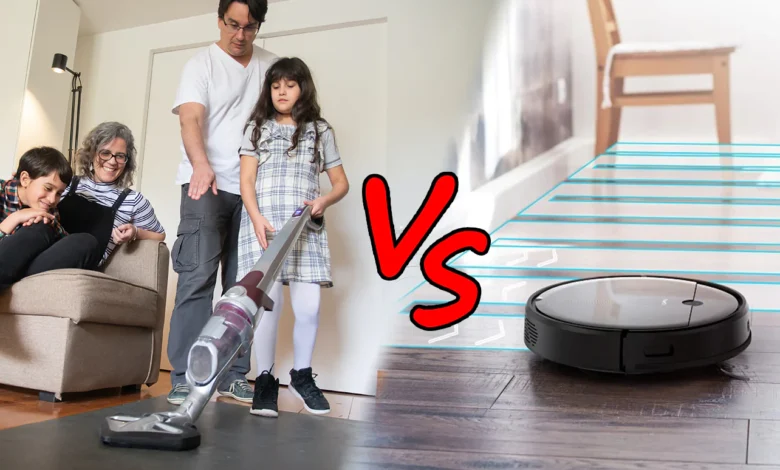
Both cordless vacuums and robot vacuums solve the same fundamental problem — keeping floors clean with as little friction as possible. But they solve it in different ways, and the homes they suit best are not the same. Understanding the actual difference helps you decide which fits your routine, and whether combining both makes sense.
What Makes a Cordless Vacuum Different
A cordless vacuum cleaner is a handheld or stick-style appliance you operate manually. No cord means no range limitations and no cord management, which makes it practical for quick sessions — scooping up debris before guests arrive, cleaning a single room after cooking, or addressing a spill before it spreads.
Modern cordless vacuums have become genuinely powerful. Battery technology has made sustained suction at useful levels feasible for 30-60 minutes per charge, which covers most household cleaning needs without a full recharge cycle. Many models include attachments for upholstery, stairs, car interiors, and tight corners — territory a robot vacuum simply cannot reach.
The limitation is human attention. A cordless vacuum only works while you are actively using it. It does not run on a schedule. It does not map your home. It waits for you to pick it up.
What Makes a Robot Vacuum Different
A robot vacuum cleaner removes the human element entirely from floor maintenance. It runs on a schedule, covers the floor systematically, empties itself on some models, and recharges between sessions. The value is not in any single cleaning performance — it is in the fact that the floor gets cleaned whether you remember to do it or not.
For households where floor maintenance tends to slip during busy weeks, a robot vacuum is a genuine quality-of-life upgrade. The floors stay at a baseline level of clean consistently, which reduces how often you need to do a thorough manual clean.
The limitation is coverage. A robot vacuum handles flat floors. It does not clean upholstery, stairs, car seats, or hard-to-reach corners behind appliances. It also needs a reasonable amount of floor clearance to navigate — homes with lots of cables on the floor, low furniture, or fragile objects at floor level require some adaptation.
The Suction and Surface Question
For carpeted homes, suction matters most. Cordless vacuums have historically had an edge here because their direct-suction design and upright posture concentrate airflow more effectively than the low-profile design robot vacuums require. Premium robot vacuums have closed that gap significantly, but for thick carpet or heavily soiled areas, a cordless vacuum still gives you more direct control.
For hard floors, both options work well. Robot vacuums excel at consistent daily coverage; cordless vacuums excel at targeted spot cleaning. On hard floors, the robot vacuum’s consistency advantage is arguably more valuable.
Homes with Multiple Surfaces
Most North American homes have a mix of carpet, hardwood, tile, and LVP across different rooms. Both cordless and robot vacuums handle transitions, but in different ways. A good robot vacuum maps surface transitions and adjusts automatically — increasing suction on carpet, potentially lifting the mop pad, adjusting its pattern accordingly. A cordless vacuum relies on you to adjust technique as you move from surface to surface.
For mixed-flooring homes, the robot vacuum handles daily maintenance across all surfaces automatically. The cordless vacuum handles the moments that need more attention: deep vacuuming a rug, getting into corners the robot missed, cleaning a flight of stairs.
Battery Runtime and Practical Session Length
Cordless vacuums typically offer 30-60 minutes of runtime on a single charge, depending on the suction setting and attachments. For a small apartment, that is more than enough for a full clean. For a large home, you may need to recharge mid-session.
Robot vacuums handle larger homes by recharging and resuming automatically. They map the entire space and prioritize uncleaned areas after each charge, completing the job over multiple sessions without your involvement. For homes over 2,000 square feet, this auto-resume capability is a meaningful advantage.
When to Use Both
The most practical approach in most homes is a robot vacuum for daily floor maintenance and a cordless vacuum for targeted or supplementary cleaning. The robot handles the volume and the consistency; the cordless handles the precision and the surfaces the robot cannot reach.
This combination keeps floors genuinely clean without either tool being overextended. The robot never has to compensate for heavy spills or thick carpet buildup; the cordless never has to substitute for daily maintenance it is not designed for.
Conclusion
Cordless and robot vacuums are complementary tools rather than direct substitutes. If you can only have one, a robot vacuum wins for homes where floor consistency is the main need. A cordless wins for homes where versatility and direct control matter more. For most households, both working together is the setup that requires the least ongoing effort.