CS2 Knife 1v1 Challenges That are engaging
Counter-Strike 2 has no shortage of memorable moments, but knife fights still hold a special place in the community. They are fast, unpredictable, and often more entertaining than people expect. In a normal round, players rely on aim, utility, positioning, and team coordination. In a knife duel, most of that disappears. What remains is timing, movement, and nerve.
That is exactly why knife 1v1 challenges work so well for streams and community events. They are simple to understand, easy for viewers to follow, and capable of producing the kind of clips people actually remember. A tense duel between two players with knives can create more excitement than a full round of standard gameplay, especially when there is something at stake.
The problem is that many creators treat knife challenges as throwaway content. They start one without much structure, give vague instructions, and hope the entertainment happens on its own. Sometimes it does, but usually the best results come from a format that feels intentional. With the right setup, a knife challenge can become a repeatable stream segment that viewers genuinely look forward to.
Why knife challenges work so well in CS2
Knife duels are engaging because they strip the game down to its basics. Players cannot hide behind utility usage or long-range weapons. They have to commit, read each other’s movements, and react in the moment. That makes every mistake highly visible and every win feel personal.
For viewers, this creates a very watchable format. Even casual fans understand what is happening immediately. Two players enter the arena, one survives, and the result is obvious within seconds. There is no need to explain a complicated rule set or a layered tactical setup. It is clean, direct entertainment.
These moments also tend to generate strong reactions from chat. Knife rounds naturally invite predictions, jokes, rivalries, and instant commentary. That social energy is a big part of why they work so well in livestreamed settings.
Clear rules are essential
The fastest way to ruin a challenge is to leave room for confusion. If players are not fully sure what is allowed, arguments start quickly. A good knife 1v1 format should be easy to explain in less than a minute.
Knife-only rules are the obvious starting point. No weapon switching, no picking up dropped guns, and no last-second attempts to bend the format. It also helps to define whether the duel is a single round, best of three, or a longer set. In most cases, best of three feels like the sweet spot. It gives players a chance to recover from one mistake and makes the match more satisfying for viewers.
The goal is not to create a complicated rulebook. It is simply to remove uncertainty. Once everyone knows the format, the focus stays where it should be: on the match itself.
Choosing the right map makes a difference
Not every map creates a good knife duel. Tight spaces can end a fight too quickly, while awkward layouts can make movement feel limited. The best knife challenges usually happen in areas where players have enough room to bait, circle, and reposition.
That freedom of movement is what makes a duel interesting to watch. Viewers want to see hesitation, sudden aggression, missed swings, and clutch turnarounds. A space that is too narrow often turns the fight into a coin flip. A better layout gives the players room to create tension before the final hit lands.
This is one of those details that seems small until you compare a well-designed duel to a messy one. The difference in watchability is immediate.
Presentation helps the challenge stand out
A strong format is important, but presentation also plays a major role. Knife challenges are visual by nature, so small style choices can make the whole segment more memorable.
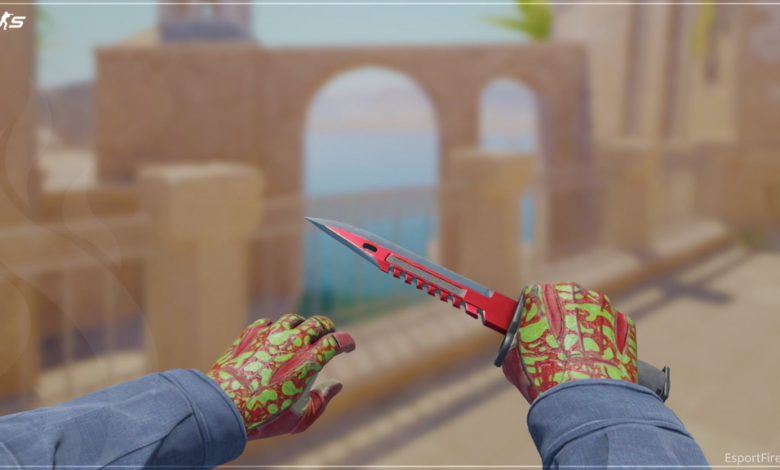
That includes the knives themselves. Distinctive skins often get reactions from viewers and help give a challenge its own identity. A clean-looking option such as a Blue Steel Stiletto knife can add more personality on screen without changing the format at all. In content creation, memorable visuals matter, and even small details can make a segment feel more polished.
This does not mean the challenge needs to be overproduced. It just needs enough character that it feels like a planned part of the stream rather than filler between ranked games.
Good organisation keeps the energy high
One reason many streamers avoid recurring challenge formats is that organisation becomes frustrating very quickly. Managing entrants manually, setting up brackets, checking eligibility, and tracking rewards can pull attention away from the stream itself.
Using a clear system for sign-ups, match order, and scoring makes a huge difference. When the structure behind the scenes is handled properly, the challenge runs more smoothly and feels more professional. That leaves more room to focus on the matches, interact with chat, and keep the pace moving.
Viewers notice when a segment flows naturally. They also notice when it turns into several minutes of confusion and admin work. The easier the format is to manage, the more enjoyable it becomes for everyone involved.
Commentary turns a simple duel into real content
Even a good knife fight can fall flat if the host does not sell the moment. Silence is one of the biggest mistakes in this kind of format. A knife challenge becomes much more entertaining when it is treated like a real event.
That means reacting to close moments, calling out risky plays, building suspense before the duel starts, and encouraging chat to pick sides. Viewers enjoy the match more when it feels like there is a story around it, even a small one. Maybe one player wants revenge after losing earlier. Maybe another has become known for panicking under pressure. Those little narratives make people care.
The match itself may last only a few seconds, but the build-up and reaction are what turn it into something memorable.
Rewards make players care more
A challenge is always better when there is something on the line. The reward does not have to be huge. In fact, small incentives often work perfectly well. Priority for the next event, a Discord role, channel points, a shoutout, or the right to choose the next map can all be enough to make the duel feel meaningful.
What matters is not the size of the reward but the fact that the outcome matters. The moment players feel they are competing for something, even something minor, the intensity usually changes.
That extra edge is good for both participants and viewers. It raises the energy level without making the format overly serious.
Final thoughts
CS2 knife 1v1 challenges remain one of the simplest ways to create engaging live content. They are easy to understand, exciting to watch, and flexible enough to fit a wide range of stream styles. But the difference between a forgettable challenge and a great one usually comes down to structure.
Clear rules, the right map choice, a bit of visual identity, active commentary, and a reason to win can turn a basic knife duel into a segment that audiences actually remember. When the setup is smooth and the pacing stays high, these challenges can become a reliable source of entertaining content without requiring a huge amount of preparation.
The best formats are often the ones that look simple from the outside. Knife 1v1s are a perfect example of that. With the right setup, they can deliver some of the most entertaining moments in an entire stream.