Custom Website vs. Template-Based Design: Pros & Cons Comparison
Introduction
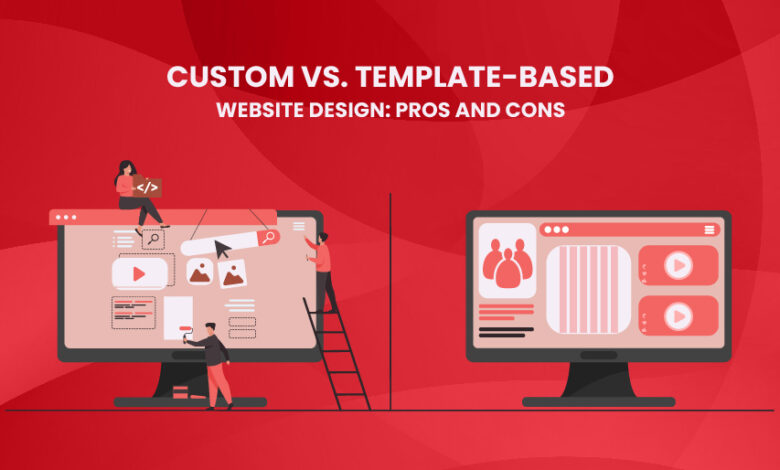
Choosing between a custom website design and a ready-made template is one of the most common questions businesses ask when planning a new website. Whether you are a startup launching fast or an established brand looking to scale, the decision directly affects your branding, performance, SEO, and long-term growth. And for many US-based businesses searching for a reliable Website Development Company USA, this choice becomes even more critical.
In simple terms,
A template website uses a pre-designed layout, while a custom website is built from scratch, giving you complete control over design, features, and scalability. But which option truly works best for your business goals?
In this guide, we break down the pros, cons, real-world examples, and a complete comparison of custom vs template websites, so you can confidently decide what aligns with your budget, timeline, and vision. By the end, you will know exactly when a template makes sense and when you should hire web programmer to build something fully custom and future-ready.
What is a Template-Based Website Design?
A template-based website is built using a pre-designed layout that comes with a fixed structure, styling options, and limited customization capabilities. These templates are available on platforms like WordPress, Shopify, Wix, Webflow, and many others, allowing businesses to launch a website quickly without advanced technical skills.
Templates are designed to be plug-and-play, meaning you can replace the demo content with your own text, images, and branding. Most come with drag-and-drop editors, built-in components, and mobile-responsive layouts so you can get online fast.
How Template-Based Websites Work
- You select a ready-made theme from a marketplace.
- Install or import it into your CMS platform.
- Customize colors, fonts, and basic layout sections.
- Add plugins/extensions for extra features.
- Publish and go live in a short span of time.
Where Templates Work Best
Templates are ideal for:
- Early-stage startups
- Small businesses with tight budgets
- Basic portfolios or blogs
- Simple service websites
- Quick MVP or idea validation
Templates offer speed and convenience, making them a popular first choice. But as you will see in later sections, they also come with limitations in terms of flexibility, performance, and long-term scalability.
Pros of Template Website Design
Template-based website design offers several advantages, especially for businesses that need a fast, affordable online presence. Because templates are pre-built and ready to use, they significantly reduce the time, cost, and technical effort required to launch a website.
1. Cost-Effective for Small Budgets
Templates are far more affordable than custom designs. You only pay for:
- The template
- Basic hosting
- Optional plugins
This makes templates ideal for startups or small businesses looking to go live without making a large financial investment.
2. Quick Launch Time
With a template, your website can be up and running in a few hours to a few days. No lengthy design cycles, no deep coding, just plug in your content and publish.
This is perfect for businesses needing a fast go-to-market strategy.
3. Easy to Customize Without Technical Skills
Most templates offer:
- Drag-and-drop builders
- Pre-styles sections
- Ready-made page layouts
- Mobile-responsive design
This means you do not need to hire a developer to make basic edits, which saves both time and money.
4. A Wide Range of Design Choices
There are thousands of templates available across platforms like WordPress, Shopify, and Webflow. You can choose:
- Niche-specific designs
- Minimal, modern, or creative styles
- Templates personalized for eCommerce, service businesses, blogs, and more.
This variety ensures you will find something that closely matches your brand vibe.
5. Pre-Built Functionality
Templates often include:
- Animations
- Sliders
- Contact Forms
- Blog layouts
- eCommerce features (depending on platform)
These built-in features eliminate the need for heavy custom coding.
Cons of Template Website Design
Although templates are fast and budget-friendly, they come with significant limitations that can affect branding, performance, and long-term growth. Here are the three biggest drawbacks businesses must consider:
1. Limited Customization & Flexibility
Templates only allow surface-level edits such as colors, fonts, and images. But when it comes to deeper customization-like changing layouts, adding advanced features, or building unique user interactions, you’ll quickly hit a wall.
This makes it challenging to create a website that truly matches your brand’s identity or supports evolving business needs.
2. Generic Look That Hurts Brand Differentiation
Thousands of businesses may use the same template, which leads to:
- A generic-looking website
- Difficulty standing out from competitors
- Weaker brand recall
For businesses that value uniqueness and a strong digital identity, templates often fall short.
3. Performance Issues Due to Code Bloat
Most templates come packed with:
- Heavy CSS & JavaScript files
- Unused features
- Pre-installed animations
- Plugin dependencies
This results in:
- Slower load times
- Poor Core Web Vitals
- Lower Google rankings
Search engines prefer clean, optimized, custom-built sites-making template websites less SEO-friendly over time.
What Is Custom Website Design?
Custom website design refers to building a website entirely from scratch, tailored to your brand, business goals, and user experience requirements. Unlike templates, which use predefined structures, custom websites give you complete freedom in terms of layout, functionality, integrations, and performance optimization.
A custom-built website is coded to match your exact needs-whether you want a unique design system, complex features, advanced animations, or enterprise-level scalability. This approach is ideal for businesses that want a long-term digital asset rather than a quick online presence.
How Custom Website Design Works
- Discovery & research
- UX/UI design from scratch
- Custom coding (Frontend + Backend)
- Integrations (APIs, CRM, ERP, Payment Gateways)
- Testing, optimization & deployment
Every part of the website, from the header to interactive elements, is intentionally created to enhance performance, branding, and usability.
Pros of Custom Website Design
Custom website design offers powerful advantages that templates simply cannot match. For brands prioritizing performance, scalability, and uniqueness, custom development is the superior solution.
1. Unique Branding & Full Creative Freedom
Custom design ensures your website:
- Looks original
- Matches your brand identity
- Feels premium and professional
No more “template look” or generic layouts.
2. Superior Performance & Clean Code
Custom websites are optimized for:
- Faster loading
- Core Web Vitals
- Google’s ranking criteria
- Lightweight architecture
This gives you a significant SEO advantage over template-based websites.
3. Full Scalability as You Grow
Whether you want to add:
- CRM integrations
- AI features
- Custom dashboards
- Multi-location modules
- Complex eCommerce systems
Custom development adapts to your growth without limitations.
4. Advanced Security
With clean, custom-coded architecture:
- Fewer vulnerabilities
- Reduced plugin dependency
- Controlled access points
- Enterprise-grade protection
Perfect for industries requiring high security standards.
5. Long-Term ROI
While the upfront cost is higher, custom websites:
- Last longer
- Require fewer redesigns
- Avoid plugin maintenance headaches
- Deliver higher conversions
This makes it a strong long-term business investment.
Cons of Custom Website Design
Custom websites are powerful, but they also come with certain considerations.
1. Higher Initial Cost
Creating something from scratch requires:
- Designers
- Developers
- QA testers
- Project management
This increases upfront investment.
2. Longer Development Timelines
Unlike templates that launch in days, a custom project may take:
- 4–12+ weeks depending on complexity.
3. Requires Technical Expertise
Custom builds involve coding and complex integrations.
This is where many businesses choose to hire web programmer to ensure quality execution.
Template vs Custom Website: Side-by-Side Comparison
| Feature | Template Website | Custom Website |
| Cost | Low | Medium–High |
| Launch Time | Fast (1–7 days) | Longer (4–12+ weeks) |
| Customization | Limited | Unlimited |
| Brand Uniqueness | Generic | Unique |
| Performance | Moderate | High |
| SEO Friendliness | Fair | Excellent |
| Security | Depends on plugins | Strong |
| Scalability | Low | Very High |
| Maintenance | Dependent on theme/plugins | Cleaner, long-term stability |
| Best For | Startups, low-budget | Growing or ambitious businesses |
This simple comparison helps readers quickly identify the right choice for their scenario.
How to Choose the Right Approach for Your Business
Choosing between a template and a custom design depends on your:
- Budget
- Timeline
- Feature requirements
- Long-term vision
- Industry competitiveness
Choose a Template If:
- You need a website ASAP
- Your budget is limited
- You only need basic functionality
- Your website won’t require heavy scaling soon
Choose Custom If:
- Your brand requires uniqueness
- You’re targeting competitive markets (like the USA or global audiences)
- You need advanced features or integrations
- SEO and performance matter deeply
- You want long-term scalability
This decision becomes even more important when selecting a Website Development Company USA, as U.S.-based competition demands better performance and stronger digital branding.
SEO, Performance & Core Web Vitals – Why Custom Often Wins
Google prioritizes websites that:
- Load fast
- Are mobile-friendly
- Use clean code
- Have strong UX
- Avoid layout shifts
Custom websites naturally score higher because they are built with:
- Fewer scripts
- Minimal plugins
- Clean CSS and JS
- Optimized images
- Server-level tuning
Templates, on the other hand, usually carry unnecessary elements that slow down performance and affect rankings.
Planning to Go Custom? Here’s How to Hire the Right Web Programmer
If you choose a custom website, the developer you hire plays a major role in the final result.
What to Look For
- Strong portfolio
- Experience in your industry
- SEO-friendly coding practices
- Mobile-first development
- API integration knowledge
- Ability to scale the system over time
Questions to Ask Before Hiring
- What tech stack do you recommend?
- Will the code be fully custom?
- How will you optimize for performance?
- What is your security approach?
- Will there be documentation?
When to Choose a Website Development Company USA
If your target audience is primarily in the U.S., working with a U.S.-based agency ensures:
- Time-zone alignment
- Market-specific UX
- Faster support
- Familiarity with U.S. digital standards
12. Real-World Scenarios: Template vs Custom
Scenario 1 – Small Startup
- Needs: Quick online presence
- Solution: Template
- Why: Fast, budget-friendly, minimal complexity
Scenario 2 – Growing Service Business
- Needs: Lead generation, SEO, brand identity
- Solution: Custom
- Why: Better performance + stronger branding
Scenario 3 – eCommerce Brand
- Needs: Integrations, custom checkout, scalability
- Solution: Custom
- Why: Templates limit growth and performance
Scenario 4 – Portfolio Website
- Needs: Simple pages, aesthetics
- Solution: Template
- Why: Minimal features needed
Final Verdict: Which One Should You Choose?
If you’re just starting and need a quick, budget-friendly online presence, templates are a great choice. But if you’re serious about long-term brand growth, advanced functionality, SEO strength, and unique design-custom websites deliver far superior value.
Custom website design is better for businesses wanting unique branding, scalability, and high performance, while templates are suitable for quick, budget-friendly website launches.
Conclusion
Both custom and template-based websites have their place, but your choice should depend on your long-term vision and business goals. A template may get you online quickly, but a custom website helps you scale, differentiate your brand, and deliver a premium digital experience that stands out in competitive markets like the U.S.
Think about where your brand will be in the next 3–5 years and choose the option that supports that future, not just today’s requirements.