Debunking LiDAR Myths: Insights From a Lidar Company
What’s the first thing that crosses your mind when you hear the term “LiDAR”? Many associate it with pictures of million-dollar self-driving car models or complex mapping equipment, but the reality is different. In a lidar company, we work daily with drone developers, robotics enthusiasts and industrial innovators.
The technology has evolved, yet numerous myths persist. This blog has stepped ahead to clear the air, and you will know what LiDAR is capable of.
LiDAR is Too Expensive for Most Projects
Five years ago, a premium-quality LiDAR sensor could cost as much as a small car. Now, thanks to advancements in photonics and manufacturing, it is accessible to academic research, hobbyist projects and industrial fleets. So, if you think your project’s budget is very tight for precise sensing, the current market might surprise you.
It Only Works for Professional Mapping
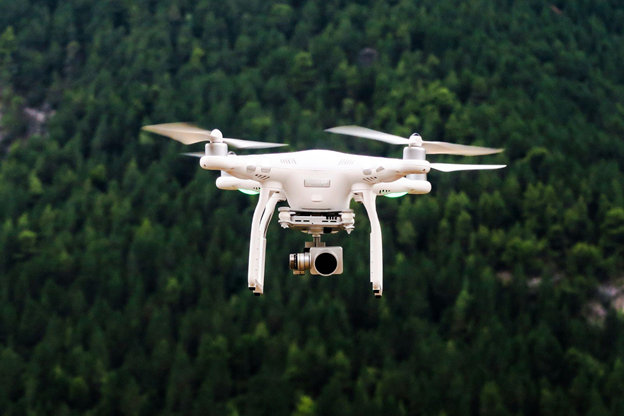
LiDAR is regarded as the gold standard for high-fidelity surveying and also a powerhouse for real-time autonomy. It provides eyes to machines to instantly understand distance, whether you want to maintain the drone at a safe height over a tree canopy. The LiDAR company isn’t just about making maps, but about making machines aware of their surroundings.
LiDAR Is Too Complex to Integrate
Another misconception is that you need a PhD in robotics to get a sensor running, when modern sensors are designed keeping the end user in mind
It Has Plug and play Capability – Upgraded sensors now come with ready-made drivers for relevant platforms.
Requires Minimal Configuration – The device demands minimal configuration so you can often start pulling distance data within minutes after switching it on.
Documentation – The lidar company prioritizes providing straightforward documentation, so you spend less time troubleshooting and more time building.
It Can’t Handle Outdoor Environments
People assume that these sensors are useless in front of dust, sunlight or rain. Yes, these have limits, but the best part is that modern solid-state and micro LiDAR technology is rugged. It uses particular wavelengths and advanced filtering algorithms to filter noise from the environment, letting them function in dust and bright sunlight where other sensors might fail.
Get in touch with Lightware and see how their team guides you.
Frequently Asked Questions
Is it difficult to integrate a LiDAR sensor into my current drone build?
Not at all. Modern sensors are designed for modularity.
Do I need specialized software to interpret the data from a LiDAR sensor?
Basic distance measurement data is usually provided in a raw format that is easily interpreted by most.