Why Fashion Brands on Both Sides of the Atlantic Are Turning to DTF Transfers for Custom Merchandise
Custom merchandise has always been part of how fashion brands connect with their audiences. From limited-edition capsule collections to branded event giveaways, physical products carry a weight that digital marketing simply cannot replicate. But producing custom merchandise has historically been complicated — especially for independent labels and emerging brands that do not have the budgets or order volumes to access traditional manufacturing at competitive prices.
That is changing. A printing technology called Direct to Film — DTF — has made it possible for fashion brands of all sizes, from independent designers in London to boutique labels in New York, to produce high-quality custom merchandise without large minimum orders, long lead times, or compromises on print quality.
What Is DTF Printing?
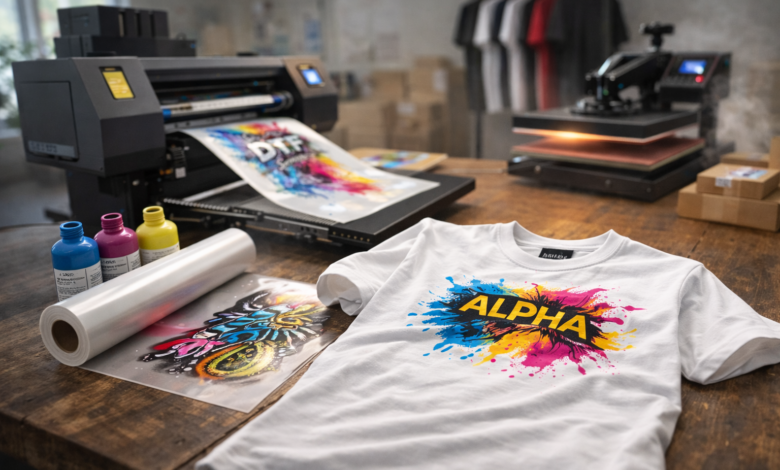
DTF printing is a process where a design is printed onto a special transfer film using high-quality inks, coated with a heat-activated adhesive powder, and then applied to fabric or other materials using a heat press. The result is a full-color, durable transfer that works on virtually any fabric — cotton, polyester, blends, denim, and more.
Unlike screen printing, DTF does not require a separate screen for each color in the design. Unlike embroidery, it handles gradients, photographic images, and fine details without limitation. Unlike sublimation, it works equally well on dark and light fabrics.
For fashion brands that prioritize design quality and visual flexibility, DTF printing removes constraints that other methods impose.
The Appeal for Independent Fashion Labels
Independent fashion labels operate in a different reality than large brands. Production runs are smaller. Design cycles are faster. Margins are tighter. And the cost of getting stuck with unsold inventory is real.
Traditional custom printing methods were not built for this environment. Screen printing shops require minimum orders that make sense for large brands but are economically painful for small labels. Embroidery is limited in what it can reproduce accurately. And many traditional suppliers have lead times measured in weeks — too slow for brands that need to respond to seasonal trends or capitalize on cultural moments.
DTF transfers fit the independent fashion model much more naturally. You can produce a run of 10 pieces or 500 pieces with the same production quality. You can test a new design on a small batch before scaling. You can reorder quickly when something sells out.
Trend-Responsive Production
One of the most important advantages DTF printing offers fashion brands is speed. In an industry where trends move fast and timing is everything, the ability to go from a finished design to a wearable product in 24 to 48 hours is not a small thing.
Consider a brand that wants to release a piece tied to a cultural moment — a music festival, a sports event, a viral aesthetic. With traditional printing methods, the window to respond has usually closed before the product is even produced. With DTF transfers, the turnaround is fast enough to actually capitalize on the moment.
This is not just relevant for trend-chasing. It is relevant for any brand that runs seasonal campaigns, collaborates with other creators, or wants to release limited drops without months of advance planning.
Print Quality That Meets Fashion Standards
Fashion consumers are discerning. They notice when a print looks cheap or feels stiff against the skin. Early heat transfer methods had a justified reputation for producing lower-quality output — prints that cracked after washing, colors that faded quickly, textures that felt like plastic on the fabric.
Modern DTF transfers are a different product entirely. The prints are sharp and vibrant. The hand feel is soft — comparable to a well-done screen print. They hold up through repeated washing without cracking or peeling when applied correctly. For fashion brands that stake their reputation on the quality of what they produce, this standard of output is what makes DTF a serious option rather than a budget compromise.
Consistency Across a Product Range
A fashion brand that produces multiple product types — tees, hoodies, caps, tote bags, accessories — needs its branding to look consistent across all of them. This is harder than it sounds when different products are produced by different suppliers using different methods.
DTF transfers solve this by anchoring every product to the same digital file. The colors are defined once. The proportions are fixed. A logo that looks perfect on a white t-shirt will look the same on a black hoodie or a canvas tote bag. For brands building a recognizable visual identity, this consistency is foundational.
Accessible for Emerging Designers
One of the most meaningful implications of DTF printing is what it means for emerging designers. Building a fashion brand has always required capital — money for production, money for inventory, money for samples. DTF transfers reduce the production barrier significantly.
An emerging designer can produce a small run of samples to pitch to buyers or present at a trade show without committing to hundreds of units. They can launch a direct-to-consumer collection with low stock risk. They can test price points and product types before deciding where to invest more heavily.
For designers who are building something real but are still at an early stage, this kind of accessible production is genuinely valuable.
Working With a Reliable DTF Supplier
The quality of your DTF transfers depends significantly on who produces them. Not all suppliers are equal in terms of ink quality, film quality, color accuracy, or turnaround reliability. For fashion brands that need consistent results, working with a specialist matters.
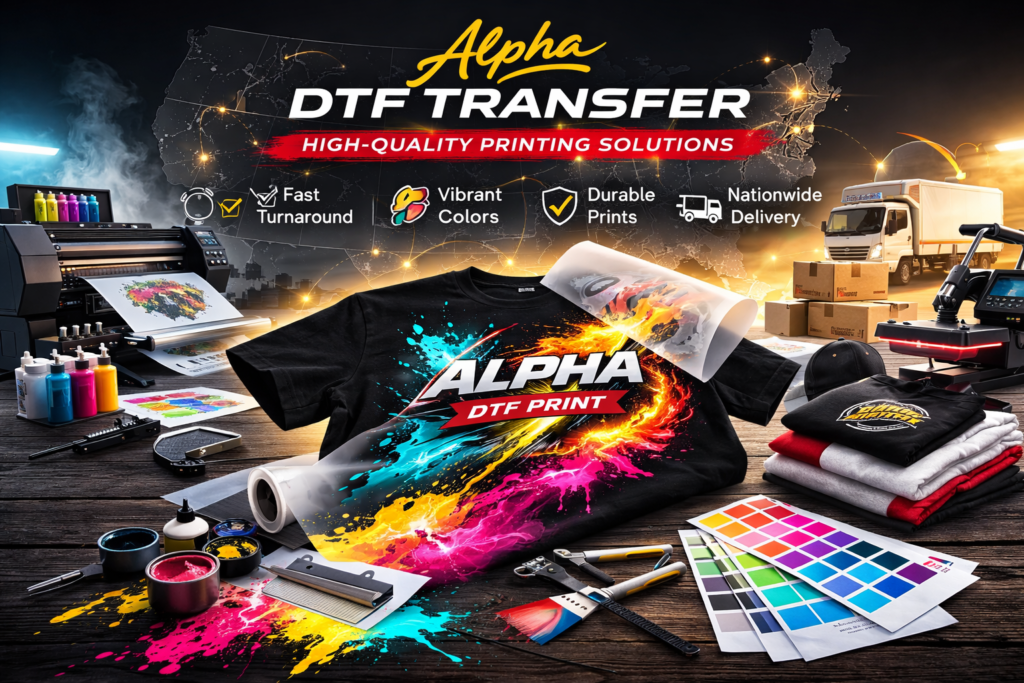
Alpha DTF Print produces custom DTF transfers with no minimum order requirements, ships across the US and internationally, and maintains the kind of print quality that fashion brands expect. For labels on both sides of the Atlantic looking for a reliable production partner, it is worth exploring.
The Shift Is Already Happening
The fashion industry is practical. When a technology works better, is more affordable, and fits the production needs of independent labels and emerging brands, it gets adopted. DTF printing is already well into that adoption curve.
Independent designers, boutique labels, custom merchandise brands, and fashion-forward small businesses are all finding that DTF transfers give them access to capabilities that used to require significantly more investment. The technology has matured, the quality is there, and the economics make sense.
For any fashion brand — whether based in London, New York, or anywhere in between — that has not yet explored what DTF printing can offer, the moment to look closer is now.