FasTrac.OnTrac: Complete Guide to OnTrac’s FasTrac System, Features, Benefits, and Integrations
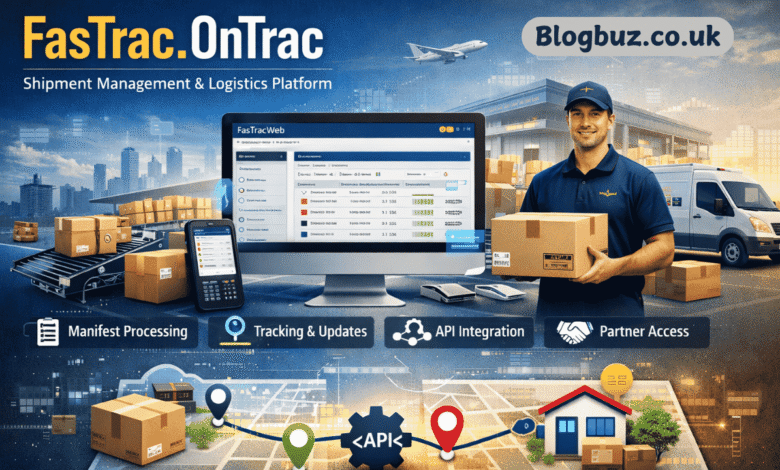
In the fast-moving world of e-commerce and last-mile logistics, speed, visibility, and automation are no longer optional. Companies that ship thousands of packages daily need systems that reduce manual work, improve tracking accuracy, and streamline delivery operations. One platform designed to meet these needs is FasTrac.OnTrac. FasTrac.OnTrac is part of the technology ecosystem used by OnTrac, a major last-mile delivery carrier in the United States. It plays a key role in managing shipment data, manifests, tracking, and partner integrations. In this in-depth guide, you will learn what FasTrac.OnTrac is, how it works, its main features, business benefits, integration options, and how it fits into modern logistics operations.
What Is FasTrac.OnTrac?
FasTrac.OnTrac refers to the FasTrac system and web portal used by OnTrac to manage operational shipping data. It is commonly accessed through the FasTrac web interface (often called FasTracWeb), which is used internally by OnTrac and by approved business partners, contractors, and logistics integrators.
At its core, FasTrac is a shipment management and manifest processing platform that supports:
- Package data submission
- Manifest creation and retrieval
- Tracking number management
- Delivery workflow coordination
- Integration with routing and logistics tools
It is not a consumer-facing tracking site, but rather a backend operational system that helps OnTrac and its partners move packages efficiently through the delivery network.
Understanding OnTrac’s Role in Last-Mile Delivery
To understand the importance of FasTrac.OnTrac, it helps to understand OnTrac itself.
OnTrac is a regional last-mile delivery carrier serving large portions of the United States, particularly in the western and central regions. The company is widely used by eCommerce brands, marketplaces, and retailers as an alternative to national carriers.
After merging with LaserShip and rebranding as OnTrac, the company expanded its coverage and technology infrastructure. FasTrac is one of the platforms that supports this growth by handling operational data and automation.
How FasTrac.OnTrac Works
FasTrac.OnTrac functions as a data exchange and management system for shipments entering the OnTrac network.
Here is a simplified workflow:
- Shipment Creation
A shipper or logistics system generates shipment data, including recipient address, package weight, and service type. - Data Submission to FasTrac
This data is transmitted to the FasTrac system through:- Direct system integration (API)
- File uploads
- Partner logistics platforms
- Manifest Generation
FasTrac creates and stores shipment manifests that list all packages in a batch or pickup. - Tracking Number Assignment
Each shipment is assigned a unique OnTrac tracking number, which becomes visible to customers via OnTrac’s public tracking tools. - Operational Use
Warehouses, drivers, and routing systems use FasTrac data to manage scanning, sorting, and delivery planning. - Delivery Updates
Status changes are recorded and propagated to tracking systems and partner platforms.
Key Features of FasTrac.OnTrac
Manifest Management
One of FasTrac’s most critical roles is handling shipping manifests. These documents include:
- Shipment lists
- Package IDs
- Weights and dimensions
- Pickup and destination information
Accurate manifests help OnTrac plan routes, assign loads, and reduce the number of lost or delayed packages.
Shipment Data Validation
FasTrac verifies that the submitted shipping data is complete and formatted correctly. This reduces:
- Address errors
- Duplicate labels
- Invalid service selections
- Failed deliveries
Tracking Number Coordination
Every shipment processed through FasTrac receives a unique tracking number that is synchronized with OnTrac’s tracking infrastructure. This ensures customers and businesses can monitor package status in real time.
API and System Integration Support
FasTrac.OnTrac works closely with OnTrac’s API infrastructure, enabling:
- Automated shipment creation
- Real-time status updates
- Bulk manifest uploads
- Warehouse management system (WMS) integration
- Transportation management system (TMS) integration
Partner Access via FasTracWeb
Authorized partners and contractors can log in to FasTracWeb to:
- Retrieve manifests
- View shipment batches
- Confirm package handoffs
- Download reports
- Troubleshoot shipping issues
Operational Reporting
FasTrac stores historical shipping data, allowing for:
- Delivery performance analysis
- Volume forecasting
- Error tracking
- Dispute resolution
Benefits of FasTrac.OnTrac for Businesses
Improved Shipping Accuracy
By validating data before packages enter the network, FasTrac reduces labeling and routing mistakes that often lead to returns or customer complaints.
Faster Processing Times
Automated data handling minimizes manual entry and speeds up:
- Warehouse scanning
- Sorting
- Driver dispatching
- Final delivery confirmation
Better Tracking Transparency
FasTrac ensures shipment data flows smoothly into OnTrac’s tracking systems, giving customers reliable delivery updates.
Scalable for High-Volume Shippers
Whether a business ships 500 or 500,000 packages per day, FasTrac can process large batches efficiently through automated manifests and integrations.
Strong Integration Ecosystem
FasTrac works with:
- eCommerce platforms
- 3PL providers
- Routing software
- Fleet management systems
- Analytics tools
This makes it suitable for both growing brands and enterprise retailers.
FasTrac.OnTrac and the FasTrac Partner Program
OnTrac operates a formal FasTrac Partner Program for technology companies, logistics consultants, and solution providers.
Partners typically gain access to:
- Technical documentation
- API credentials
- Testing environments
- FasTrac system access
- Implementation support
The program is designed to encourage third-party tools to integrate seamlessly with OnTrac’s delivery network.
Common Use Cases of FasTrac.OnTrac
eCommerce Fulfillment Centers
Large fulfillment warehouses use FasTrac to upload daily manifests for thousands of outgoing packages.
Third-Party Logistics Providers (3PLs)
3PL companies rely on FasTrac to coordinate shipments across multiple clients and warehouses.
Route Optimization Platforms
Some routing software tools pull manifest data from FasTrac to plan driver routes more efficiently.
Retail Distribution Hubs
Retailers use FasTrac to automate the handoff of shipments to OnTrac for regional deliveries.
Contractor & Driver Operations
Independent delivery contractors access FasTrac data to confirm assigned packages and delivery loads.
Security and Access Control
FasTrac.OnTrac is not publicly accessible. Access typically requires:
- Authorized credentials
- Business verification
- API keys for integrations
This protects sensitive customer data and shipment details.
FasTrac.OnTrac vs Public OnTrac Tracking
Many people confuse FasTrac with the public OnTrac tracking website. They serve different purposes:
| Users | Businesses & partners | Customers |
| Purpose | Operations & manifests | Package tracking |
| Access | Login required | Public |
| Functions | Data processing, manifests, integration | Status lookup |
SEO Value of FasTrac.OnTrac as a Keyword
The keyword FasTrac.OnTrac is a niche but highly targeted. It attracts:
- Logistics professionals
- Software integrators
- Warehouse managers
- OnTrac partners
- Developers working with shipping APIs
Optimizing content around this keyword can help capture traffic from people actively searching for technical or operational information about OnTrac’s systems.
Best Practices When Working with FasTrac.OnTrac
- Validate data before upload – ensure addresses and weights are accurate.
- Automate via API – reduces errors and saves time.
- Reconcile manifests daily – detect missing or duplicate shipments early.
- Monitor status updates – identify delivery bottlenecks quickly.
- Secure credentials – protect access to sensitive shipping data.
Challenges and Limitations
While FasTrac.OnTrac is powerful; it may present challenges such as:
- Technical complexity during initial integration
- Limited public documentation
- Restricted access for non-partners
- Learning curve for new warehouse staff
However, these are common tradeoffs for enterprise-level logistics platforms.
Future of FasTrac.OnTrac
As e-commerce continues to grow, systems like FasTrac are expected to evolve with:
- Real-time analytics dashboards
- AI-based route optimization
- Predictive delivery windows
- Deeper eCommerce platform integrations
- Automated exception handling
OnTrac’s continued expansion suggests FasTrac will remain a core component of its technology stack.
Final Thoughts
FasTrac.OnTrac is not just a background system—it is a critical piece of infrastructure that enables OnTrac to operate at scale in the highly competitive last-mile delivery space. By centralizing shipment data, automating manifest processing, coordinating tracking numbers, and supporting deep system integrations, FasTrac helps reduce errors, speed up operations, and improve visibility across the entire delivery lifecycle.
You May Also Read: Lomas Distribution: Services, Logistics Solutions, and Industry Expertise