From Product Ads to Short Dramas: Seedance 2.5 Use Cases That Stick
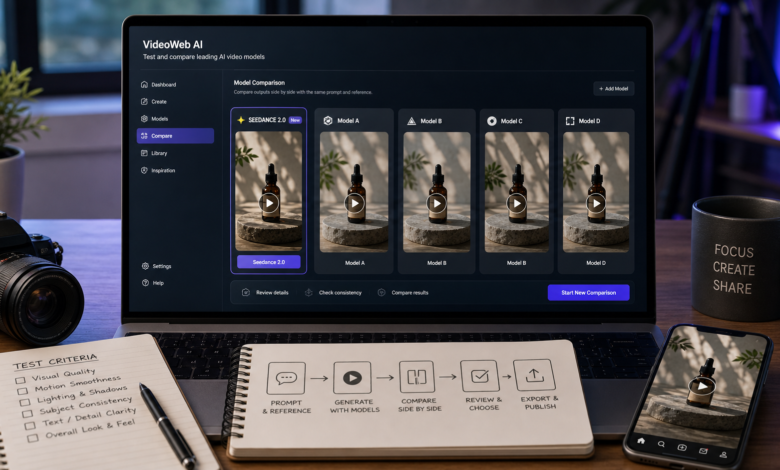
A lot of AI video tools demo beautifully and then collapse the moment you try to use them for real work. The clip looks great in a tweet; it falls apart the second you need it to serve an actual goal. What’s interesting about Seedance 2.5 is that the use cases people are reaching for aren’t novelty experiments — they’re the bread-and-butter jobs that creators and small teams get paid for. Here’s where it’s genuinely sticking.
E-commerce product ads
Start with the most obvious money-maker. A product ad needs to do four things in a tight window: establish the product, show it in motion, hit a hero beat, and resolve cleanly. Older tools made that a stitching nightmare, because a 30-second spot meant welding together multiple clips and praying the lighting on the product matched across cuts.
With a single continuous 30-second shot, the whole spot builds in one pass — the reveal, the rotation, the close-up on the texture, the logo landing. The product stays lit the same way from start to finish because it was never cut apart. For DTC brands churning out ad variants weekly, that’s the difference between a usable pipeline and a constant repair job. Feed in a few reference images of the actual product and the platform holds its real look instead of inventing a plausible-but-wrong version.
Short dramas and episodic content
This is the use case that wasn’t even possible a year ago. Short-form vertical drama is exploding as a format, and its entire premise is a recurring character you follow across scenes. That’s exactly what stitched workflows couldn’t deliver — the lead’s face would subtly drift between cuts and the illusion would break.
Seedance 2.5 handles this through multi-shot character consistency backed by a deep stack of multimodal references. One launch demo tracked a single character across six rooms in six different art styles and kept them recognizable the entire way. Translate that to a drama: your protagonist can move through scenes, costume changes, and camera setups while staying the same person. Pair it with native synced audio — dialogue and lip-sync generated in the same pass — and a creator can rough out an entire episode beat without ever opening a separate audio tool.
Brand films that need to hold an identity
Brand work lives and dies on consistency — the same color story, the same mood, the same visual signature across every frame. The reason marketers were nervous about AI video was that it tended to wander off-brand the moment a scene got complex.
Here the multimodal reference system earns its keep. You hand the platform your brand’s visual language up front — reference imagery, a mood, a palette — and it anchors the output to that identity across the full clip. The result feels deliberate rather than generated. If you want to pressure-test this with your own brand assets before committing, the simplest move is to run a short brand clip through Seedance 2.5 free and see whether it actually holds your look across 30 seconds — that’s the real test, not a generic demo.
Social shorts and creator content
Not every use case is a polished commercial. A huge share of real-world demand is just fast, good-enough-to-publish content for social feeds, where the bottleneck is volume and turnaround, not Cannes-level craft.
This is where the localized editing feature quietly shines. A creator shipping daily doesn’t have time to regenerate a whole clip because one detail is off. Being able to fix a single element — swap a prop, correct a flaw — while leaving the rest intact means a near-miss becomes a publish in seconds rather than a do-over. The workflow stops being a gamble and starts being a production line.
Pre-visualization and pitch work
There’s a less obvious use case that working pros love: previs. Before a real shoot or a client pitch, you need to show what a sequence will look like — framing, camera moves, pacing. That used to mean storyboards or expensive mockups.
Through camera direction and a 3D blockout input, you can pre-stage composition and camera movement, then generate a continuous shot that communicates the intended sequence. It’s not the final deliverable — it’s the thing that gets the client to nod yes. For agencies and small studios, that shortens the distance between an idea and a signed-off concept dramatically.
Where the costs actually land
The thread tying these use cases together is that they’re repeatable, deadline-bound jobs — which means cost-per-output matters more than headline price. A tool that’s cheap per generation but eats an hour of cleanup is expensive where it counts. A tool that delivers a clean 30-second result in one pass can win even at a premium, because it removes the rework. That’s why it’s worth running your specific workload against the Seedance 25 pricing rather than guessing — the answer depends on how much stitching and re-rolling it’s replacing for your particular use case.
The pattern that makes them stick
Look across all of these and the common denominator isn’t a feature — it’s that each use case used to be sabotaged by the same set of problems: short clips, drifting characters, broken continuity, endless re-rolls. Solve those underneath, and a whole spread of real jobs becomes practical at once.
That’s why these use cases stick instead of fizzling after the novelty wears off. Product ads, short dramas, brand films, social content, previs — they’re not demos. They’re the actual work, and for the first time the tool gets out of the way long enough to let creators finish it.
![swimsuit edition [abbb] - 1.20 21 swimsuit edition - chapter](https://blogbuz.co.uk/wp-content/uploads/2025/04/swimsuit-edition-abbb-1.20-21-swimsuit-edition-chapter-390x220.webp)