G4Si1 vs ER70S-6 Welding Wire: 7 Critical Differences Every Fabricator Must Know
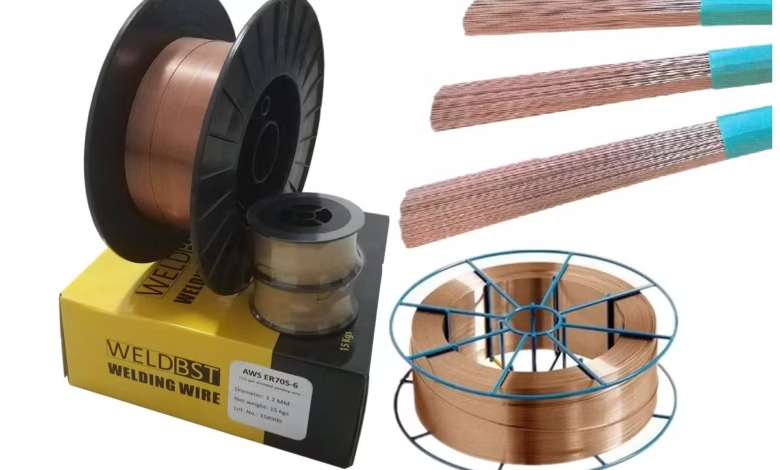
When production schedules tighten and quality specifications become non-negotiable, fabricators face critical decisions about welding consumables that directly impact their operational success. The choice between different wire specifications can determine whether a project meets deadlines, passes inspection, or requires costly rework. Two specifications that frequently create confusion in fabrication shops are G4Si1 and ER70S-6, both carbon steel welding wires that serve similar applications but operate under different classification systems with distinct characteristics that affect weld quality, penetration patterns, and overall project outcomes.
Understanding these differences becomes particularly important when fabricators work across international projects, manage supply chain disruptions, or need to substitute materials without compromising structural integrity. The wrong choice can lead to failed inspections, weakened joints, or inconsistent results that cascade through entire production runs, creating delays and additional costs that impact profitability and client relationships.
Wire Classification Systems Create Fundamental Operational Distinctions
The primary difference between these two specifications lies in their classification origins, which directly affects how fabricators source, specify, and implement them in production environments. G4Si1 operates under the European EN standard system, while ER70S-6 follows the American Welding Society classification structure. This distinction extends beyond simple labeling because each system prioritizes different performance characteristics and testing protocols that influence real-world welding behavior.
European g4si1 welding wire specifications typically emphasize consistent mechanical properties and predictable arc characteristics, reflecting manufacturing approaches that prioritize repeatability across extended production runs. The classification system requires specific silicon and manganese content ranges that directly affect how the wire behaves during welding, particularly regarding arc stability and penetration patterns that influence joint strength and appearance.
American ER70S-6 classification focuses heavily on tensile strength requirements and impact resistance, reflecting industrial priorities that emphasize structural performance under stress. This approach creates differences in alloy composition and manufacturing controls that affect how the wire performs in various welding positions and environmental conditions, particularly when fabricators encounter challenging access angles or varying base metal conditions.
Chemical Composition Variations Affect Weld Pool Behavior
The chemical makeup of these two wire types creates distinct differences in how molten metal flows, solidifies, and forms mechanical bonds with base materials. These compositional variations directly impact fabricators’ ability to achieve consistent results across different welding positions and joint configurations, affecting both productivity and quality outcomes in production environments.
Silicon Content Controls Fluidity and Penetration Patterns
Silicon levels in these wires create measurable differences in weld pool fluidity and penetration characteristics that directly affect joint strength and appearance. Higher silicon content typically found in ER70S-6 increases weld pool fluidity, creating deeper penetration patterns that can be beneficial for structural applications but may create challenges when welding thin materials or performing out-of-position work. This increased fluidity can lead to burn-through issues or excessive reinforcement that requires additional finishing work, impacting production efficiency and material costs.
G4Si1 specifications typically maintain more controlled silicon levels that create predictable weld pool behavior across varying welding parameters and positions. This consistency becomes particularly valuable when fabricators need to maintain uniform bead appearance across long seam welds or when working with automated welding systems that require predictable wire performance to maintain programmed parameters throughout extended production runs.
Manganese Levels Influence Strength and Ductility Balance
Manganese content differences between these specifications create distinct trade-offs between ultimate strength and ductility that affect how finished welds perform under operational stresses. Higher manganese levels typically associated with ER70S-6 can increase tensile strength but may reduce ductility in certain applications, particularly when welds experience dynamic loading or thermal cycling that requires flexibility to prevent crack initiation.
The manganese balance in G4Si1 specifications often prioritizes consistent mechanical properties that remain stable across varying heat input levels and cooling rates. This consistency helps fabricators achieve predictable results when welding parameters must be adjusted for different joint configurations or when production schedules require multiple welders to work on similar components with varying skill levels and techniques.
Arc Characteristics Create Different Welding Experiences
The fundamental differences in wire composition and manufacturing approaches create distinct arc behaviors that directly affect welder productivity, bead appearance, and overall joint quality. These characteristics become particularly important when fabricators must maintain consistent results across multiple shifts, different equipment setups, or varying environmental conditions that can influence welding performance.
Spatter Generation Affects Cleanup Requirements
Spatter patterns and intensity vary significantly between these two wire specifications due to differences in alloy composition and arc stability characteristics. ER70S-6 typically produces more aggressive arc action that can increase spatter generation, particularly at higher amperage settings or when welding with longer arc lengths. This increased spatter creates additional cleanup requirements that extend production time and may require more extensive post-weld grinding or finishing to meet appearance specifications.
G4Si1 wires generally produce cleaner arc action with reduced spatter generation, creating smoother workflow patterns and reducing post-weld cleanup requirements. This characteristic becomes particularly valuable in production environments where appearance quality is critical or when fabricators must minimize finishing time to maintain competitive pricing structures. The reduced cleanup requirements also decrease consumable costs for grinding wheels and other finishing materials.
Arc Starting and Stability Patterns
Initial arc establishment and maintenance characteristics differ between these specifications in ways that affect overall welding efficiency and joint quality consistency. ER70S-6 often provides more aggressive arc starting characteristics that can be beneficial when welding through mill scale or surface contamination but may create challenges when precise heat control is required for thin materials or critical joint geometries.
G4Si1 specifications typically offer more controlled arc initiation and steady burning characteristics that create predictable heat input patterns throughout the welding process. This stability helps fabricators maintain consistent penetration and bead geometry, particularly important when welding structural joints that require specific penetration depths or when working with automated systems that depend on consistent arc behavior to maintain programmed welding parameters.
Mechanical Property Differences Impact Structural Performance
The resulting mechanical properties of completed welds vary between these two wire specifications in ways that directly affect structural performance, service life, and inspection compliance. Understanding these differences helps fabricators select appropriate consumables based on specific application requirements and performance expectations rather than simple availability or cost considerations.
Tensile Strength and Yield Point Variations
Ultimate tensile strength and yield point characteristics differ between G4Si1 and ER70S-6 deposits in ways that affect how structures perform under operational loading conditions. ER70S-6 typically produces higher tensile strength values that can be advantageous in applications requiring maximum load-bearing capacity, but these higher strength levels may come with reduced ductility that affects performance under dynamic loading or impact conditions.
G4Si1 deposits often provide more balanced strength and ductility combinations that perform well across varying service conditions, particularly when structures experience thermal cycling or dynamic loading that requires flexibility to prevent fatigue crack initiation. This balanced approach can extend service life in applications where maximum strength is less critical than long-term durability and resistance to stress concentration effects.
Impact Resistance and Toughness Characteristics
Low-temperature impact resistance and overall toughness properties vary significantly between these wire specifications, affecting performance in applications where structures experience sudden loading or operate in challenging environmental conditions. These differences become particularly important when fabricators work on projects subject to AWS structural welding codes or other specifications that require specific impact resistance values at defined temperatures.
The toughness characteristics also influence how welds perform during service, particularly regarding crack propagation resistance and ability to withstand stress concentrations that develop around joint geometries or areas with slight welding defects that may not be visible during standard inspection procedures.
Heat Input Requirements Create Procedural Differences
Optimal heat input ranges and welding parameter windows differ between G4Si1 and ER70S-6, affecting how fabricators develop welding procedures, train personnel, and maintain quality consistency across production runs. These parameter differences can significantly impact productivity, quality outcomes, and overall project success when not properly understood and implemented.
Travel Speed and Amperage Optimization
The relationship between travel speed, amperage settings, and resulting weld quality varies between these wire specifications due to differences in heat transfer characteristics and molten metal behavior. ER70S-6 often tolerates higher heat input levels and faster travel speeds, which can increase productivity in applications where penetration requirements and joint access allow aggressive welding parameters.
G4Si1 specifications typically perform optimally within more controlled parameter ranges that emphasize consistency over maximum speed. This characteristic can actually improve overall productivity when fabricators need to maintain strict quality standards or when welding complex joint geometries that require precise heat control to prevent distortion or achieve specific penetration patterns without excessive reinforcement.
Position Welding Performance Variations
Out-of-position welding characteristics differ between these specifications in ways that affect fabricator flexibility and project scheduling efficiency. The fluid characteristics of ER70S-6 can create challenges in overhead or vertical positions, requiring modified techniques or parameter adjustments that may slow production or require more skilled personnel to maintain quality standards.
G4Si1 wires often provide more consistent performance across all welding positions, allowing fabricators to use similar parameters and techniques regardless of joint orientation. This consistency can simplify training requirements, reduce the need for position-specific procedure development, and allow more flexible workforce deployment across different aspects of complex fabrication projects.
Supply Chain and Availability Considerations
Practical availability and supply chain reliability differences between these two wire specifications can significantly impact project planning, inventory management, and overall operational efficiency. These factors often influence material selection decisions as much as technical performance characteristics, particularly when fabricators must balance optimal performance against delivery schedules and cost constraints.
ER70S-6 enjoys broader availability across most North American markets due to widespread adoption in structural fabrication and general manufacturing applications. This availability extends to various packaging options, diameter ranges, and specialized versions designed for specific applications or welding processes. The broad market presence typically results in competitive pricing and reliable supply even during periods of high demand or supply chain disruption.
G4Si1 availability varies significantly by geographic region and may require longer lead times or specialized suppliers, particularly in markets where European standards are less commonly specified. However, increasing globalization of fabrication projects and growing adoption of international standards is expanding availability and creating more competitive pricing structures for G4Si1 products across diverse markets.
Application-Specific Performance Outcomes
Real-world performance differences between G4Si1 and ER70S-6 become most apparent in specific application contexts where particular characteristics provide distinct advantages or create operational challenges. Understanding these application-specific differences helps fabricators make informed decisions based on project requirements rather than general specifications or supplier recommendations.
Structural steel fabrication often benefits from ER70S-6 characteristics, particularly when maximum strength and deep penetration are priorities. The aggressive arc action and higher strength deposits align well with structural requirements and inspection standards commonly applied to building construction and heavy industrial applications where load-bearing capacity is the primary performance criterion.
Precision fabrication and applications requiring controlled heat input often perform better with G4Si1 specifications. The predictable arc behavior and controlled penetration characteristics reduce the risk of burn-through or distortion in thin materials while maintaining adequate strength for service requirements. This makes G4Si1 particularly suitable for architectural metalwork, precision machinery components, and applications where appearance quality is as important as structural performance.
Conclusion
The choice between G4Si1 and ER70S-6 welding wire ultimately depends on balancing technical performance requirements against practical considerations including availability, cost, and fabricator experience with each specification. While both wires serve similar general applications, their distinct characteristics in arc behavior, mechanical properties, and heat input requirements create meaningful differences in production outcomes and long-term performance.
Successful fabricators recognize that optimal wire selection requires understanding not only the technical specifications but also how these differences translate into real-world production efficiency, quality consistency, and project success. By matching wire characteristics to specific application requirements and operational constraints, fabricators can achieve better results while maintaining competitive positioning in increasingly demanding markets that require both technical excellence and reliable delivery performance.
When production schedules tighten and quality specifications become non-negotiable, fabricators face critical decisions about welding consumables that directly impact their operational success. The choice between different wire specifications can determine whether a project meets deadlines, passes inspection, or requires costly rework. Two specifications that frequently create confusion in fabrication shops are G4Si1 and ER70S-6, both carbon steel welding wires that serve similar applications but operate under different classification systems with distinct characteristics that affect weld quality, penetration patterns, and overall project outcomes.
Understanding these differences becomes particularly important when fabricators work across international projects, manage supply chain disruptions, or need to substitute materials without compromising structural integrity. The wrong choice can lead to failed inspections, weakened joints, or inconsistent results that cascade through entire production runs, creating delays and additional costs that impact profitability and client relationships.
Wire Classification Systems Create Fundamental Operational Distinctions
The primary difference between these two specifications lies in their classification origins, which directly affects how fabricators source, specify, and implement them in production environments. G4Si1 operates under the European EN standard system, while ER70S-6 follows the American Welding Society classification structure. This distinction extends beyond simple labeling because each system prioritizes different performance characteristics and testing protocols that influence real-world welding behavior.
European g4si1 welding wire specifications typically emphasize consistent mechanical properties and predictable arc characteristics, reflecting manufacturing approaches that prioritize repeatability across extended production runs. The classification system requires specific silicon and manganese content ranges that directly affect how the wire behaves during welding, particularly regarding arc stability and penetration patterns that influence joint strength and appearance.
American ER70S-6 classification focuses heavily on tensile strength requirements and impact resistance, reflecting industrial priorities that emphasize structural performance under stress. This approach creates differences in alloy composition and manufacturing controls that affect how the wire performs in various welding positions and environmental conditions, particularly when fabricators encounter challenging access angles or varying base metal conditions.
Chemical Composition Variations Affect Weld Pool Behavior
The chemical makeup of these two wire types creates distinct differences in how molten metal flows, solidifies, and forms mechanical bonds with base materials. These compositional variations directly impact fabricators’ ability to achieve consistent results across different welding positions and joint configurations, affecting both productivity and quality outcomes in production environments.
Silicon Content Controls Fluidity and Penetration Patterns
Silicon levels in these wires create measurable differences in weld pool fluidity and penetration characteristics that directly affect joint strength and appearance. Higher silicon content typically found in ER70S-6 increases weld pool fluidity, creating deeper penetration patterns that can be beneficial for structural applications but may create challenges when welding thin materials or performing out-of-position work. This increased fluidity can lead to burn-through issues or excessive reinforcement that requires additional finishing work, impacting production efficiency and material costs.
G4Si1 specifications typically maintain more controlled silicon levels that create predictable weld pool behavior across varying welding parameters and positions. This consistency becomes particularly valuable when fabricators need to maintain uniform bead appearance across long seam welds or when working with automated welding systems that require predictable wire performance to maintain programmed parameters throughout extended production runs.
Manganese Levels Influence Strength and Ductility Balance
Manganese content differences between these specifications create distinct trade-offs between ultimate strength and ductility that affect how finished welds perform under operational stresses. Higher manganese levels typically associated with ER70S-6 can increase tensile strength but may reduce ductility in certain applications, particularly when welds experience dynamic loading or thermal cycling that requires flexibility to prevent crack initiation.
The manganese balance in G4Si1 specifications often prioritizes consistent mechanical properties that remain stable across varying heat input levels and cooling rates. This consistency helps fabricators achieve predictable results when welding parameters must be adjusted for different joint configurations or when production schedules require multiple welders to work on similar components with varying skill levels and techniques.
Arc Characteristics Create Different Welding Experiences
The fundamental differences in wire composition and manufacturing approaches create distinct arc behaviors that directly affect welder productivity, bead appearance, and overall joint quality. These characteristics become particularly important when fabricators must maintain consistent results across multiple shifts, different equipment setups, or varying environmental conditions that can influence welding performance.
Spatter Generation Affects Cleanup Requirements
Spatter patterns and intensity vary significantly between these two wire specifications due to differences in alloy composition and arc stability characteristics. ER70S-6 typically produces more aggressive arc action that can increase spatter generation, particularly at higher amperage settings or when welding with longer arc lengths. This increased spatter creates additional cleanup requirements that extend production time and may require more extensive post-weld grinding or finishing to meet appearance specifications.
G4Si1 wires generally produce cleaner arc action with reduced spatter generation, creating smoother workflow patterns and reducing post-weld cleanup requirements. This characteristic becomes particularly valuable in production environments where appearance quality is critical or when fabricators must minimize finishing time to maintain competitive pricing structures. The reduced cleanup requirements also decrease consumable costs for grinding wheels and other finishing materials.
Arc Starting and Stability Patterns
Initial arc establishment and maintenance characteristics differ between these specifications in ways that affect overall welding efficiency and joint quality consistency. ER70S-6 often provides more aggressive arc starting characteristics that can be beneficial when welding through mill scale or surface contamination but may create challenges when precise heat control is required for thin materials or critical joint geometries.
G4Si1 specifications typically offer more controlled arc initiation and steady burning characteristics that create predictable heat input patterns throughout the welding process. This stability helps fabricators maintain consistent penetration and bead geometry, particularly important when welding structural joints that require specific penetration depths or when working with automated systems that depend on consistent arc behavior to maintain programmed welding parameters.
Mechanical Property Differences Impact Structural Performance
The resulting mechanical properties of completed welds vary between these two wire specifications in ways that directly affect structural performance, service life, and inspection compliance. Understanding these differences helps fabricators select appropriate consumables based on specific application requirements and performance expectations rather than simple availability or cost considerations.
Tensile Strength and Yield Point Variations
Ultimate tensile strength and yield point characteristics differ between G4Si1 and ER70S-6 deposits in ways that affect how structures perform under operational loading conditions. ER70S-6 typically produces higher tensile strength values that can be advantageous in applications requiring maximum load-bearing capacity, but these higher strength levels may come with reduced ductility that affects performance under dynamic loading or impact conditions.
G4Si1 deposits often provide more balanced strength and ductility combinations that perform well across varying service conditions, particularly when structures experience thermal cycling or dynamic loading that requires flexibility to prevent fatigue crack initiation. This balanced approach can extend service life in applications where maximum strength is less critical than long-term durability and resistance to stress concentration effects.
Impact Resistance and Toughness Characteristics
Low-temperature impact resistance and overall toughness properties vary significantly between these wire specifications, affecting performance in applications where structures experience sudden loading or operate in challenging environmental conditions. These differences become particularly important when fabricators work on projects subject to AWS structural welding codes or other specifications that require specific impact resistance values at defined temperatures.
The toughness characteristics also influence how welds perform during service, particularly regarding crack propagation resistance and ability to withstand stress concentrations that develop around joint geometries or areas with slight welding defects that may not be visible during standard inspection procedures.
Heat Input Requirements Create Procedural Differences
Optimal heat input ranges and welding parameter windows differ between G4Si1 and ER70S-6, affecting how fabricators develop welding procedures, train personnel, and maintain quality consistency across production runs. These parameter differences can significantly impact productivity, quality outcomes, and overall project success when not properly understood and implemented.
Travel Speed and Amperage Optimization
The relationship between travel speed, amperage settings, and resulting weld quality varies between these wire specifications due to differences in heat transfer characteristics and molten metal behavior. ER70S-6 often tolerates higher heat input levels and faster travel speeds, which can increase productivity in applications where penetration requirements and joint access allow aggressive welding parameters.
G4Si1 specifications typically perform optimally within more controlled parameter ranges that emphasize consistency over maximum speed. This characteristic can actually improve overall productivity when fabricators need to maintain strict quality standards or when welding complex joint geometries that require precise heat control to prevent distortion or achieve specific penetration patterns without excessive reinforcement.
Position Welding Performance Variations
Out-of-position welding characteristics differ between these specifications in ways that affect fabricator flexibility and project scheduling efficiency. The fluid characteristics of ER70S-6 can create challenges in overhead or vertical positions, requiring modified techniques or parameter adjustments that may slow production or require more skilled personnel to maintain quality standards.
G4Si1 wires often provide more consistent performance across all welding positions, allowing fabricators to use similar parameters and techniques regardless of joint orientation. This consistency can simplify training requirements, reduce the need for position-specific procedure development, and allow more flexible workforce deployment across different aspects of complex fabrication projects.
Supply Chain and Availability Considerations
Practical availability and supply chain reliability differences between these two wire specifications can significantly impact project planning, inventory management, and overall operational efficiency. These factors often influence material selection decisions as much as technical performance characteristics, particularly when fabricators must balance optimal performance against delivery schedules and cost constraints.
ER70S-6 enjoys broader availability across most North American markets due to widespread adoption in structural fabrication and general manufacturing applications. This availability extends to various packaging options, diameter ranges, and specialized versions designed for specific applications or welding processes. The broad market presence typically results in competitive pricing and reliable supply even during periods of high demand or supply chain disruption.
G4Si1 availability varies significantly by geographic region and may require longer lead times or specialized suppliers, particularly in markets where European standards are less commonly specified. However, increasing globalization of fabrication projects and growing adoption of international standards is expanding availability and creating more competitive pricing structures for G4Si1 products across diverse markets.
Application-Specific Performance Outcomes
Real-world performance differences between G4Si1 and ER70S-6 become most apparent in specific application contexts where particular characteristics provide distinct advantages or create operational challenges. Understanding these application-specific differences helps fabricators make informed decisions based on project requirements rather than general specifications or supplier recommendations.
Structural steel fabrication often benefits from ER70S-6 characteristics, particularly when maximum strength and deep penetration are priorities. The aggressive arc action and higher strength deposits align well with structural requirements and inspection standards commonly applied to building construction and heavy industrial applications where load-bearing capacity is the primary performance criterion.
Precision fabrication and applications requiring controlled heat input often perform better with G4Si1 specifications. The predictable arc behavior and controlled penetration characteristics reduce the risk of burn-through or distortion in thin materials while maintaining adequate strength for service requirements. This makes G4Si1 particularly suitable for architectural metalwork, precision machinery components, and applications where appearance quality is as important as structural performance.
Conclusion
The choice between G4Si1 and ER70S-6 welding wire ultimately depends on balancing technical performance requirements against practical considerations including availability, cost, and fabricator experience with each specification. While both wires serve similar general applications, their distinct characteristics in arc behavior, mechanical properties, and heat input requirements create meaningful differences in production outcomes and long-term performance.
Successful fabricators recognize that optimal wire selection requires understanding not only the technical specifications but also how these differences translate into real-world production efficiency, quality consistency, and project success. By matching wire characteristics to specific application requirements and operational constraints, fabricators can achieve better results while maintaining competitive positioning in increasingly demanding markets that require both technical excellence and reliable delivery performance.