Hamilton vs. Colson vs. Albion: The Ultimate US Industrial Rubber Wheel Comparison for 2026
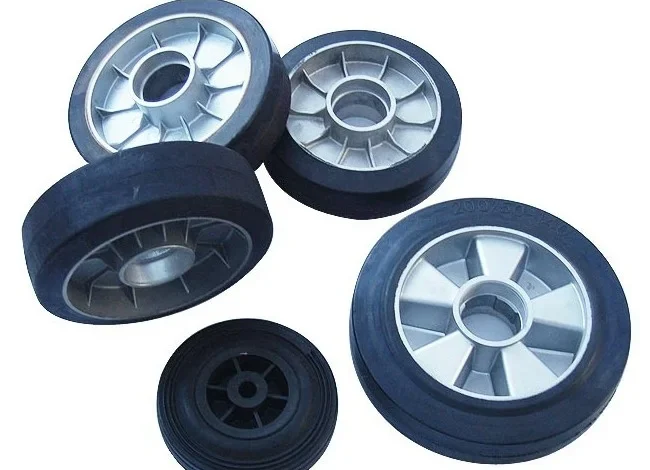
Manufacturing operations across the United States depend on material handling equipment that performs consistently under demanding conditions. When production schedules are tight and downtime costs run into thousands of dollars per hour, the reliability of every component matters. Industrial rubber wheels represent a critical intersection of load capacity, floor protection, and operational durability that directly impacts workflow efficiency.
Three manufacturers have established themselves as dominant forces in the American industrial rubber wheel market: Hamilton, Colson, and Albion. Each company brings decades of engineering experience and distinct approaches to wheel design, manufacturing processes, and application focus. Understanding these differences becomes essential when equipment failures can cascade through entire production systems, affecting delivery schedules and customer relationships.
The selection process extends beyond simple load ratings or dimensional compatibility. Modern industrial environments demand wheels that maintain consistent performance across temperature variations, chemical exposures, and extended operational cycles. The wrong choice can lead to premature wear, increased maintenance intervals, or unexpected equipment failures that disrupt carefully orchestrated production flows.
Hamilton’s Engineering Heritage and Industrial Focus
Hamilton Manufacturing has built its reputation through specialized engineering for heavy-duty industrial applications. The company’s approach centers on understanding the specific stress patterns and environmental challenges that industrial rubber wheels encounter in manufacturing environments. Hamilton rubber wheels are designed with particular attention to compound formulations that resist degradation from oils, solvents, and temperature fluctuations common in industrial settings.
The manufacturing process emphasizes consistency in rubber compound mixing and curing cycles. Hamilton’s quality control systems focus on maintaining uniform hardness and load distribution characteristics across production runs. This consistency becomes critical when facilities operate multiple pieces of identical equipment, where variations in wheel performance can create uneven wear patterns on floors or unpredictable handling characteristics.
Load Distribution and Durability Characteristics
Hamilton’s wheel designs prioritize even load distribution across the contact surface, reducing point stresses that can cause premature failure. The engineering approach recognizes that industrial applications often involve sustained loads rather than intermittent use patterns. Wheels are constructed to maintain their shape and rolling characteristics even under continuous operation with near-maximum rated loads.
The rubber compounds are formulated to resist chunking and tearing when wheels encounter debris or minor obstructions on facility floors. This durability focus addresses a common failure mode where damaged wheels create vibrations that propagate through equipment, affecting precision operations or causing accelerated wear on other components.
Chemical Resistance and Environmental Adaptation
Industrial facilities expose wheels to various chemical environments, from cleaning solutions to process chemicals that may spill or create vapor exposures. Hamilton’s rubber formulations incorporate additives that maintain elasticity and structural integrity when exposed to petroleum products, alkaline cleaners, and mild acids commonly found in manufacturing environments.
Temperature stability receives particular attention in Hamilton’s design process. Wheels maintain consistent performance characteristics across the temperature ranges typical in heated production areas or climate-controlled clean rooms. This stability prevents the softening or hardening that can alter rolling resistance and affect equipment operation.
Colson’s Market Position and Application Breadth
Colson Group has established a comprehensive approach to industrial mobility solutions, with rubber wheels representing one component of a broader product ecosystem. The company’s strength lies in application engineering, where wheel specifications are matched to specific operational requirements rather than following standard catalog approaches. This flexibility allows for customization that addresses unique facility needs or specialized equipment configurations.
Manufacturing capabilities span multiple production facilities, enabling regional supply chain advantages and shorter lead times for replacement components. Colson’s quality systems emphasize traceability and batch control, supporting facilities that require documentation for regulatory compliance or quality management system requirements.
Design Flexibility and Custom Solutions
Colson’s engineering team works closely with equipment manufacturers and end users to develop wheel specifications that address specific operational challenges. This collaborative approach often results in hybrid designs that combine standard components with custom features, balancing cost effectiveness with performance requirements.
The company’s ability to modify rubber compounds for specific applications provides advantages in specialized environments. Whether addressing unique chemical exposures, extreme temperature conditions, or specialized floor surfaces, Colson’s technical team can adjust formulations to optimize performance for particular use cases.
Supply Chain Integration and Support
Colson’s distribution network provides advantages for facilities that require rapid replacement part availability. The company maintains regional inventory and technical support capabilities that reduce downtime when wheel replacement becomes necessary. This support structure includes application engineering assistance for troubleshooting performance issues or optimizing wheel selection for new equipment installations.
Technical documentation and specification support help maintenance teams understand compatibility requirements and proper installation procedures. Clear specifications reduce the risk of incorrect replacements that could compromise equipment performance or create safety hazards.
Albion’s Specialized Manufacturing Approach
Albion Industries focuses on precision manufacturing techniques that emphasize dimensional consistency and material uniformity. The company’s approach to rubber wheel production incorporates advanced mixing and molding processes that create predictable performance characteristics across large production quantities. This consistency becomes particularly valuable for facilities operating multiple identical units where performance variations could create operational imbalances.
Quality control processes at Albion include statistical sampling and measurement protocols that ensure wheels meet specified tolerances for critical dimensions and performance parameters. These controls support applications where precision equipment requires consistent rolling characteristics to maintain accuracy or repeatability in production processes.
Material Science and Compound Development
Albion’s rubber compound development emphasizes balancing competing performance requirements such as load capacity versus rolling resistance, or durability versus floor protection. The engineering process involves extensive testing under simulated operational conditions to validate performance predictions and identify potential failure modes before production release.
The company’s material science capabilities extend to understanding how different rubber formulations interact with various floor surfaces and environmental conditions. This knowledge helps predict wheel life and performance degradation patterns, enabling more accurate maintenance scheduling and replacement planning.
Manufacturing Process Control
Production processes at Albion incorporate multiple inspection points and measurement systems that verify wheel specifications throughout manufacturing. These controls help ensure that wheels shipped to customers meet the performance characteristics specified during the selection process, reducing the likelihood of field performance issues.
Process consistency extends to packaging and shipping procedures that protect wheels during transportation and storage. Proper handling helps maintain wheel geometry and compound properties, ensuring that installed wheels perform as intended from the beginning of their service life.
Comparative Performance Analysis
When evaluating these three manufacturers, performance differences emerge in specific application areas rather than overall superiority. Hamilton’s focus on heavy industrial applications provides advantages in environments with sustained high loads and challenging chemical exposures. The engineering emphasis on durability and consistency supports operations where wheel failure creates significant operational disruption.
Colson’s broader product range and customization capabilities offer advantages for specialized applications or facilities with diverse equipment requirements. The ability to work with engineering teams on custom solutions can address unique operational challenges that standard catalog products cannot handle effectively.
Albion’s precision manufacturing approach provides benefits for applications requiring consistent performance characteristics across multiple installations. The emphasis on dimensional accuracy and material uniformity supports precision equipment and operations where predictable wheel behavior is essential for process control.
Cost Considerations and Value Analysis
Initial purchase cost represents only one component of total wheel cost over the equipment’s operational life. Factors such as wheel longevity, maintenance requirements, and replacement frequency significantly impact overall costs. Hamilton’s durability focus often results in longer service life in demanding applications, potentially offsetting higher initial costs through reduced replacement frequency.
Colson’s customization capabilities can provide value by optimizing wheel specifications for specific applications, potentially improving performance while avoiding over-specification costs. The ability to match wheels precisely to operational requirements helps ensure that facilities pay for needed performance characteristics without unnecessary features.
Albion’s manufacturing consistency reduces the risk of performance variations that could require premature replacement or create operational issues. The predictable performance characteristics support accurate cost forecasting and maintenance planning, helping facilities manage replacement budgets more effectively.
Application-Specific Recommendations
Heavy manufacturing environments with sustained high loads, chemical exposures, and demanding operational schedules often benefit from Hamilton’s durability-focused approach. The engineering emphasis on withstanding industrial conditions helps ensure consistent performance throughout the wheel’s service life.
Facilities with diverse equipment types or specialized operational requirements may find Colson’s customization capabilities valuable. The ability to work with technical teams on application-specific solutions can address unique challenges that standard products cannot handle effectively.
Precision manufacturing operations requiring consistent equipment performance across multiple installations often benefit from Albion’s manufacturing consistency. The emphasis on dimensional accuracy and material uniformity supports applications where predictable wheel behavior is essential for maintaining process control.
Selection Criteria and Decision Framework
Effective wheel selection requires understanding the specific operational environment and performance requirements rather than relying on general specifications or brand preferences. Key factors include load patterns, environmental conditions, floor surfaces, and operational schedules that affect wheel performance and longevity.
Load analysis should consider both maximum loads and typical operating loads, as wheels designed for intermittent peak loads may not perform optimally under sustained loading conditions. Environmental factors such as temperature ranges, chemical exposures, and cleaning procedures affect rubber compound selection and expected service life.
Floor surface compatibility influences both wheel performance and facility maintenance requirements. Wheels that protect delicate floor surfaces may have different performance characteristics than those designed for rough industrial floors. Understanding these trade-offs helps ensure that wheel selection supports both equipment performance and facility maintenance objectives.
Implementation and Transition Planning
Changing wheel suppliers or specifications requires careful planning to avoid operational disruptions. Pilot testing with small quantities can validate performance expectations before committing to large-scale conversions. This approach helps identify any performance differences or compatibility issues that could affect equipment operation.
Inventory management considerations include maintaining adequate spare wheel supplies during transition periods and ensuring that maintenance teams understand any specification or installation procedure changes. Clear documentation helps prevent errors that could compromise equipment performance or create safety concerns.
Training requirements may include familiarizing maintenance personnel with new specifications, installation procedures, or performance characteristics. Understanding these differences helps ensure proper installation and can prevent premature failures due to incorrect handling or maintenance practices.
Future Considerations and Industry Trends
The industrial rubber wheel market continues evolving as facilities seek improved performance, environmental sustainability, and operational efficiency. Material science advances enable rubber compounds that offer better performance in specific applications while potentially reducing environmental impact through improved durability or recyclability.
Automation and precision manufacturing trends place increasing demands on wheel consistency and predictability. As facilities implement more sophisticated equipment and tighter process controls, wheel performance variations that were acceptable in previous generations may become problematic. This trend favors manufacturers with strong quality control systems and consistent manufacturing processes.
Supply chain resilience has become increasingly important following recent disruptions in global manufacturing and logistics systems. Manufacturers with domestic production capabilities and robust distribution networks provide advantages for facilities seeking to reduce supply chain risks and ensure parts availability. According to the U.S. Census Bureau, domestic manufacturing capabilities continue playing crucial roles in supply chain stability for industrial operations.
Conclusion
The choice between Hamilton, Colson, and Albion industrial rubber wheels ultimately depends on specific operational requirements, environmental conditions, and performance priorities rather than universal superiority of any single manufacturer. Each company has developed distinct strengths that serve different segments of the industrial market effectively.
Hamilton’s focus on heavy-duty industrial applications and durability provides advantages for demanding manufacturing environments where wheel failure creates significant operational disruption. Colson’s customization capabilities and broad product range serve facilities with diverse equipment requirements or specialized applications. Albion’s precision manufacturing approach supports operations requiring consistent performance characteristics and predictable wheel behavior.
Successful wheel selection requires careful analysis of operational conditions, load requirements, and environmental factors that affect performance and service life. Understanding these requirements and matching them to manufacturer strengths helps ensure optimal equipment performance while managing total cost of ownership effectively. The investment in proper wheel selection pays dividends through improved reliability, reduced maintenance requirements, and minimized operational disruptions throughout the equipment’s service life.