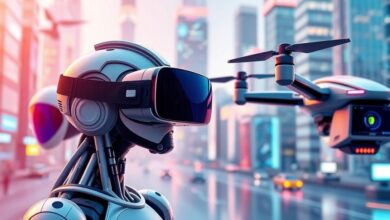
How AI Employees Are Changing the Way Businesses Operate

The way businesses operate is undergoing a structural shift. For years, efficiency improvements were driven by software adoption, automation tools, and workflow optimization. Today, that model is evolving toward something more autonomous, where systems are not just supporting work but executing it.
This shift is being driven by the emergence of AI employees, which are designed to handle tasks, make decisions, and complete workflows across systems. Unlike traditional automation, these systems operate with context, adapt to changing inputs, and execute end-to-end processes.
At a macro level, this transition is part of a broader digital evolution. According to the Government of India’s Ministry of Electronics and IT, the country’s digital economy is expected to contribute nearly 20% of GDP by 2026, reflecting how deeply digital systems are becoming embedded into business operations.
As businesses continue to digitize, the focus is shifting from tools to execution models. This is where AI employees are becoming relevant, as organizations look for ways to move beyond manual workflows and fragmented systems.
What AI Employees Actually Mean in Business Operations
AI employees represent a shift from assistive technology to execution-driven systems. Instead of supporting individual tasks, they are designed to take ownership of workflows and complete them across multiple steps.
They operate across entire workflows, not isolated tasks
Traditional tools typically handle specific actions such as generating content, automating responses, or processing data. AI employees, on the other hand, can manage a sequence of actions, from understanding context to executing outcomes.
They interact with multiple systems simultaneously
Rather than being confined to a single platform, AI employees work across tools, databases, and applications. This allows them to complete processes that would otherwise require coordination between multiple teams.
They combine reasoning with execution
AI employees do not rely solely on predefined rules. They can interpret inputs, make decisions based on context, and adjust actions accordingly.
They reduce dependency on manual coordination
By handling multiple steps within a workflow, they reduce the need for human intervention between stages, improving operational flow.
Why Businesses Are Moving Toward AI Employees
The shift toward AI employees is not driven by technology alone. It is a response to operational challenges that traditional systems struggle to address.
- Increasing complexity of workflows: Modern business processes involve multiple systems, teams, and dependencies. Managing these manually creates delays and inefficiencies.
- Fragmentation across tools and platforms: Many organizations use a large number of software tools that do not integrate seamlessly. This leads to workflow gaps and increased coordination effort.
- Demand for faster execution: Businesses are expected to operate in real time. Delays in decision-making or execution directly impact performance.
- Need for scalability without linear cost growth: Hiring more people to handle growing workloads increases costs. Businesses need models that allow them to scale operations without proportional increases in headcount.
How AI Employees Are Changing Business Operations
AI employees are reshaping how work is executed across organizations. Their impact can be seen in how processes are structured, managed, and scaled.
From task-based work to outcome-based execution
Traditional workflows break tasks into smaller steps handled by different teams or tools. AI employees shift this approach by focusing on completing outcomes rather than individual tasks.
- Reduced handoffs improve efficiency: When fewer people or systems are involved in a workflow, delays caused by coordination are minimized.
- End-to-end execution improves consistency: Handling entire workflows ensures that processes are executed uniformly, reducing variability.
From manual coordination to autonomous workflows
Businesses often rely on coordination between teams to complete processes. AI employees reduce this dependency by handling multiple steps independently.
- Automated decision-making reduces delays: AI systems can process information and make decisions faster than manual workflows.
- Continuous execution improves process flow: Workflows can proceed without waiting for human input at every stage, improving overall efficiency.
From static systems to adaptive operations
Traditional automation relies on predefined rules. AI employees introduce adaptability into workflows.
- Context-aware systems improve accuracy: AI employees can interpret changing inputs and adjust their actions accordingly.
- Dynamic workflows reduce rigid dependencies: Processes can evolve based on real-time conditions rather than fixed rules.
Impact of AI Employees Across Business Functions
The adoption of AI employees is influencing multiple business functions, each benefiting from improved execution and reduced complexity.
Customer operations
Customer service workflows often involve multiple systems and manual coordination.
- Faster resolution improves customer experience: AI employees can handle queries, process requests, and complete actions without delays.
- Consistent service delivery reduces variability: Standardized workflows ensure that customers receive uniform responses.
HR and employee operations
HR processes involve repetitive tasks such as onboarding, documentation, and internal support.
- Automated workflows improve efficiency: AI employees can manage routine HR processes, reducing administrative workload.
- Faster response improves employee experience: Employees receive quicker support for queries and requests.
Finance and compliance
Financial workflows require accuracy, consistency, and adherence to regulations.
- Automated processing improves accuracy: AI employees reduce errors by handling repetitive calculations and validations.
- Structured workflows improve compliance: Processes are executed consistently, ensuring adherence to policies.
Operations and internal workflows
Internal business processes often involve coordination across teams.
- Reduced manual effort improves productivity: AI employees handle routine tasks, allowing teams to focus on higher-value work.
- Improved workflow continuity reduces delays: Processes move faster when fewer handoffs are involved.
Role of AI in the Broader Digital Economy
The rise of AI employees is part of a larger shift toward digital and automated operations. According to NITI Aayog, India’s AI strategy emphasizes the integration of artificial intelligence across sectors such as healthcare, agriculture, and education to improve efficiency and scalability.
This highlights how AI is becoming a foundational layer in business operations, not just a supporting tool.
What Makes AI Employees Different from Traditional Automation
While automation has existed for years, AI employees introduce capabilities that go beyond rule-based systems.
- They combine intelligence with execution: Unlike traditional automation, AI employees can interpret context and make decisions.
- They operate across multiple systems: They are not limited to a single tool or platform, allowing them to complete complex workflows.
- They improve over time: AI systems can learn from feedback and adapt their behavior, improving performance.
- They support scalability: Businesses can expand operations without proportionally increasing workforce size.
Challenges Businesses Need to Consider
While AI employees offer significant advantages, their implementation requires careful planning to ensure that systems integrate smoothly and deliver expected outcomes.
Integration with existing systems
Most organizations operate with a mix of legacy and modern tools. Integrating AI employees into these environments requires aligning data flows, APIs, and system access.
Without proper integration, workflows may remain fragmented, limiting the effectiveness of AI systems.
Managing organizational change
Adopting AI employees changes how work is structured and executed. Employees need to adapt to new roles where they oversee and manage workflows rather than perform every step manually.
This transition requires clear communication and training to ensure smooth adoption.
Ensuring data security and compliance
AI employees operate across systems and handle large volumes of data. Businesses must ensure that data access is controlled and compliant with regulations.
Strong governance frameworks are essential to maintain security and trust.
When Businesses Start Adopting AI Employees
Organizations typically move toward AI employees when operational challenges begin to affect performance.
- Increasing workload without proportional hiring
- Complex workflows involving multiple systems
- Need for faster execution and decision-making
- Scaling operations across regions
- Reducing dependency on manual processes
Conclusion
Business operations are moving toward models that prioritize speed, consistency, and scalability. As workflows become more complex and interconnected, traditional systems struggle to keep up with execution demands.
AI employees represent a shift toward more autonomous operations, where systems can manage workflows end-to-end, reduce dependency on manual coordination, and improve efficiency across functions.
For organizations evaluating how to adapt to this shift, understanding how AI employees function within business operations provides useful context on how work is evolving from task-based execution to outcome-driven systems.