How Modern Businesses Are Rethinking Physical Security
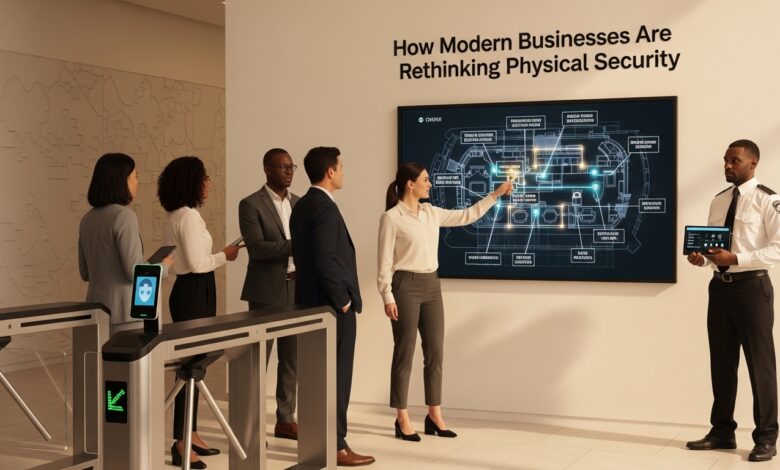
Physical security used to be straightforward. You locked the front door, maybe hired a guard, and called it a day. But the workplace has changed dramatically over the past few years — and so have the threats that businesses face. From hybrid working models that create unpredictable foot traffic, to sophisticated tailgating techniques and data theft disguised as routine access, the old approaches simply don’t hold up anymore.
Whether you run a small office in the city centre or manage a multi-site enterprise, understanding how access control and physical security have evolved isn’t just useful — it’s essential. The businesses that take security seriously aren’t just protecting their assets. They’re protecting their people, their data, and their reputation.
Why Physical Security Is No Longer an Afterthought
For years, physical security sat at the bottom of most business budgets. Cyber threats grabbed the headlines, and rightfully so — data breaches, ransomware attacks, and phishing campaigns caused billions in damages globally. But in the rush to shore up digital defences, many organisations quietly overlooked their front doors.
That’s changing fast. According to Acre Security, a significant proportion of data breaches still involve a physical element — an unauthorised person accessing a restricted area, a lost access card going unreported, or a server room with no audit trail. In short, your firewall means nothing if someone can walk unchallenged into your building and plug in a USB drive.
Businesses are now waking up to the fact that physical and digital security aren’t separate concerns. They’re two sides of the same coin, and the smartest organisations are treating them that way.
The Rise of Smart Access Control
One of the biggest shifts in physical security over the past decade has been the transition from traditional lock-and-key systems to intelligent access control. It sounds like a minor upgrade, but the implications are enormous.
Traditional keys are static. If an employee loses one, you either hope for the best or spend money re-keying every lock in the building. There’s no record of who went where, no ability to revoke access remotely, and no way to set time-based permissions. In environments where dozens or even hundreds of people move through a building each day, that’s a serious liability.
Modern access control systems flip this entirely. Credentials — whether physical cards, mobile apps, or biometrics — can be issued and revoked in seconds. Every entry and exit is logged with a timestamp, giving facilities managers and security teams a complete audit trail. If an employee leaves the company, their access is deactivated immediately. If a door is propped open out of hours, an alert fires automatically.
This level of granularity wasn’t available to most businesses a decade ago. Now, it’s accessible to organisations of almost every size.
What to Look for in a Modern Security Provider
Choosing a physical security partner isn’t as simple as picking whoever offers the lowest quote. The technology matters, but so does the ecosystem around it — the software, the integration capabilities, and the ongoing support.
A few things to consider:
- Scalability. Your security solution needs to grow with your business. A system that works beautifully for a single office might become a headache when you open a second or third location. Look for providers that offer centralised management across multiple sites, ideally through a single cloud-based dashboard.
- Integration. Physical security doesn’t operate in isolation. Your access control system should talk to your HR software (so access rights update automatically when staff join or leave), your visitor management platform, and ideally your IT infrastructure. The more joined-up your systems are, the fewer gaps there are for threats to exploit.
- Audit and compliance capabilities. Depending on your sector, you may have legal obligations around who can access certain areas and when. A good system provides detailed, exportable logs that satisfy regulatory requirements without demanding hours of manual work.
- Reliability and support. Security systems can’t afford downtime. Before committing to a provider, understand their uptime guarantees, their response times for faults, and whether they offer 24/7 support.
Hybrid Working Has Complicated Everything
The shift to hybrid working, which accelerated dramatically during the pandemic and has since become the norm for millions of knowledge workers, has introduced a new layer of complexity to physical security.
When the majority of employees were in the office five days a week, it was relatively easy to spot anomalies. People knew their colleagues, receptionists recognised familiar faces, and unusual behaviour stood out. In a hybrid environment, where a building might be at 30% capacity on some days and 80% on others, that natural human surveillance disappears. n higher-risk situations, businesses may also turn to covert surveillance delivered by specialist providers such as S2K Group, whose intelligence-led services are designed for discreet, legally compliant observation in sensitive corporate environments.
This has made formal access control systems more important than ever. When you can’t rely on people to challenge an unfamiliar face, you need technology to do it for you. Turnstiles and access gates that require valid credentials prevent tailgating at entry points. Visitor management systems ensure that guests are pre-registered, checked in formally, and escorted appropriately. Camera systems with intelligent analytics can flag unusual behaviour — like someone loitering near a server room — rather than simply recording footage that nobody watches.
Hybrid working has also complicated the credential question. In a traditional office, most employees carried a physical access card. With hybrid and remote working, mobile credentials have surged in popularity. Using a smartphone to access a building is convenient, harder to lose than a card, and easier to manage remotely. For many organisations, it’s becoming the default.
Securing the Digital Layer: Authentication and Network Access
Physical access is only one part of a complete security picture. As employees move between offices, co-working spaces, and home setups, the question of how they authenticate to systems and networks becomes just as important as whether they can open a door.
Hardware-based authentication has emerged as one of the most robust answers to this problem. Unlike passwords, which can be phished, guessed, or leaked in a data breach, physical authentication devices generate cryptographic credentials that can’t be replicated remotely. If you want a deeper dive into how these devices work and why they’re gaining traction across enterprise environments, this overview of hardware security keys and secure authentication is worth reading — it covers the key standards, use cases, and why hardware authentication is increasingly seen as the baseline for serious security postures rather than an optional extra.
The broader point is that physical and digital security don’t just complement each other — they increasingly depend on each other. An access control system with weak network security is vulnerable. A strong network security posture means little if someone can walk through an unsecured door and access a device directly.
The Insider Threat: A Problem Nobody Likes to Talk About
External threats get most of the attention, but security professionals will tell you that insider threats — whether malicious or accidental — are responsible for a surprisingly high proportion of security incidents.
A disgruntled employee who retains access after their notice period begins. A contractor who was given temporary credentials and never had them revoked. A well-meaning team member who holds the door open for a stranger without thinking. These aren’t hypothetical scenarios — they happen in businesses of every size, every day.
Network access is another dimension that often gets overlooked in physical security conversations. Remote employees connecting over unsecured networks create real vulnerabilities, particularly when those connections are used to reach internal systems that also interface with physical security infrastructure — such as cloud-based access control platforms. For businesses managing security across multiple sites, understanding how to layer network-level protections is essential. Tools that mask network traffic and route connections through secure intermediaries can play a meaningful role here, and there’s a useful explainer on how proxy-based solutions enhance online security that breaks down the practical applications for businesses of different sizes.
But technology alone isn’t enough. The best physical security strategies combine strong systems with a culture of security awareness. That means training staff to challenge unknown visitors, educating them about tailgating risks, and making it socially acceptable — even encouraged — to question whether someone belongs in a particular area.
Integrating Video Surveillance With Access Control
For most businesses, cameras and access control have historically been separate systems, managed by different teams and running on different platforms. That’s starting to change.
When video surveillance and access control are integrated, each system becomes significantly more powerful. An access event — say, a door being forced open or credentials being used outside permitted hours — can automatically trigger the closest camera to begin recording and flag the incident to a security manager in real time. Rather than sifting through hours of footage after an incident, security teams can jump directly to the relevant clip.
This kind of integration also improves response times dramatically. A lone security guard monitoring a bank of screens can only watch so many feeds simultaneously. But if the system is intelligent enough to surface only the events that matter — the anomalies, the alerts, the out-of-hours activity — that one guard becomes vastly more effective.
For larger organisations, this convergence of physical and digital security is already well underway. For smaller businesses, the falling cost of intelligent camera systems and cloud-based platforms is making it increasingly accessible.
What This Year Looks Like for Business Security
The trajectory is clear. Physical security is becoming smarter, more connected, and more data-driven. The gap between enterprise-grade systems and what’s available to smaller businesses is narrowing rapidly, which is good news for everyone.
A few trends worth watching:
- Biometrics going mainstream. Fingerprint and facial recognition access control, once the preserve of high-security government facilities, are increasingly common in commercial settings. As accuracy improves and costs fall, expect adoption to accelerate.
- Mobile-first credentials. Physical access cards aren’t disappearing overnight, but the direction of travel is towards smartphone-based credentials. They’re more convenient, more secure (harder to clone than many card formats), and easier to manage at scale.
- Cloud-based management. On-premises servers for access control management are giving way to cloud platforms, which offer easier updates, better redundancy, and the ability to manage multiple sites from anywhere in the world.
- Security as a service. Many organisations are moving towards subscription-based security models, where hardware, software, maintenance, and support are bundled into a single monthly fee. This reduces capital expenditure and shifts responsibility for keeping systems current onto the provider.
Final Thoughts
Physical security has never been more important — or more sophisticated. The good news is that the tools available to businesses today are genuinely excellent, and the barriers to implementing a robust access control strategy are lower than they’ve ever been.
The key is not to treat security as a box-ticking exercise. A system that’s installed and then forgotten provides a false sense of safety. The businesses that get physical security right are the ones that treat it as an ongoing discipline — regularly auditing who has access to what, reviewing their processes in light of changing working patterns, and staying engaged with developments in the technology.
Security isn’t just about stopping bad things from happening. It’s about building an environment where your people feel safe, your clients feel confident, and your business can operate without unnecessary risk. That’s an investment worth making.