How to Choose Power Tools for Daily Electrical Site Use
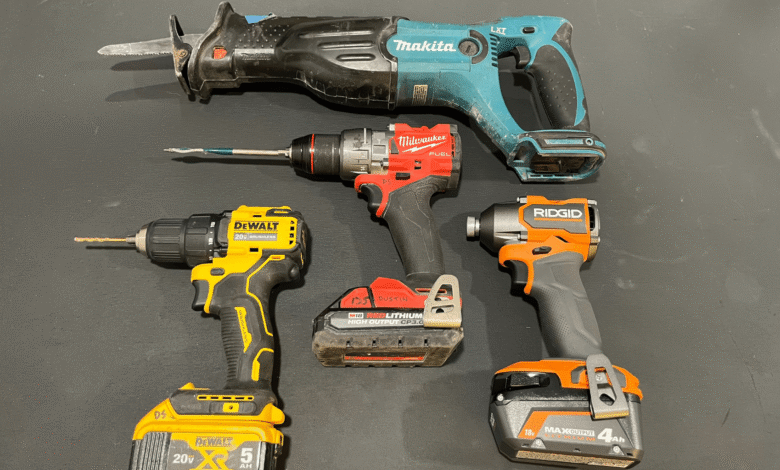
Selecting the right power tools for daily electrical work requires more than simply choosing a well-known brand or the most powerful option available. Electrical contractors and technicians depend on tools that perform reliably under demanding site conditions, maintain safety standards, and support consistent productivity throughout the workday. From installation tasks to maintenance work, the tools used must align with the specific requirements of electrical environments.
Prioritising Reliability and Site Durability
Electrical work environments expose tools to dust, vibration, heat, and constant movement between job locations. For this reason, durability should be one of the first factors considered when selecting power tools for everyday site use. Tools designed with reinforced housings, sealed electronics, and impact-resistant components tend to perform more consistently in demanding conditions.
Professionals often compare trade-grade equipment such as cordless drills, impact drivers, rotary hammer drills, cable cutters, and oscillating multi-tools to assess durability in real site conditions. When reviewing examples within these categories, technicians may look at models like Milwaukee electrical tools and power equipment alongside other professional-grade tools to see how different designs address durability, heat management, and repeated electrical installation work.
Consistent reliability reduces the risk of equipment failure during critical work stages. When tools remain dependable under pressure, technicians can complete installations, testing, and maintenance tasks more efficiently.
Considering Ergonomics for Repetitive Tasks
Electrical contractors frequently operate power tools for extended periods while working in confined spaces, overhead installations, or awkward positions. Poorly balanced or heavy equipment can quickly lead to fatigue, reducing both comfort and precision.
Ergonomic design focuses on handle balance, grip texture, and overall weight distribution. Tools that incorporate vibration control and well-positioned controls allow electricians to operate them comfortably throughout the workday.
Long-term physical strain can affect productivity and job quality. Selecting tools that support natural hand positioning and controlled movement helps technicians maintain accuracy during delicate electrical tasks.
Evaluating Battery Systems and Runtime
Cordless power tools have become standard across electrical worksites due to their mobility and convenience. However, the efficiency of these tools largely depends on the quality of their battery systems.
Professionals typically review battery capacity, charging speed, and compatibility across different tools within the same platform. Systems designed with advanced lithium-ion battery technology often provide longer runtime and stable power output, even during energy-intensive tasks.
Choosing tools within a unified battery ecosystem can also simplify site operations. Shared battery platforms reduce the need for multiple chargers and allow electricians to rotate power sources between tools during busy work periods.
Matching Tool Power to Electrical Applications
Different electrical tasks require different levels of torque, speed, and precision. Installing cable trays, drilling through switchboard panels, and fastening electrical enclosures each place unique demands on a tool’s output capabilities.
Professionals often evaluate torque ratings, motor efficiency, and power-to-weight ratios when selecting drills, drivers, or cutters. Tools that deliver stable power without excessive weight allow technicians to maintain control during repetitive tasks while reducing operator fatigue.
It is also important to consider how consistently a tool delivers power over time. Equipment with well-designed brushless motors generally produces less heat and maintains steady performance across prolonged use, which is particularly beneficial for daily electrical work.
Ensuring Compatibility with Electrical Work Environments
Electrical installations often involve working around sensitive components, wiring systems, and specialised materials. Power tools used in these environments must offer precision and control to prevent accidental damage.
Features such as adjustable speed settings, controlled start mechanisms, and compact tool designs help technicians work safely around live panels, conduit runs, and distribution boards. Tools designed for tight workspaces allow electricians to operate effectively without compromising safety.
Understanding how a tool behaves in restricted environments is just as important as its power output. Equipment that balances control, visibility, and accessibility allows professionals to complete complex electrical tasks with greater confidence.
Choosing Tools That Support Long-Term Site Performance
Power tools used in electrical work must meet the demands of daily site operations while maintaining reliability and user comfort. By focusing on durability, application-specific power, ergonomic design, battery efficiency, and compatibility with electrical environments, technicians can select tools that support consistent performance across varied projects.