Is Your Warehouse Airspace the Most Undervalued Real Estate You Own?
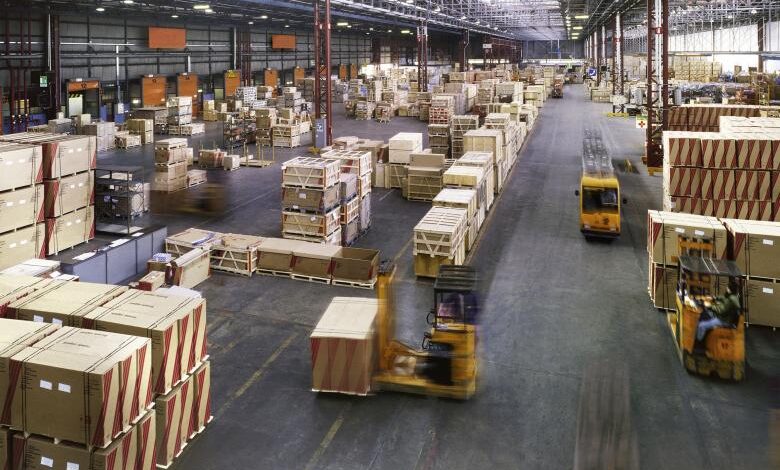
In the world of industrial logistics and manufacturing, there is an obsession with the floor. Facility managers fight wars over square footage. They tape off aisles, optimize forklift paths, and squeeze racking systems inches closer together to maximize storage. The floor is the battlefield, and every square foot is prime real estate with a tangible dollar sign attached to it.
But while managers are busy playing Tetris on the ground, they are often ignoring a massive, empty asset hovering right above their heads: the air.
Most industrial facilities are built with soaring ceilings—20, 30, or even 40 feet high—yet the vast majority of productive work happens in the bottom six feet. The rest is just expensive climate-controlled air. This “Vertical Blindness” is a strategic error. In an era where industrial land prices are skyrocketing and expansion is often cost-prohibitive, the solution to your space crunch isn’t buying the lot next door. It’s looking up.
The “Floor-Bound” Bottleneck
To understand the value of the air, we first have to look at the inefficiency of the ground.
The primary tool for moving heavy materials in most shops is the forklift. Forklifts are versatile, but they are greedy. They demand wide aisles—often 12 to 14 feet—just to turn around. They create traffic jams. They require “pedestrian exclusion zones” for safety.
Every time you dedicate a 12-foot lane to a forklift path, you are effectively paying rent on empty space that produces nothing. If you have a 50,000-square-foot facility, your forklift lanes alone could be consuming 15,000 square feet of that potential production capacity. That is a massive “infrastructure tax” you pay every month.
Liberating the Floor
Now, imagine lifting that entire logistics layer off the ground.
When you transition heavy material handling from floor-based vehicles to overhead systems, you instantly reclaim the floor. The 14-foot aisle can shrink to a 4-foot walking path. The space once reserved for turning radiuses can now house a new CNC machine, a welding station, or another assembly line.
This is the concept of “Cubic Utilization.” It treats the facility as a 3D volume rather than a 2D map.
An overhead system moves materials in the “dead space” above the machinery. It hops over obstacles rather than driving around them. It takes the most dangerous kinetic energy in the building—moving heavy loads—and puts it on a dedicated, predictable rail system high above the heads of the workforce.
The “Workflow Velocity” Factor
Beyond just saving space, utilizing the air changes the physics of your workflow.
Forklifts operate on “Batch Logic.” Because it takes time to drive to a pile, pick it up, and drive back, operators tend to wait until they have a full pallet before moving anything. This creates bottlenecks. Work-in-progress (WIP) piles up at one station while the next station sits idle, waiting for the forklift driver to finish his coffee.
Overhead handling enables “Flow Logic.” Because the lifting mechanism is always present and available at the station, operators can move individual pieces as soon as they are ready. The product flows continuously from Station A to Station B like water in a pipe.
This reduces WIP inventory. It reduces the time a product sits on the floor collecting dust. It turns a choppy, stop-and-go factory into a streamlined river of productivity.
The Safety Dividend
Finally, we must address the elephant in the room: safety. Forklifts are statistically the most dangerous piece of equipment in any warehouse. They have blind spots, they tip over, and they collide with racks and people.
By moving heavy loads into the air, you separate the “heavy metal” from the “soft tissue.” An overhead system operates on a fixed path. It cannot swerve into a break area. It cannot be driven off a loading dock. It creates a physical segregation between the transport layer and the human layer.
Furthermore, floor-based lifting often relies on friction—tires on concrete. If there is an oil spill or a wet patch, a forklift carrying 10 tons can become an uncontrollable sled. An overhead system, suspended from the building’s steel or a freestanding runway, is immune to floor conditions.
Conclusion
If your facility feels cramped, your first instinct might be to call a real estate agent. Resist that urge. Before you spend millions on a new building or a lease expansion, walk out onto your production floor and look up.
There is a vast, silent reservoir of potential capacity floating above your machines. It is waiting to be monetized. It is waiting to take the heavy lifting off the backs of your floor crew and into the hands of a system designed for the task.
Whether you are moving massive steel coils or delicate aerospace assemblies, the air is your most underutilized asset. By installing a robust 40 ton overhead crane or a similar high-capacity lifting solution, you aren’t just buying a piece of equipment; you are unlocking the other 50% of the building you are already paying for. Stop fighting for inches on the ground and start claiming the acres in the sky.