Juicer vs Blender: Which is Better for Your Health?
Introduction
When it comes to healthy living, many of us strive to incorporate fresh fruits and vegetables into our daily routines. But with so many appliances on the market, how do you know which one is best for you: a juicer vs blender? Both of these devices offer fantastic health benefits, but their functions, textures, and nutritional benefits differ significantly. If you’re confused about which one to choose, don’t worry – this article will provide a comprehensive guide to help you make an informed decision.
Juicer vs Blender: Which is Better?
Both juicers and blenders have their unique benefits and drawbacks, depending on what you’re looking to achieve. The decision largely depends on your personal needs and preferences.
What Does a Juicer Do?
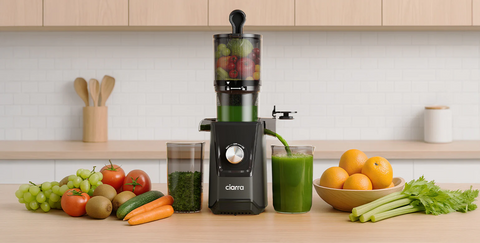
A juicer extracts the juice from fruits and vegetables while separating the pulp and fiber. The result? A smooth, drinkable liquid packed with vitamins, minerals, and antioxidants. The juicer works its magic by either centrifugal force or a masticating mechanism.
- Centrifugal juicers work by spinning at high speeds to shred the produce. The pulp is separated by centrifugal force, leaving behind the juice.
- Masticating Juicers operate more slowly by grinding and pressing the produce to extract juice. This process typically preserves more nutrients and prevents oxidation.
If you love to drink fruit or vegetable juice without the fibrous texture, Ciarragadgets recommends juicers as a perfect choice. You’ll be able to enjoy a liquid full of concentrated nutrients without any pulp.
What Does a Blender Do?
A blender, on the other hand, blends the entire fruit or vegetable—fibrous bits and all—into a smooth mixture. Unlike a juicer, which extracts liquid, a blender keeps everything together, including the pulp and fiber. This creates a thicker, more filling drink, often referred to as a smoothie.
The process works by using sharp blades that spin at high speeds to pulverize the ingredients, breaking down even tough elements like ice, seeds, and skin. Blenders are versatile tools, great for making smoothies, soups, batters, and sauces.
Juicer vs Blender: Which is Better for Weight Loss?
When it comes to weight loss, both juicers and blenders can play a significant role in your diet. However, the juicer vs blender for weight loss debate boils down to how you incorporate them into your routine.
- Juicers provide a quick and efficient way to consume a larger quantity of fruits and vegetables. The juice extracted from fruits and vegetables is lighter on the stomach and faster to digest, making it an excellent option for those looking for quick energy without the fullness of fiber.
- Blenders, however, retain all the fiber, which aids in digestion and helps you stay full longer. This is beneficial for those looking to reduce overall calorie intake by feeling fuller for a longer period.
Both have advantages, but for long-term weight management, blenders with their high fiber content are likely to be more satisfying.
Juicer vs Blender vs Food Processor
If you’re wondering how a food processor fits into the equation, here’s how they differ:
- Juicers are specifically designed to extract juice from fruits and vegetables, leaving the pulp behind. This makes them ideal for those who want nutrient-dense liquid without the fiber.
- Blenders blend the whole fruit or vegetable, including the fiber. They create thicker, more filling drinks or smoothies, perfect for those looking for a substantial meal replacement.
- Food Processors, however, are more versatile appliances designed for chopping, dicing, and pureeing ingredients. They aren’t typically used for extracting juice or blending smoothies, but are perfect for making salsa, dough, or chopping vegetables for a variety of dishes.
·
Juicer vs Blender Nutrition: Which is More Nutrient-Dense?
When it comes to nutrition, both juicers and blenders offer their own set of benefits.
- Juicers give you concentrated nutrients that are absorbed quickly by the body. Since there’s no fiber, the juice is a powerful, nutrient-dense liquid. However, some fiber is removed, which can aid digestion and provide long-term satiety.
- Blenders retain all of the nutrients, including the fiber. The fiber helps slow down the absorption of sugars, which is beneficial for stabilizing blood sugar levels and maintaining digestive health.
Ultimately, if you’re looking for a nutrient-dense drink that is quickly absorbed, juicing is a great option. However, for a more balanced, long-term approach, blending provides fiber along with vitamins and minerals.
Cold Press Juicer vs Blender: Which is Healthier?
When we compare a cold-press juicer and a blender, there are some key differences:
- Cold-press juicers use a slow, masticating process to extract juice from produce. This method preserves more nutrients, enzymes, and vitamins compared to centrifugal juicers. Since there’s no heat involved, cold-press juicers maintain higher nutritional integrity.
- Blenders, on the other hand, break down the whole fruit or vegetable into a smooth consistency. While this is great for fiber retention, blenders may heat up slightly during the blending process, which can cause a small loss in nutritional value, especially with some delicate vitamins.
Both appliances have their place in a healthy diet, but for preserving nutrient integrity, a cold-press juicer has the edge.
Juicer vs Juice Extractor: What’s the Difference?
It’s common to hear the terms juicer and juice extractor used interchangeably, but they are not the same thing. While both devices extract juice, the key difference lies in their mechanisms.
- Juicers typically use a masticating or centrifugal mechanism to extract juice, separating it from the pulp.
- Juice Extractors often refer to machines that are designed to remove juice in a more specific manner, often with specialized blades or augers. The term “extractor” may be used interchangeably with juicer, but it’s generally a marketing term used for products that may have more specialized features.
·
2-in-1 Juicer and Blender: The Best of Both Worlds
If you can’t decide between a juicer and a blender, why not have both? A 2-in-1 juicer and blender can provide the best of both worlds.
These versatile appliances allow you to extract juice when you need a quick, nutrient-dense drink and blend smoothies when you want something more filling. A 2-in-1 juicer and blender gives you the flexibility to make whatever type of drink fits your needs at any time.
Juicer vs Blender Reddit: What Do People Say?
When it comes to researching appliances, Reddit is an excellent resource for user reviews. Many people on Reddit share their experiences with both juicers and blenders. From discussing the pros and cons of different brands to recommending specific models, you can get plenty of real-world insights.
A common sentiment on Reddit is that people love their blenders for the versatility, while juicers are favored by those seeking the purest, nutrient-dense drinks. Check out forums like r/juicing or r/blenders for firsthand experiences.
Conclusion
Both juicers and blenders serve different purposes and offer unique health benefits. If you’re looking for a juicer vs blender comparison to help make your decision, it ultimately comes down to your specific goals:
- Juicers are ideal for extracting concentrated nutrients quickly, while blenders are better for making thicker, more fiber-rich drinks.
- For versatility, a blender is the better option, but for nutrient absorption and a quick energy boost, a juicer is perfect.
- Cold-press juicers are a great option for retaining nutrients, while 2-in-1 juicer and blender models provide the best of both worlds.
Whichever appliance you choose, both are excellent additions to your kitchen for a healthier lifestyle. Invest in a juicer or blender, or both, and start blending or juicing your way to better health today!