MICROS POS Support: What Restaurants Should Expect from a Payment Integration Partner
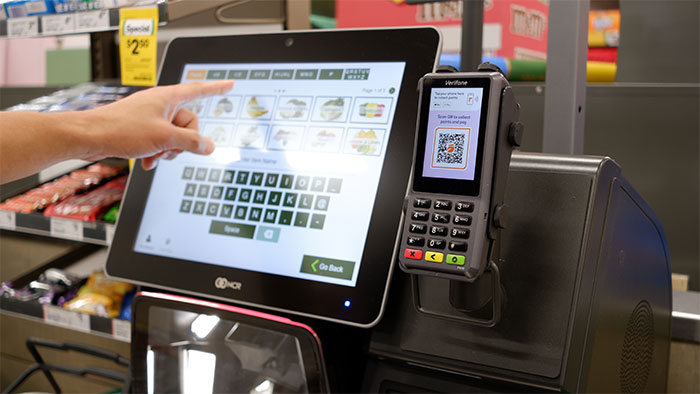
Your POS goes down at 7pm on a Friday. That’s not a hypothetical — it happens, and when it does, every minute offline translates directly into lost covers, frustrated staff, and payments that don’t process. Good micros oracle support isn’t a luxury line item; it’s the difference between a 20-minute recovery and a two-hour disaster. So what should you actually expect from a payment integration partner when your MICROS system starts misbehaving?
Why Professional Oracle MICROS Support Is Crucial
Most restaurant operators don’t think about POS support until something breaks. That’s the wrong posture. Oracle MICROS systems — whether you’re running a cloud-based Simphony deployment or an on-premise setup — are deeply integrated with payment processing, kitchen display routing, and inventory. When one layer fails, it doesn’t fail in isolation.
The real cost of downtime isn’t just the revenue you lose in the moment. It’s the comped meals to keep guests calm, the paper-ticket chaos in the kitchen, the staff who’ve never been trained on a manual fallback, and the payment batches that don’t close cleanly. Unresolved POS issues compound fast.
Minimizing System Downtime
During a dinner rush, a frozen terminal doesn’t wait for a ticket. Your support partner needs to respond in minutes, not hours. Here’s where most operators get burned: they assume their Oracle contract covers rapid-response troubleshooting. It often doesn’t — access to real support depends heavily on your contract tier, account status, and which product portal you’re routed through. That’s not a knock on Oracle; it’s just how enterprise support structures work at scale.
A dedicated integration partner fills that gap. They know your specific configuration, your payment processor mappings, and your hardware before the call even starts.
Comprehensive MICROS POS Technical Support Solutions
What does “comprehensive support” actually mean in day-to-day operations? Not a brochure answer — an operational one.
24/7 Monitoring and Proactive Maintenance
Proactive beats reactive every time. A good support partner monitors system health before errors surface in service. That means watching for database locks, payment gateway timeouts, and network instability — the kind of low-level noise that turns into a hard crash at the worst possible moment.
A solid maintenance routine looks like this:
- Scheduled log reviews to catch recurring error codes before they escalate
- Payment batch reconciliation checks — verify every close matches processor records
- Workstation and peripheral firmware updates during off-peak windows
- Network path testing between POS terminals and the payment processor
- Database integrity checks on the MICROS server after high-volume service periods
If/when you see split checks failing intermittently — check the network switch first, not the software. Nine times out of ten it’s a packet loss issue, not a MICROS bug.
Remote and On-Site Troubleshooting
Remote diagnostics handle a surprisingly large percentage of issues — configuration drift, payment token errors, menu sync failures. But some problems require hands on hardware. A partner without on-site capability is a half-solution.
Edge cases that typically require physical presence:
- Card reader replacement after a hardware fault (not a software reset)
- Workstation power supply failures mid-service
- Network switch failures affecting multiple terminals simultaneously
- Void-after-close scenarios where a payment posted to the wrong batch and the processor needs a manual adjustment
At 9pm close, if your batch report shows a discrepancy between MICROS totals and your processor statement, that’s not something you chase through a generic support portal at midnight. You need someone who can pull the transaction logs, cross-reference the auth codes, and escalate to the processor directly.
Specialized Support for Oracle MICROS RES 3700
The RES 3700 is still running in a lot of restaurants — more than people admit. It’s a stable, proven on-premise system, and operators who’ve built their workflows around it aren’t rushing to migrate. That’s a valid call. But on-premise systems carry their own support overhead.
Legacy System Maintenance and Migration
The micros res 3700 runs on a local server architecture, which means your data, your configuration, and your payment integrations live on hardware you own or lease. When that hardware ages, so does your risk profile. Legacy maintenance on RES 3700 requires product-specific expertise — not every MICROS technician has hands-on experience with the 3700’s database structure or its payment module configuration.
Check these before assuming your RES 3700 is “fine”:
- When was the last full database backup verified — not just scheduled, but actually tested for restore?
- Is your payment integration still using a supported encryption standard for card data?
- Has anyone audited the server’s disk health in the last six months?
Migration to Simphony is a conversation worth having — but it’s not a weekend project. A partner who’s done it before knows which configuration elements don’t translate cleanly and where payment processing gaps appear during cutover.
Advanced Assistance for Oracle MICROS Simphony
Simphony runs on a cloud architecture, which changes the support dynamic entirely. Software updates push automatically. Configuration changes propagate across locations. That’s powerful — and it’s also a new category of failure mode if something pushes incorrectly.
Cloud Integration and Performance Optimization
During breakfast rush, if Simphony loses sync with the cloud layer, terminals can go into offline mode. Most operators don’t know their system has an offline fallback until it activates unexpectedly. Knowing how your Simphony deployment handles offline payment authorization is not optional knowledge. Test it before service, not during.
Performance issues in Simphony often trace back to the local network configuration, not the cloud platform itself. Slow ticket printing, delayed payment confirmations, kitchen display lag — check local bandwidth and switch configuration before assuming the issue is Oracle-side.
Why Choose Certified MICROS Technicians
Oracle’s support documentation separates Simphony and RES 3700 into distinct product paths. That’s not bureaucracy for its own sake — the systems are genuinely different under the hood, and troubleshooting one doesn’t automatically translate to the other. A technician who’s certified on both, and who understands how payment processing integrates at the hardware and software level, is a different resource than a general IT contractor.
The catch is that not every company marketing “MICROS support” has that depth. Ask direct questions: Can they pull transaction-level logs from your specific product version? Have they handled payment batch reconciliation failures on your system type? Do they have a documented escalation path to the payment processor when the issue isn’t on the POS side?
Tailored Service Level Agreements
SLAs need to match your actual service hours — not a standard business-hours window. A restaurant running dinner service until midnight needs a support partner whose response window covers that exposure. Get the SLA terms in writing: response time, resolution target, on-site availability, and what happens when a hardware replacement is required.
If the SLA doesn’t define what “response” means — phone acknowledgment versus active troubleshooting — negotiate that language before you sign. Acknowledgment at 11pm and active resolution at 9am the next morning are not the same thing when you’re trying to open for lunch service.
Contact Us for MICROS POS Customer Service
The right support partner doesn’t just answer tickets. They know your system configuration, your payment processor relationships, and your operational calendar before anything breaks. In 2026, with payment integrations getting more complex and POS systems carrying more operational weight than ever, that relationship is worth building before you need it.
Don’t wait for a Friday night failure to find out what your support coverage actually looks like. Audit your current SLA, test your offline fallback procedures, and make sure whoever supports your MICROS system has product-specific experience — not just general IT credentials. That’s the baseline. Everything above that is upside.