Openclawd AI + OpenAI: What’s the Future Going to Be?
When the news dropped that OpenAI had acquired Openclawd AI, a lot of people shrugged and treated it like just another Silicon Valley purchase. That reaction feels a bit lazy. Openclawd AI was one of the few assistants pushing hard in a direction most mainstream AI companies have avoided for years: letting the AI live on your own machine, automate things on its own, and bend to your workflow instead of the other way around. So when a company famous for cloud models suddenly brings that kind of project under its roof, it naturally raises eyebrows. Not because acquisitions are unusual, but because this one touches a nerve about who actually controls the future of AI.
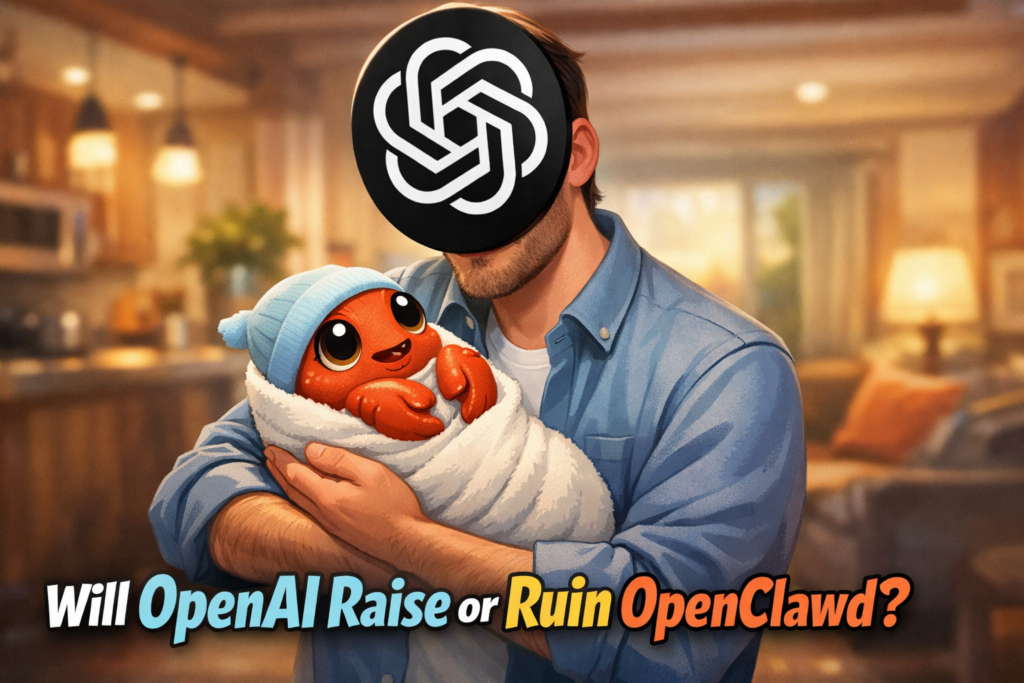
img alt: Openclawd AI being acquired by OpenAI was one of the biggest recent upsets in the AI industry.
Table of Contents
- Why Openclawd AI Matters More After the Acquisition
- How Openclaw Pushes AI Beyond Simple Responses
- Openclaw AI Lets Users Shape the Assistant They Need
- Connecting Tools That Live in Separate Worlds: Openclawd?
- The Cost Structure Behind Open Claw
- Openclaw AI: Becoming the Bridge?
- The Future of Openclaw After Joining OpenAI
Why Openclawd AI Matters More After the Acquisition
Openclawd AI has always stood out because it runs directly on your own hardware. That approach already appealed to developers and anyone tired of sending sensitive data across the internet just to automate a task. Now that OpenAI has acquired Openclawd AI, the local-first model suddenly has much more momentum behind it.
It’s not difficult to see where this might lead. OpenAI’s models could handle the thinking side of things, language, reasoning, all the heavy brain work, while Openclawd AI takes care of actually running tasks on your own machine. Put the two together and you end up with something a lot more practical than a chatbot. An assistant that’s smart, sure, but also one that can operate inside your own systems instead of just talking about what should be done.
How Openclaw Pushes AI Beyond Simple Responses
One thing people notice pretty quickly about Openclaw is that it doesn’t behave like the assistants most of us are used to. Most AI tools wait politely for prompts. You ask something, they respond, and then they sit quietly until the next request.
Openclaw is built to do more than that. Once configured, Openclaw can monitor systems, trigger workflows, and coordinate services automatically. It shifts the assistant from a reactive tool into something that actively keeps your digital environment running.
Now that OpenAI is involved, this capability could become even more powerful. Imagine combining OpenAI’s reasoning models with Openclaw’s automation engine. Instead of just answering questions, the assistant could understand goals and carry out tasks across your entire system.
That is a very different kind of AI assistant.
Openclaw AI Lets Users Shape the Assistant They Need
Another reason Openclaw AI has attracted attention is customization. Many AI assistants are powerful but fixed. You use the tools provided, but you rarely change how the assistant itself works.
Openclaw AI was built to be flexible from the start thanks to its modular skill system. Users can add new abilities, tweak existing ones, or remove things they don’t need depending on how they actually work. Instead of squeezing your workflow into a fixed tool, the assistant can be shaped around what you need it to do.
Now that OpenAI is involved, that system could grow quite a bit. Developers might start building new skills powered by advanced models, while the core automation still runs locally on your machine. For teams that build complex systems, that kind of flexibility is incredibly valuable.
Connecting Tools That Live in Separate Worlds: Openclawd?
Anyone who works online knows the routine. One tab for email, another for storage, another for project management, another for analytics. The modern digital workspace is basically a collection of disconnected islands.
Openclawd tackles that problem by integrating with more than one hundred services. Instead of manually coordinating those tools, the assistant can trigger actions and move information between them automatically.
This is where OpenAI’s involvement could really amplify things. Openclawd already connects the tools. With OpenAI’s models involved, the assistant could start understanding the context behind those connections. It could identify patterns, anticipate needs, and trigger workflows before a user even thinks to ask.
That kind of coordination starts to feel less like automation and more like genuine assistance.
The Cost Structure Behind Open Claw
Another interesting difference between Open Claw and conventional AI platforms is how the costs are structured. Most cloud assistants follow the same pattern. You pay a monthly subscription and the meter keeps running whether you’re using the tool constantly or barely touching it that month.
Open Claw approaches things a bit differently. There’s an initial setup, and after that the costs mostly come from usage based API calls depending on how the system actually runs. Since a lot of the automation happens locally, the assistant isn’t leaning on cloud processing every second.
With OpenAI now owning Open Claw, it’s easy to picture that model evolving into something more balanced. Everyday tasks could stay local and efficient, while the heavier reasoning pulls in powerful models only when it’s actually needed.
Openclaw AI: Becoming the Bridge?
Right now, AI tends to fall into two categories. Cloud assistants offer powerful models but limited control. Local systems provide privacy and flexibility but sometimes lack advanced reasoning capabilities.
Openclaw AI has always leaned toward the local side of that equation. With OpenAI acquiring the technology, it suddenly has the chance to sit right in the middle.
Openclaw AI could become the orchestration layer that connects powerful models with local automation. The assistant would not just generate answers. It would interpret goals, coordinate services, and execute tasks directly on your machine.
That combination would make AI assistants feel far more practical in everyday work.
The Future of Openclaw After Joining OpenAI
Openclaw already proved that AI assistants do not need to live entirely in the cloud to be powerful. Its focus on autonomy, customization, and local execution created a system that behaves more like infrastructure than a chatbot.
Now that OpenAI has brought Openclawd into its orbit, the ceiling suddenly feels a lot higher. What started as a local automation assistant could end up plugged into some of the most powerful AI models available today, and that combination is hard to ignore.
If things move in that direction, Openclaw probably won’t stay just another name in the long list of AI assistants. It has a real shot at becoming the kind of system that bridges two worlds. The intelligence lives in the cloud, but the actual work happens right on your own machine. That’s a pretty compelling place for AI to land.