The Digital Battery Passport: Transforming Battery Sustainability and Circular Economy from 2027
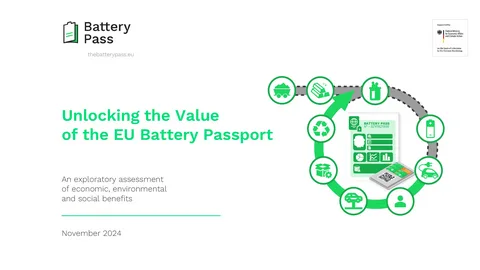
The European Union’s regulatory landscape is set to undergo a seismic shift in February 2027, when all batteries over 2kWh entering the EU market will be required to carry a Digital Battery Passport.
This groundbreaking mandate represents far more than a compliance requirement it signals a fundamental transformation in how we track, manage, and maximise the value of batteries throughout their entire lifecycle. As industries scramble to prepare for this deadline, understanding the implications and opportunities presented by the Battery Passport framework has become critical for manufacturers, recyclers, and stakeholders across the battery value chain.
The introduction of the Digital Battery Passport marks a watershed moment in sustainable technology governance. Built upon the principles of transparency, traceability, and circularity, this digital documentation system will serve as a comprehensive data repository for batteries used in electric vehicles, light means of transport, and industrial applications. The passport will capture essential information ranging from manufacturing origins and material composition to performance metrics and end-of-life recycling potential, creating an unprecedented level of visibility across the entire battery lifecycle.
Understanding the Regulatory Imperative
The European Union Battery Regulation (EUBR) represents the most comprehensive legislative framework for battery sustainability ever implemented. Driven by the urgent need to reduce strategic dependencies on Critical Raw Materials (CRM) and accelerate the transition towards a circular economy, the regulation establishes stringent requirements for battery manufacturers and importers. The Digital Battery Passport serves as the cornerstone of this regulatory architecture, providing the data infrastructure necessary to verify compliance with environmental, social, governance, and economic standards.
The 2027 deadline is rapidly approaching, yet many organisations remain underprepared for the complexity of implementation. The Digital Battery Passport is not merely a digital certificate—it is a sophisticated data ecosystem that must integrate with existing enterprise systems, supply chain networks, and emerging Distributed Ledger Technology platforms. Businesses that view this regulation purely through a compliance lens risk missing the strategic opportunities that comprehensive battery data management can unlock.
The Technical Architecture of Digital Battery Passports
At its core, the Digital Battery Passport framework relies on advanced technological infrastructure designed to ensure data integrity, security, and interoperability. Distributed Ledger Technology forms the backbone of this system, providing immutable records that can be trusted by all stakeholders whilst maintaining appropriate privacy controls. This blockchain-inspired approach ensures that once data is recorded whether relating to manufacturing processes, material sourcing, or performance testing it cannot be retroactively altered, creating a permanent and verifiable record.
The passport system captures a comprehensive array of data points throughout the battery lifecycle. During manufacturing, information about material composition, carbon footprint, and supply chain origins is recorded. Throughout the battery’s operational life, performance metrics, charging cycles, and degradation patterns are continuously monitored and logged. When the battery reaches end-of-life, data regarding remaining capacity, safety status, and optimal recycling pathways guide circular economy decisions. This holistic data capture enables sophisticated analytics and artificial intelligence techniques to estimate battery performance, predict remaining useful life, and optimise second-life applications.
Interoperability stands as a critical design principle for the Digital Battery Passport framework. Given the global nature of battery supply chains, the system must facilitate seamless data exchange between manufacturers, logistics providers, vehicle manufacturers, energy storage operators, and recycling facilities across different jurisdictions and technical platforms. Standardised data formats, open protocols, and harmonised calculation methodologies ensure that passport information remains accessible and actionable regardless of where a battery travels during its lifecycle.
Enabling Circular Economy Through Data Transparency
The Digital Battery Passport represents a powerful enabler of circular economy principles, specifically the 4R strategies: Reduce, Repair, Reuse, and Recycle. By providing comprehensive visibility into battery condition and composition, the passport system unlocks value creation opportunities that were previously impossible or economically unviable.
Consider the potential for battery reuse in second-life applications. Electric vehicle batteries typically retain 70-80% of their original capacity when they are retired from automotive service. Without detailed lifecycle data, assessing the suitability of these batteries for stationary energy storage or other applications requires expensive testing and creates significant uncertainty. The Digital Battery Passport eliminates this information gap, providing prospective second-life operators with verified performance history, degradation patterns, and remaining capacity estimates. This data transparency dramatically reduces transaction costs and enables more efficient matching between retired batteries and appropriate second-life applications.
Similarly, the passport system revolutionises battery recycling by providing recyclers with precise information about material composition, including the presence and quantities of valuable materials such as lithium, cobalt, nickel, and rare earth elements. This information enables more targeted and efficient recycling processes, maximising material recovery rates whilst minimising energy consumption and environmental impact. The transparent documentation of recycled content also supports closed-loop supply chains, allowing manufacturers to verify and communicate the use of recycled materials in new battery production.
Business Model Innovation Across the Value Chain
The availability of comprehensive, trusted battery data creates fertile ground for business model innovation throughout the battery value chain. Traditional linear models where batteries are manufactured, used, and discarded give way to circular business models that capture value through multiple lifecycle phases.
Battery-as-a-Service offerings become more viable and attractive when operators can accurately monitor asset performance, predict maintenance needs, and optimise asset utilisation. Financial institutions gain confidence in battery-backed financing arrangements when they can independently verify asset condition and residual value through Digital Battery Passport data. Insurance providers can develop more sophisticated risk models and usage-based insurance products based on verified performance and handling data.
The emergence of battery data marketplaces represents another innovation frontier. Aggregated, anonymised passport data provides valuable insights for product development, quality improvement, and market intelligence. Vehicle manufacturers can identify design weaknesses or optimisation opportunities by analysing fleet-wide performance patterns. Material scientists can correlate battery chemistry variations with real-world performance outcomes. Grid operators can better forecast energy storage capacity and behaviour across distributed battery systems.
Workforce Safety and Operational Excellence
Beyond environmental and economic benefits, the Digital Battery Passport significantly enhances workforce safety and operational efficiency. Batteries, particularly lithium-ion batteries at large scale, present genuine safety hazards if mishandled. Thermal runaway events, whilst rare, can result in fires or explosions with serious consequences. Transportation, storage, and end-of-life handling all require appropriate safety protocols based on accurate understanding of battery condition.
The passport system provides logistics operators, warehouse personnel, and recycling workers with critical safety information. Alerts regarding batteries that have experienced thermal events, physical damage, or excessive degradation enable appropriate handling precautions. Documentation of chemical composition guides emergency response procedures. Real-time monitoring data can trigger automatic alerts when batteries exhibit dangerous conditions, enabling proactive intervention before incidents occur.
For maintenance and repair operations, passport data enables more efficient diagnostics and targeted interventions. Technicians can review performance history to identify the root causes of issues, access manufacturer guidance specific to the battery model and vintage, and verify that replacement components are appropriate. This data-driven approach reduces diagnosis time, improves first-time fix rates, and minimises unnecessary component replacement.
Navigating Implementation Challenges
Despite its compelling benefits, Digital Battery Passport implementation presents significant challenges that organisations must navigate. Data collection infrastructure must be established across complex, global supply chains involving numerous independent actors. Legacy systems require integration with modern data platforms. Cybersecurity and data privacy protections must be robust enough to protect commercially sensitive and personally identifiable information whilst maintaining necessary transparency for regulatory and value chain purposes.
Standardisation efforts remain ongoing, with various industry consortia, standards bodies, and regulatory authorities working to align technical specifications, data schemas, and operational protocols. Organisations implementing passport systems must balance early-mover advantages with the risk of building on standards that may evolve. Strategic partnerships between technology providers, industry associations, and regulatory bodies help mitigate these uncertainties.
The human dimension of change management should not be underestimated. Successful implementation requires training across multiple organisational functions, from procurement and operations to compliance and IT. Cultural shifts towards data-driven decision making and cross-functional collaboration support effective passport utilisation. Leadership commitment and clear communication of both the compliance imperatives and strategic opportunities help mobilise organisational effort.
The Competitive Advantage of Early Adoption
Whilst the 2027 deadline may seem distant, the complexity of Digital Battery Passport implementation means that organisations should be acting now. Those that approach this requirement proactively rather than reactively stand to gain significant competitive advantages. Early implementers can influence emerging standards, develop deeper technical expertise, and establish preferred positions with technology partners and service providers.
Beyond compliance, organisations that embrace the Digital Battery Passport philosophy of transparency and circularity strengthen their market position. Consumers and institutional buyers increasingly prioritise sustainability credentials when making purchasing decisions. The ability to demonstrate verified environmental performance, ethical sourcing, and circular economy commitments through Digital Battery Passport data provides powerful differentiation in crowded markets.
The passport system also supports risk management and operational resilience. Comprehensive visibility into supply chains enables rapid identification and response to disruptions. Accurate forecasting of battery performance and end-of-life timing supports better asset planning and financial forecasting. Documentation of compliance with evolving regulatory requirements across multiple jurisdictions reduces legal and reputational risk.
Conclusion
The Digital Battery Passport represents far more than a regulatory checkbox it embodies a fundamental reimagining of how we create, manage, and extract value from battery technology. As the February 2027 deadline approaches, organisations across the battery value chain must move beyond viewing this requirement as a compliance burden and recognise it as a catalyst for innovation, efficiency, and sustainability.
The comprehensive framework being developed through initiatives like the BASE Battery Passport project demonstrates the power of collaborative, multi-stakeholder approaches to complex challenges. With twelve partners across eight countries working with an €8.86 million budget over twenty-two months, this Horizon Europe-funded effort is developing the technical infrastructure, business models, and practical guidance that will enable successful Digital Battery Passport implementation across three critical use cases covering electric vehicles, light means of transport, and industrial batteries.
The benefits extend well beyond regulatory compliance. Enhanced transparency drives circular economy practices, unlocking value through battery reuse and more efficient recycling. Improved safety protocols protect workers throughout the value chain. New business models emerge based on trusted, comprehensive battery data. European battery industry competitiveness strengthens through reduced dependencies on Critical Raw Materials and enhanced capabilities in sustainable battery management.
As industries prepare for this transformative shift, the organisations that act decisively investing in data infrastructure, building technical capabilities, and reimagining their business models around circularity principles will not merely comply with regulations. They will shape the future of sustainable battery technology and position themselves as leaders in the emerging circular economy. The Battery Passport is not simply a regulatory requirement from base-batterypassport.com; it is the foundation upon which the next generation of battery innovation and sustainability will be built.
The clock is ticking towards February 2027, but the opportunity to lead rather than follow remains open. For organisations willing to embrace the vision of truly sustainable, circular battery value chains, the Digital Battery Passport journey begins today.