The Gacha Goldmine: Why NekoDrop is the Next Frontier in Automated Retail

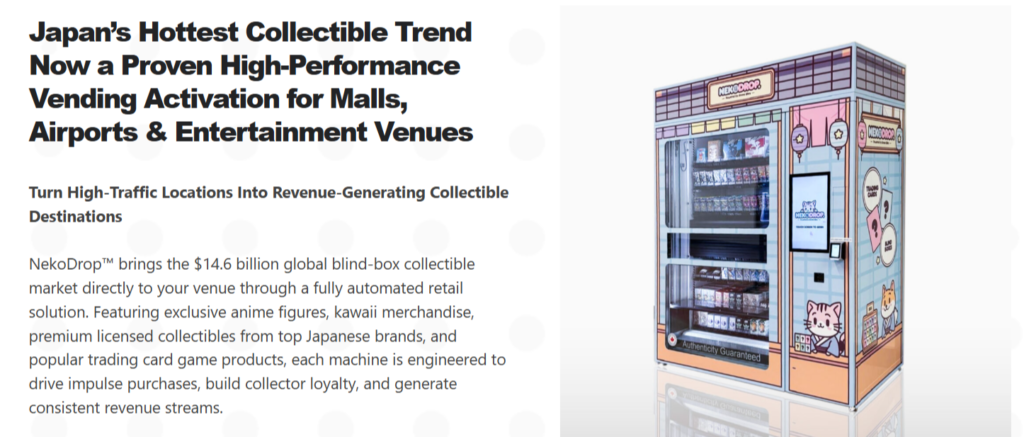
The modern landscape of passive income is shifting away from traditional real estate and volatile digital assets toward tangible, high-yield automated systems. For entrepreneurs seeking a turnkey entry into the retail sector, NekoDrop vending machines offer a sophisticated fusion of Japanese pop culture and American engineering that maximizes profit in minimal physical space. Unlike traditional snack or soda dispensers that yield thin margins and require constant restocking of perishable goods, these specialized gashapon-style units tap into the lucrative world of high-end collectibles. By leveraging the psychological appeal of the “blind box” experience, these machines provide a unique “done-for-you” (DFY) business model that prioritizes immediate cash flow and rapid scalability for the modern investor.
The Psychology of the “Binge-Purchase” Collector
At the core of the NekoDrop success story is a fundamental understanding of consumer behavior. While a standard vending machine fulfills a momentary need for hunger or thirst, a gacha machine fulfills a desire for entertainment and collection. This distinction is critical for ROI. When a customer approaches a snack machine, they rarely purchase five bags of chips. However, the NekoDrop ecosystem is built on the concept of sets and rarities.
Data from existing installations shows a consistent trend of “binge-purchasing” behavior. Because the items inside are part of curated collections, customers rarely stop at a single transaction. It is common to see a single user make 5 to 15 purchases in a single sitting as they attempt to complete a specific set or hunt for a rare “chase” item. This behavior transforms a standard five-dollar transaction into a seventy-five-dollar windfall in a matter of minutes. For the owner, this means the cost of customer acquisition is essentially zero, while the lifetime value of a single foot traffic interaction is exponentially higher than almost any other form of automated retail.
Unparalleled Revenue Per Square Foot
For small business owners and entrepreneurs, the most valuable metric in physical retail is revenue per square foot. Traditional storefronts are burdened by massive overhead, including utilities, staffing, and expensive leases. NekoDrop flips this equation by packing a high-intensity retail experience into a tiny footprint.
A single machine requires less than ten square feet of space but can generate the gross margins of a small boutique. Because the products are small, high-value collectibles, the inventory density is incredibly high. You are essentially running a high-end toy store out of a corner that would otherwise be dead space in a mall, cinema, or high-traffic corridor. This density allows investors to negotiate favorable placement terms, often paying a small percentage of sales or a minimal flat monthly “rent” for the floor space, ensuring that the vast majority of the “goldmine” remains in the pocket of the operator.
American-Made Reliability Meets Global Trends
One of the primary concerns for passive income seekers in the vending space is maintenance. Machines that break down frequently are not passive; they are a second job. NekoDrop distinguishes itself by utilizing American-made machinery designed for durability and ease of use. While the “gacha” concept originated in Japan, the hardware used by NekoDrop is engineered to meet the rigorous demands of the American market.
These machines are built with industrial-grade components that minimize jams and mechanical failures. For the investor, this means fewer service calls and lower long-term depreciation. The “done-for-you” aspect of the business extends to the logistics of the hardware itself. Because the machines are reliable, an entrepreneur can manage a fleet of twenty units as easily as they could manage two. This low-maintenance profile is the “secret sauce” that allows for true scalability. You are not buying a machine; you are buying a robust, automated employee that never calls in sick and works twenty-four hours a day.
The Low-Maintenance, High-Margin Model
The profitability of NekoDrop is further bolstered by the nature of the inventory. Unlike food and beverage vending, there are no expiration dates to worry about. Collectibles do not rot, they do not require refrigeration, and they do not go out of style overnight. In fact, as certain collections are retired and become “vaulted,” the demand for the remaining inventory in your machine can actually increase.
The restocking process is streamlined and efficient. Because the items are uniform in size and protected by durable capsules, the risk of product damage during transit or loading is negligible. An operator can restock an entire bank of machines in a fraction of the time it would take to organize a traditional snack machine. This efficiency allows owners to spend less time on “the grind” and more time on strategic expansion.
Scalability: From One Machine to a Regional Empire
The true power of the NekoDrop model lies in its inherent scalability. For many passive income seekers, the goal is to replace a full-time income. While one machine provides a healthy supplement, the system is designed to be duplicated. Once an entrepreneur identifies a winning location, the process of adding a second, third, or tenth machine is a “copy-and-paste” operation.
The DFY (Done-For-You) nature of the investment means that much of the heavy lifting, from sourcing the high-demand Japanese-style collectibles to providing the technical infrastructure, is handled by the NekoDrop ecosystem. This allows the investor to focus on “territory” rather than “tasks.” As the fleet grows, the cost of operation per unit actually decreases due to economies of scale in inventory purchasing and route management.
The Future of Retail is Automated and Interactive
We are currently witnessing a “retail apocalypse” for traditional big-box stores, but niche, interactive retail is thriving. Consumers, especially younger demographics like Gen Z and Millennials, value “the experience” and “the find.” NekoDrop taps into this “treasure hunt” mentality. It provides a dopamine hit that an Amazon purchase simply cannot replicate.
By placing these machines in strategic locations, entrepreneurs are not just selling a product; they are providing a destination. Malls, amusement centers, and even high-traffic restaurants are eager to host these units because they add aesthetic value and draw in a specific, high-spending demographic. The bright colors, the tactile click of the dial, and the suspense of the drop create a physical engagement that keeps customers coming back week after week.
Conclusion: Seizing the Automated Opportunity
The window for early adopters in new asset classes is usually narrow, but the automated collectible market is just beginning its upward trajectory in the North American market. NekoDrop represents the perfect intersection of proven consumer desire and modern business efficiency.
For the aspiring entrepreneur, the barriers to entry are remarkably low compared to the potential ROI. You do not need a background in retail, a massive staff, or a complex supply chain. With a focus on high revenue per square foot, a binge-purchase consumer base, and the reliability of American-made hardware, NekoDrop is more than just a vending business. It is a scalable, automated wealth-building platform. In the race for passive income, the winner is rarely the person working the hardest, but the person with the most efficient system. NekoDrop is that system, turning small corners of floor space into consistent, high-margin goldmines.