The Ultimate Guide to Air Permeability Testing: Methods, Standards, and Solutions
Introduction: Why Air Permeability Matters
In today’s demanding manufacturing landscape, the performance of materials is scrutinized like never before. Whether it’s the breathability of a high-tech sportswear fabric, the protective seal of a medical packaging, or the filtration efficiency of a geotextile, one critical property dictates functionality: air permeability. An Air Permeability Test is the definitive, quantifiable method for measuring how easily air passes through a material. This key quality control metric impacts product performance, safety, and compliance across dozens of industries. In this comprehensive guide, we’ll explore the science behind the test, its vital applications, and how modern technology, like the advanced Air Permeability Tester from ChiuVention, is revolutionizing accuracy and efficiency in labs worldwide.
What is an Air Permeability Test?
An air permeability test is a standardized procedure used to determine the rate of airflow through a given area of a material under a specified pressure difference. Simply put, it measures how “breathable” or “porous” a material is to air.
The core principle is straightforward: a test specimen is clamped securely in a test head, creating a sealed area. A controlled air pressure differential is applied across the specimen. Precision instruments then measure either:
- The volume of air flow through the material in a set time at a constant pressure.
- The pressure drop across the material under a constant flow rate.
The result is typically expressed in units like cm³/cm²/s, m³/m²/min, L/m²/s, or for very porous materials, Darcy. This quantified data is indispensable for material specification, research, and quality assurance.
Key Industries and Applications
The air permeability test is not confined to a single sector. Its relevance spans a vast array of fields:
- Technical Textiles & Apparel: Optimizing breathability in sportswear, wind resistance in outerwear, and comfort in linens.
- Nonwovens & Filtration: Critical for evaluating filter media efficiency, mask materials, and industrial filtration fabrics.
- Paper & Packaging: Ensuring the correct porosity of specialty papers, tea bags, and sterile medical packaging (like Tyvek®).
- Geotextiles & Construction: Assessing soil stabilization types of fabrics and building membranes for waterproofing and ventilation properties.
- Automotive & Aerospace: Testing interior fabrics, cabin air filters, and composite materials.
- Leather & Footwear: Grading leather for breathability in shoes and garments.
Understanding the Test Standards
Global standards ensure tests are repeatable and comparable. Leading standards organizations have developed specific methodologies:
- ASTM D737: Standard Test Method for Air Permeability of Textile Fabrics. Widely used in the apparel and textile industry.
- ISO 9237: Textiles — Determination of permeability of fabrics to air. The key international standard.
- GB/T 5453 (Chinese Standard): Essentially equivalent to ISO 9237.
- ASTM D6476: Standard Test Method for Determining Dynamic Air Permeability of Inflatable Restraint Fabrics (for airbags).
- TAPPI T460 & ISO 5636: Standards for paper and board.
A high-quality tester, like the ChiuVention Air Permeability Tester, is designed to comply seamlessly with these major standards, offering pre-configured test modes for each.
The Testing Procedure: A Step-by-Step Overview
While specific steps vary by standard, a general procedure involves:
- Specimen Preparation: Cutting representative samples to the required size.
- Calibration: Ensuring the instrument is calibrated for accurate pressure and flow measurement.
- Mounting: Securing the specimen in the test clamp without wrinkles or distortion.
- Test Parameter Setting: Selecting the correct test area, pressure point, and standard on the instrument.
- Test Execution: Initiating the test. The instrument automatically applies pressure/flow and measures the result.
- Data Analysis: Reviewing the result, often with statistics from multiple tests.
Crucial Factors Influencing Results:
- Test Pressure: Must be precisely controlled as per the standard.
- Clamping Force: Must be even to prevent edge leakage.
- Environmental Conditions: Temperature and humidity should be controlled, as they affect air density.
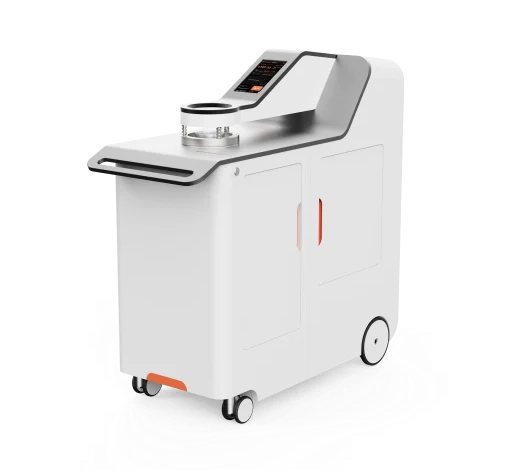
Introducing the ChiuVention Air Permeability Tester: Precision Engineered for Your Lab
Navigating complex standards requires an instrument that is both sophisticated and user-friendly. The ChiuVention Air Permeability Tester is engineered from the ground up to meet this challenge, offering unparalleled reliability and ease of use for quality control and R&D departments.
Why Choose the ChiuVention Tester?
- Unmatched Compliance & Accuracy: Fully compliant with ASTM D737, ISO 9237, GB/T 5453, and more. Its high-precision pressure sensor and digital flow meter guarantee results you can trust for critical decisions.
- Advanced Automatic Features: Features intelligent automatic leakage detection, one-button full-range calibration, and automatic test area identification. This reduces operator error and streamlines the testing workflow.
- Superior User Experience:
- Large Touchscreen Interface: Intuitive graphical UI for easy parameter setting and data visualization.
- Dual Test Heads: Optional configuration for testing two different specimen areas (e.g., 5 cm² & 20 cm²) without changing parts, boosting lab efficiency.
- Comprehensive Data Management: Store thousands of test results, generate statistical reports, and export data via USB for further analysis.
Technical Specifications & Benefits
- High-Resolution Measurement: Capable of measuring both low and high permeability materials with fine resolution.
- Robust & Stable Design: Ensures long-term stability and minimal maintenance.
- Global Support: Backed by ChiuVention’s professional technical support and customer service network.
Applications Showcase: The Tester in Action
Imagine streamlining these critical tasks:
- A Sportswear Manufacturer: Quickly verifying that a new fabric batch meets the specified breathability rating (ASTM D737) before it goes into production.
- A Medical Supplier: Validating that nonwoven materials for surgical gowns have the correct barrier properties.
- A Filter Producer: Precisely grading filtration media to ensure consistent performance in end-products.
The ChiuVention tester turns these scenarios into fast, reliable, and standardized routines.
Best Practices for Accurate Air Permeability Testing
- Consistent Sample Conditioning: Always condition and test samples in a standard atmosphere (e.g., 20±2°C, 65±4% RH).
- Regular Calibration: Follow a strict schedule for instrument calibration using certified orifice plates or masters.
- Proper Specimen Mounting: Avoid overtightening or leaving the sample loose. Ensure no folds or contamination at the test area.
- Multiple Samples: Test several specimens from across a fabric roll or material batch to get a representative average.
- Understand Your Standard: Always refer to the latest version of the applicable test standard for definitive procedures.
Conclusion: Breathe Easy with Confidence
In a world where material performance is non-negotiable, the Air Permeability Test stands as a pillar of quality assurance. Investing in a robust, accurate, and compliant testing instrument is not an expense—it’s a safeguard for your product’s reputation and performance.
The ChiuVention Air Permeability Tester embodies this principle, offering a perfect fusion of cutting-edge technology, strict standard compliance, and operational simplicity. It empowers your team to deliver data-driven confidence, from the lab to the production floor.