TikTok Audience Growth for Small Businesses
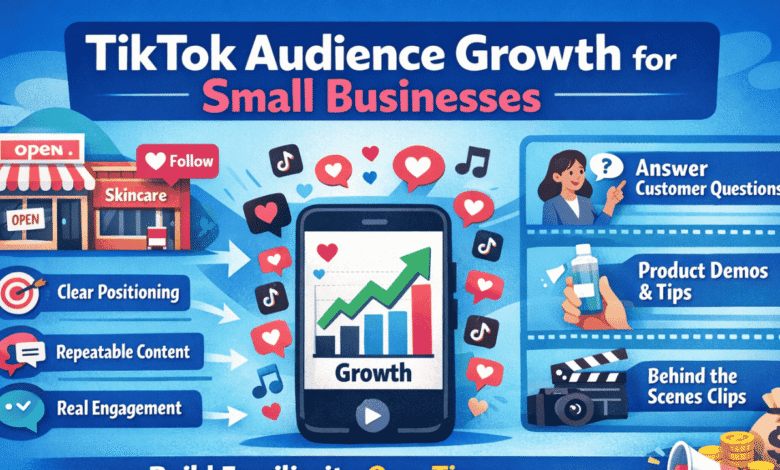
Small businesses often come to TikTok with a simple goal at first: reach more people without spending like a large brand. The platform can help with that, but audience growth tends to work better when the business treats TikTok as a place to build familiarity over time rather than chase one lucky spike. TikTok says recommendations are shaped by signals such as user interactions, watch behavior, and content information, which means steady relevance matters a great deal for smaller accounts trying to earn attention repeatedly.
Start with a realistic growth model
A small business usually benefits from focusing on the right audience before thinking about scale. TikTok for Business describes the platform as a place where businesses can grow through content and ads, but that only works well when the videos clearly match what the business sells, explains, or represents. A local bakery, a small skincare shop, and a bookkeeping service will not build the same kind of audience, and they should not try to.
That is also where outside support can enter the picture. Some owners reviewing growth options may come across organic the platform while comparing audience development services. HighSocial frames its TikTok offer around AI targeted growth and real followers, which places it on the organic and targeting focused side of the category rather than the fake engagement side that many businesses want to avoid.
Build content around recurring customer interest
Small businesses often post better videos when they stop trying to cover everything. TikTok’s Creator Search Insights lets creators and brands explore popular search topics, content gaps, and post performance in search. That is useful for smaller teams because it turns audience growth into something more practical. Instead of guessing what people may want, a business can study what users are already looking for and shape videos around those patterns.
A simple content plan often works better than a complicated one. For many small businesses, strong recurring categories include:
- answers to common customer questions
- product use cases and demonstrations
- short behind the scenes clips
- local or niche expertise
- reactions to customer habits or industry myths
TikTok’s small business marketing guide also points toward a blended strategy where organic content and paid campaigns can work together. For a smaller brand, that does not mean constant ad spending. It means organic content can build familiarity first, while paid support can be used more selectively around proven ideas.
Treat engagement as the main signal
Follower totals can look reassuring, but they do not always tell a business whether the audience is useful. TikTok explains that interactions such as likes, shares, comments, and watch behavior influence how content is recommended. For a small business, that means a smaller account with active responses can be in a healthier position than a larger one with weak attention. A thoughtful tiktok overview of HighSocial’s approach also leans on this broader idea that quality and targeting matter more than inflated numbers.
Use paid support carefully and only after patterns appear
TikTok for Business makes a clear case for paid tools, especially when a company wants to attract customers, boost conversions, or reach a tuned in audience. That can be valuable for a small business, though the stronger approach is often to start spending after the business has learned which posts already attract comments, profile visits, or product interest. Paid distribution tends to work better when it amplifies proven content instead of covering for weak creative.
A useful checkpoint before spending more is whether the business can answer a few basic questions:
- Which topics hold attention longest?
- Which videos lead to profile visits?
- Which posts attract questions from likely buyers?
- Which format can the team repeat consistently?
Those questions keep growth grounded in evidence. They also help smaller teams protect their budget, which matters when every marketing channel has to prove its value.
Make consistency manageable for a small team
On TikTok, small businesses usually find it difficult to be successful because they have selected a rhythm that they cannot sustain consistently. Having a smaller calendar allowing for predictable video formats will generally do better than clusters of activity spaced out by inactivity. The reasons for the lower, more consistent activity level are echoed in TikTok’s native tools related to search insights and recommendation signals, since platforms like TikTok reward relevance, constancy, and audience engagement over an extended period rather than in spurts.
Generally, as businesses gain traction on TikTok, they trend toward being more consistently recognizable to users. Businesses produce videos to answer repeat questions, use their products in a defined context, and cycle back to themes that their specific audience responds to. This repetitive pattern will help TikTok determine which individuals in the TikTok audience will have interest in this business and will assist users in being reminded why they are going to continue to be a follower of the business on TikTok.
What small business growth on TikTok really depends on
TikTok audience growth for small businesses tends to come from clear positioning, repeatable content, and attention to real response. The platform gives smaller brands room to compete, but it rewards relevance more than noise. That is encouraging for business owners who have expertise and patience, even if they do not have a large team behind them.
Over time, the strongest small business accounts usually look less like experiments and more like useful media habits. They give people a reason to return. They become easier to trust. And that kind of growth tends to hold up better than a brief surge that never turns into an audience.