Why Local Marketing Needs Reusable Audio, Not One-Off Jingles
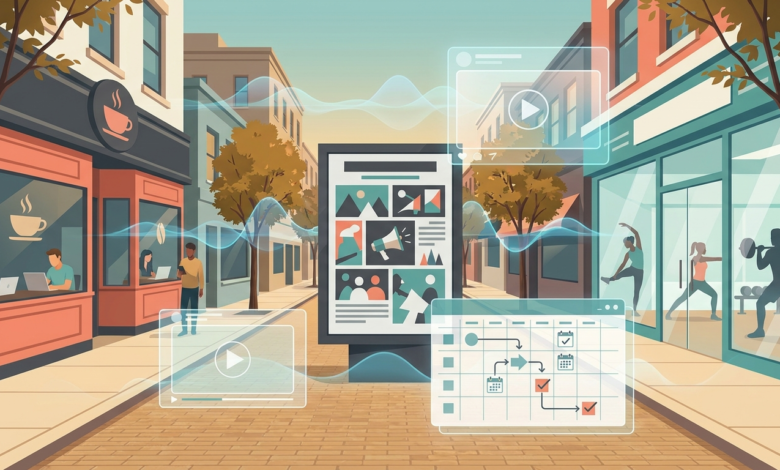
Local businesses already know how to make flyers, short videos, email updates, event posts, and seasonal promotions. The harder part is making all of that content feel connected when every campaign is produced quickly, often by a small team with no dedicated audio department.
That is where Flow Music becomes relevant: it reflects a practical shift from treating music as a last-minute decoration to treating it as a reusable part of local marketing. From a workflow perspective, it gives teams a way to turn plain-language direction into songs, vocal ideas, instrumentals, and campaign-ready audio concepts without starting every project from a blank studio brief.
This matters because local marketing is increasingly audiovisual. A restaurant announces a weekend special through a reel. A gym promotes a challenge with a short clip. A school fundraiser needs upbeat social posts. A real estate team wants neighborhood videos to feel warmer. In each case, the message is local, but the production pressure feels very modern: publish often, stay recognizable, and avoid content that sounds generic.
The problem is not that small teams lack taste. It is that music decisions usually arrive late, after the copy, design, and footage are already finished. By then, the team is searching for a track that is “close enough.” That can work once. It becomes messy when a business needs a repeatable sound across events, social platforms, product launches, and seasonal campaigns.
Why One-Off Audio Creates Friction
One-off audio choices seem efficient at first. A marketer finds a stock track, drops it into a video, exports the post, and moves on. The friction appears later, when the next campaign needs to feel related but not identical.
A local brand may end up with one energetic pop track for a summer sale, a cinematic track for a community sponsorship, a mellow acoustic track for a customer story, and a completely different sound for a holiday video. None of those choices may be bad individually. Together, they can make the brand feel inconsistent.
There is also a practical review problem. Stock libraries are useful, but the search process often rewards patience more than strategy. Teams may spend more time auditioning tracks than defining what the campaign should sound like. A vague request such as “upbeat but not cheesy” can lead to dozens of options without a clear decision rule.
Reusable audio thinking reverses that process. Instead of asking, “Which track can we find today?” the team asks, “What should this business sound like across repeated local moments?”
The Core Idea: Treat Sound Like A Brand Asset
Small businesses already understand visual consistency. They use the same logo, color palette, typography, and photography style because customers recognize those cues over time. Audio can work the same way, even if the system is lightweight.
A reusable audio system does not need to be a full sonic branding project. For many local teams, it can be a simple set of decisions:
- A general mood range for the brand
- Two or three tempo ranges for different campaign types
- A short list of preferred instruments
- Vocal or instrumental rules
- A few phrases or lyrical themes to avoid
- Clear review criteria before publishing
This gives the team a shared language. A bakery might describe its sound as warm, bright, handmade, and neighborhood-focused. A fitness studio may want confident, rhythmic, energetic, and clean. A local nonprofit may prefer sincere, hopeful, human, and calm.
Once those qualities are defined, each campaign becomes easier to brief. The business is no longer starting from silence; it is adapting a familiar sound direction to a specific moment.
How The Local Audio Workflow Works In Practice
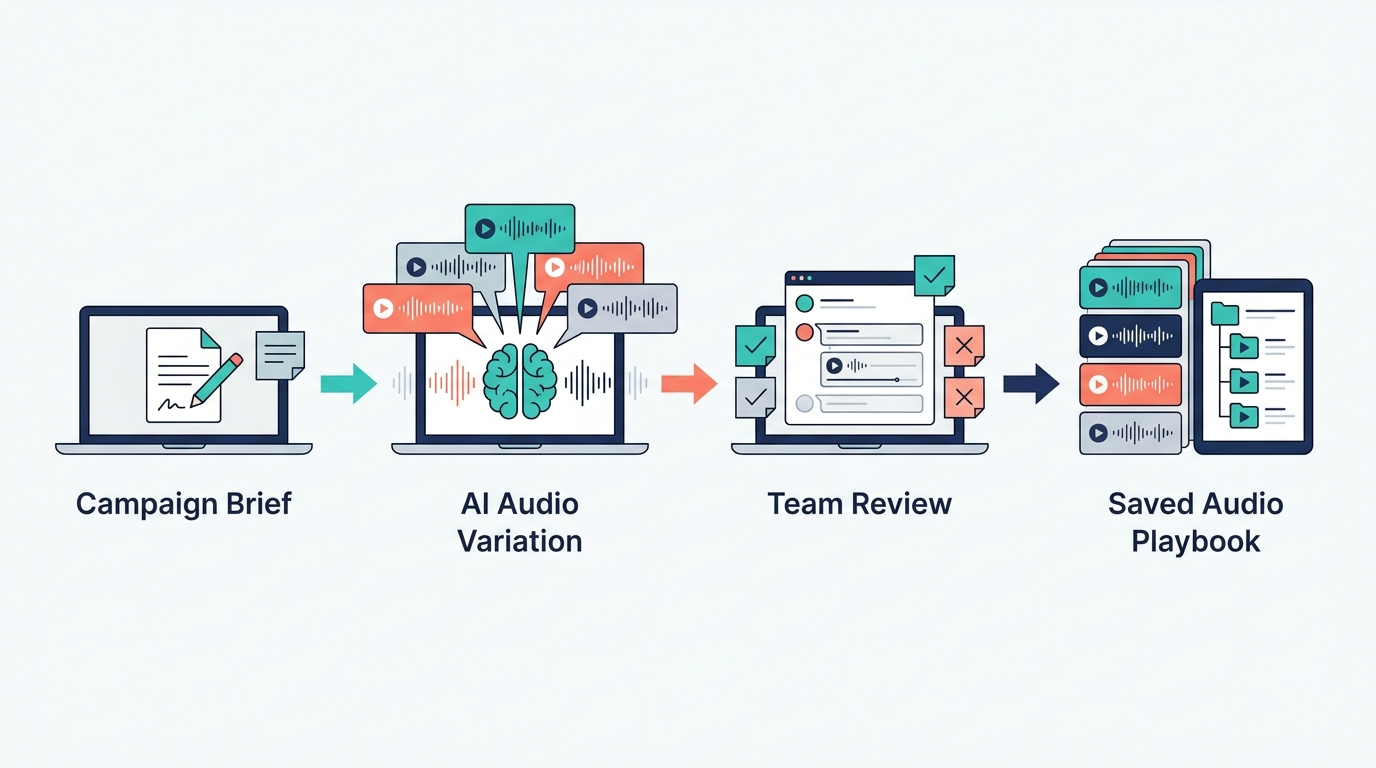
Before comparing audio workflows, it helps to see how a small team can move from a local campaign idea to a usable sound direction.
Step 1: Define The Local Moment
Start with the campaign context, not the music style. Is the business announcing a weekend sale, a grand opening, a charity drive, a class schedule, a customer story, or a seasonal menu? The local moment determines the emotional job of the audio.
For example, a community event recap may need warmth and momentum. A short product announcement may need clarity and speed. A founder story may need a softer pace. Naming the moment first prevents the team from choosing a track simply because it sounds polished.
Step 2: Translate The Moment Into Audio Direction
The next step is to turn the campaign into a short audio brief. This brief should include mood, audience, pacing, format, and any vocal needs. It should also say what the sound should avoid.
A useful brief might say: “Create an upbeat but friendly instrumental for a neighborhood coffee shop announcing Saturday morning specials. Keep it warm, modern, and light. Avoid nightclub energy, dramatic strings, or overly corporate background music.”
This kind of instruction is easier to review than a vague genre request. It connects the audio to the real marketing job.
Step 3: Generate And Review Variations
The first result should be treated as a draft, not a final answer. The team listens for brand fit, pacing, platform fit, and emotional accuracy. Does the audio support the message? Does it feel local rather than generic? Would it still make sense if used again in a related post next month?
This is where a text-to-music workflow is useful. The team can explore several directions before committing to one. A first version might be too energetic, another too slow, and a third close enough to refine. The review process becomes more concrete because the team is comparing heard examples, not debating abstract adjectives.
Step 4: Save The Direction For Future Campaigns
The most important step is the one many teams skip: document what worked. Save the prompt direction, the approved mood words, the disliked versions, and the final use case. This turns a single track into a reusable reference.
Over time, the business builds a small audio playbook. It may not be formal, but it helps new posts sound connected. That playbook can guide future video intros, event recaps, ad variations, podcast segments, or in-store announcement concepts.
Where Local Teams Can Use Reusable Audio
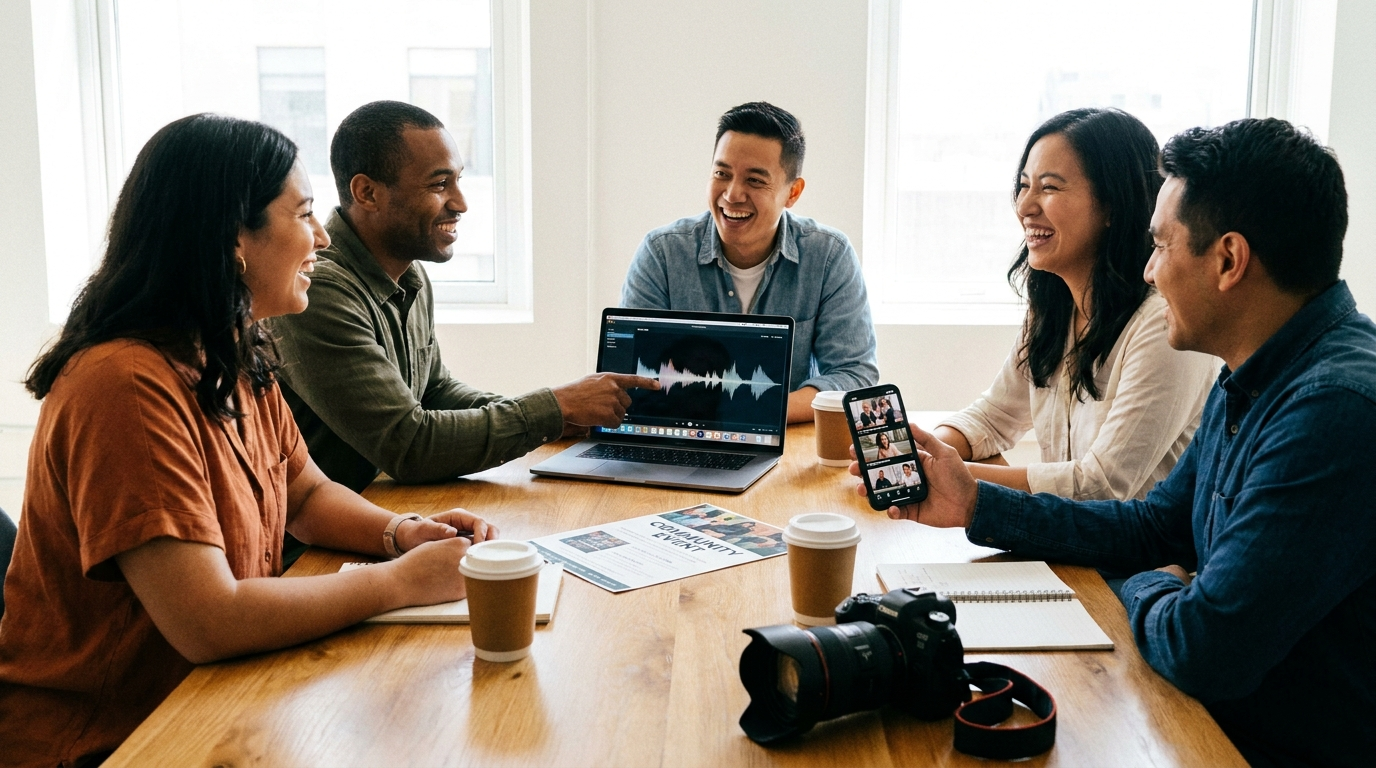
The value of reusable audio becomes clearer when it is tied to ordinary local marketing tasks.
Event Promotion
Community events need repetition. A business may promote an announcement, a reminder, a behind-the-scenes clip, a live-day recap, and a thank-you post. Each asset should feel related without sounding identical. A reusable audio direction lets the campaign stay coherent across those posts.
Short-Form Social Video
Short videos often move faster than brand review processes. A simple audio system helps social teams make faster choices. They can match a track to the content type: energetic for a limited-time offer, warmer for a customer story, calmer for a service explainer.
Seasonal Campaigns
Seasonal marketing can easily become predictable. Holiday music, summer sale music, and back-to-school music often fall into familiar patterns. A reusable sound direction gives the team room to be seasonal without losing the brand’s normal personality.
Local Storytelling
For customer spotlights, founder updates, neighborhood guides, and community partnerships, music should support trust. This is where overly dramatic stock music can feel misplaced. A more controlled audio brief can keep the tone human and grounded.
AI Audio Workflow vs Stock Tracks vs Local Studio Production: Key Differences
The table below compares three practical ways local teams can source campaign audio for repeated marketing needs.
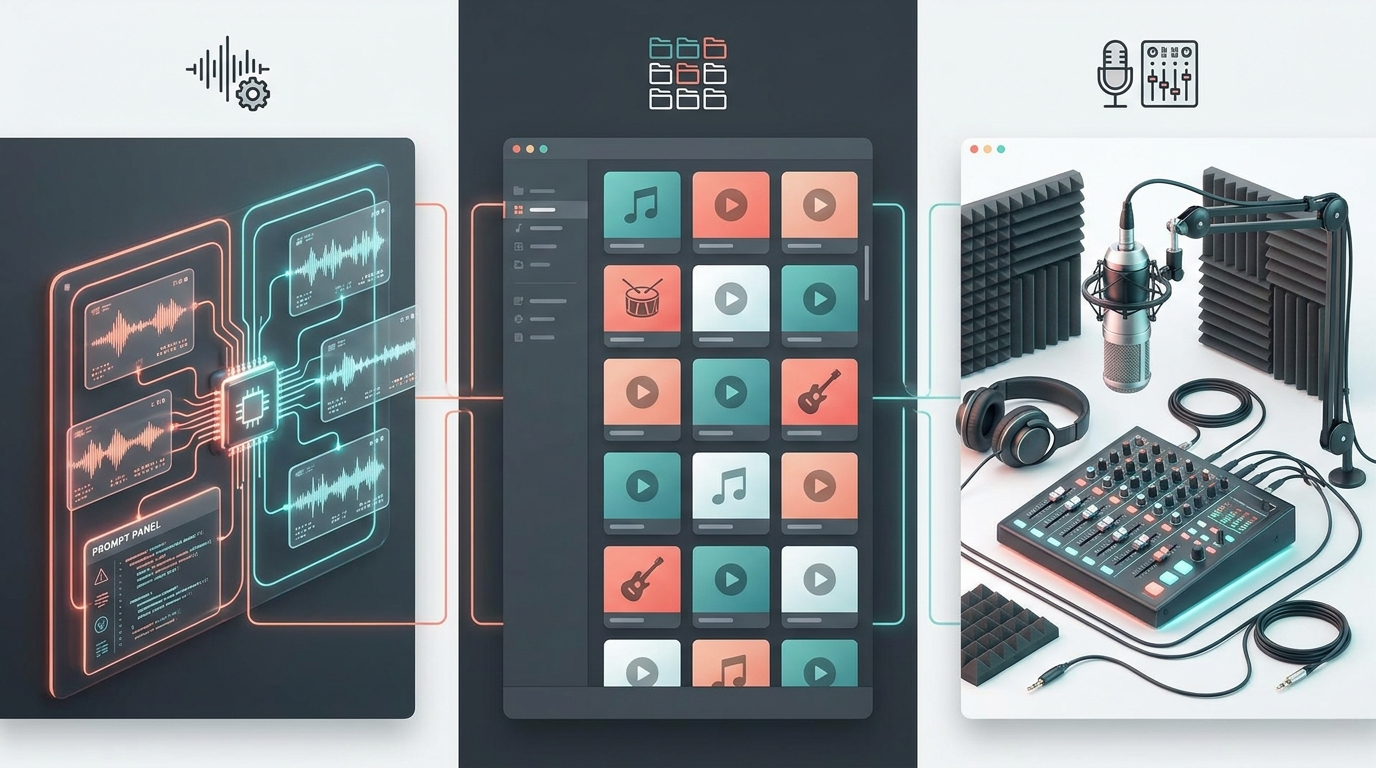
| Criteria | Flow Music Local Audio Workflow | Stock Track Search | Local Studio Production |
|---|---|---|---|
| Starting Point | Campaign brief | Library search | Creative meeting |
| Skill Needed | Clear direction | Search patience | Production expertise |
| Speed | Fast variations | Medium search time | Slower scheduling |
| Brand Consistency | Reusable prompts | Track-dependent | Strong when planned |
| Best Use Case | Early campaign audio | Quick background music | Final signature sound |
| Main Limitation | Needs human review | Can feel generic | Higher cost and time |
This does not mean every business should replace every audio source with AI-generated music. Stock tracks are still useful when speed matters and the exact sound is not central to the campaign. A local musician or studio can be the better choice for a major brand anthem, a live performance, or a high-visibility commercial.
The advantage of the AI audio workflow is in the middle: campaigns that need custom direction but cannot justify a full production cycle every time.
What Teams Should Review Before Publishing
Reusable audio still needs judgment. Small teams should review several things before publishing AI-assisted music in a campaign.
First, check platform expectations. Some platforms ask creators to disclose AI-generated or meaningfully altered media in certain realistic contexts. For music-led video content, it is safer to understand the upload platform’s current disclosure controls before treating every audio asset the same way.
Second, check commercial-use terms. A business should understand what rights come with the generated track, how the file may be used, and whether there are any restrictions around redistribution, advertising, or client work.
Third, avoid confusing the audience. If a track uses vocals, make sure the lyrics do not imply promises, endorsements, or claims the business cannot support. Local marketing is built on trust; the audio should make the message clearer, not more exaggerated.
Finally, keep humans in the loop. The best audio direction is not just technically usable. It fits the neighborhood, the audience, the offer, and the brand’s personality.
A Practical Way To Start
A small business does not need a complex sonic branding deck to begin. It can start with three simple campaign categories:
- Announcement audio for offers, launches, and urgent updates
- Story audio for customer features, founder notes, and community posts
- Event audio for promotions, recaps, and thank-you messages
For each category, the team can define mood, pace, instruments, and what to avoid. Then it can create and review audio variations until a few reliable directions emerge.
That simple structure helps local teams move away from random track picking. It also makes audio easier to discuss with non-specialists. Instead of asking whether a song is “good,” the team can ask whether it supports the local moment, matches the brand, and can be reused in a related campaign.
Final Thoughts
Local marketing is not becoming simpler. Businesses are expected to show up across video, social, email, websites, events, and community partnerships, often with small teams and short timelines. Audio can either add another bottleneck or become part of a repeatable content system.
Reusable audio thinking gives small teams a practical middle path. It does not replace taste, local knowledge, or professional production when those are needed. It gives teams a faster way to explore sound, document what works, and make future campaigns feel more connected.
For local businesses, that may be the real shift: not making one perfect jingle, but building a sound direction that can travel from one community moment to the next.