Time Is Money: How eBay Listing Automation Helps Sellers Scale Faster

For many eBay sellers, the largest challenge is not finding inventory. It is keeping up with the time required to list it. Manual listing can take several minutes per item between writing titles, researching pricing, filling out item specifics, and preparing descriptions. When multiplied across dozens of items, listing becomes a time intensive bottleneck that limits sales growth.
Modern AI powered automation tools are changing that dynamic. By reducing the repetitive steps involved in listing, eBay listing automation tools allows resellers to shift their time toward higher value activities like sourcing, photography, and inventory management. The result is a faster workflow, more consistent listing output, and more opportunities to generate sales.
Why Listing Speed Impacts Your eBay Revenue
Whether someone is selling part time or building a large store, a consistent theme appears across successful eBay accounts. Maintaining a higher volume of active listings generally leads to more visibility and more opportunities to sell.
A typical manual listing can take 5 to 12 minutes depending on item complexity. At that pace, listing 10 items per day may require well over an hour of focused work. Sellers who want to scale often find themselves limited by this time commitment, even when they have plenty of inventory ready to go.
Automation helps remove this constraint. Instead of preparing items one at a time, automated tools allow sellers to complete many listings at once, dramatically increasing how many items can be made ready for eBay in a single work session.
Where Manual Listing Consumes the Most Time
Many resellers assume most of their time goes toward sourcing. In reality, a large portion of the workload comes from tasks such as creating keyword optimized titles, writing or adjusting descriptions, identifying the correct eBay category, filling in required item specifics, comparing comparable sold prices, and repeating small clerical steps for each item.
These tasks are sequential when done manually. Every item requires repeating the same steps in order, which limits daily output. AI automation streamlines these steps by generating titles, descriptions, item specifics, and pricing suggestions within a few seconds. More importantly, automation can complete these tasks for many items at the same time, removing the bottleneck created by sequential manual work.
Spadeberry: An Automation Tool Designed for eBay Sellers
Among the automation tools available to resellers today, Spadeberry stands out because it was built specifically for eBay workflows. Instead of functioning as a general AI writing tool, it is designed around the structure of eBay categories, item specifics, resale pricing patterns, and the needs of high volume sellers.
What Spadeberry Automates
Spadeberry helps generate the core components of a complete listing, including:
• Keyword optimized titles
• Item descriptions
• Condition notes
• Suggested pricing based on market trends
• Category selection
• Required item specifics
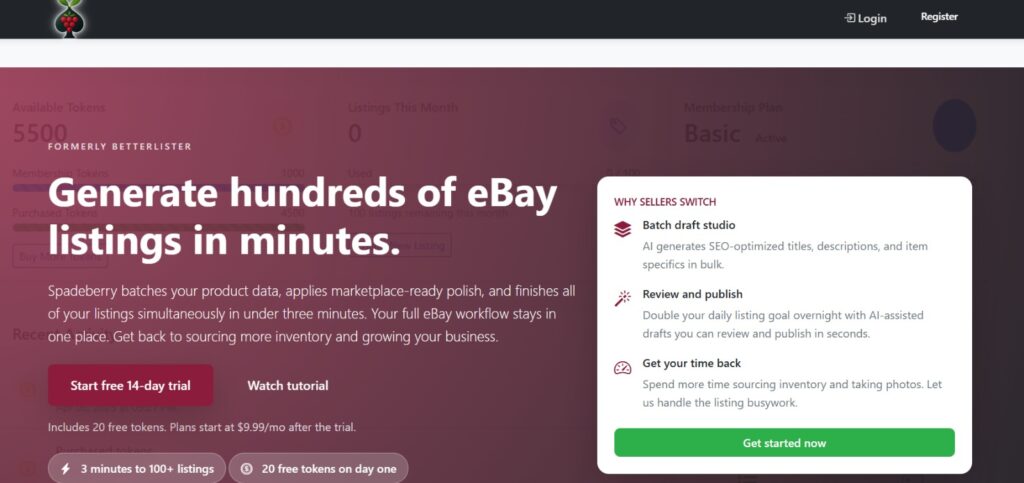
A process that might normally take 8 to 12 minutes per item manually can be completed for dozens or even hundreds of items at the same time. Instead of spending 10 minutes on one listing, a seller can generate 50, 100, or more draft listings in about 3 minutes total.
This shift from sequential to concurrent listing creation is one of the biggest advantages of using automation.
How Spadeberry Supports Profitability
Higher listing consistency tends to correlate with better weekly sales performance on eBay. Automation supports this by helping sellers:
• Increase the number of items they can list per day
• Prepare large batches of inventory quickly
• Reduce the mental load of repetitive tasks
• Maintain a consistent listing schedule
• Standardize listing quality across their store
With batch automation, sellers can prepare an entire day’s or even an entire week’s worth of listings in minutes rather than hours.
Manual Listing vs Automated Batch Listing: What Changes
| Task | Manual Process | With Spadeberry |
| Title creation | 2 to 3 minutes per item | Generated for all items at once |
| Category research | 1 to 2 minutes per item | Completed automatically for every item in the batch |
| Item specifics | About 2 minutes per item | Applied across the full batch concurrently |
| Description writing | 2 to 4 minutes per item | Generated for all items in seconds |
| Pricing review | 1 to 2 minutes per item | Suggested automatically for all items |
| Total Time | 8 to 12 minutes per item | About 3 minutes for 50 to 100 listings or more |
Actual performance varies depending on category, item complexity, and the size of the batch being processed.
This eliminates the sequential time bottleneck entirely and allows sellers to reinvest hours into sourcing, photography, or fulfillment.
Using Automation to Scale an eBay Store Effectively
1. Focus on High Return Activities
The hours saved from automation can be used for sourcing, photographing inventory, or improving operational systems. These activities produce more profit than manual data entry.
2. Set Daily Listing Targets
Shifting from hours worked to items listed creates a more predictable growth model. With batch automation, sellers can consistently prepare large volumes of listings even on busy days.
3. Build a Repeatable Workflow
Combining streamlined photography, organized inventory, and automated batch listing creates a scalable system that supports long term growth.
4. Reduce Overwhelm and Mental Fatigue
Listing dozens or hundreds of items manually can be exhausting. Automation removes the repetitive decision making that slows sellers down and often leads to burnout.
Conclusion
Time is the most valuable resource for any eBay seller. Automation offers a practical way to reduce the hours spent on repetitive listing tasks while maintaining accuracy and consistency. Sellers who adopt AI powered batch listing tools often find they can prepare far more inventory in a fraction of the time, keep up with larger backlogs, and move closer to their sales goals.
Resellers who want to explore listing automation and see how AI can support their workflow can learn more at Spadeberry.com