UK Bracing for a 411-Mile Snowstorm Ahead of Christmas: Travel, Weather, and Daily Life
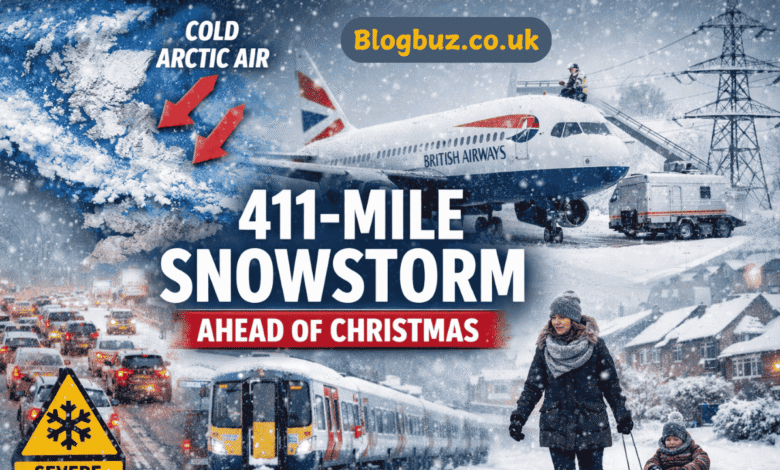
The UK bracing for a 411-mile snowstorm ahead of Christmas, has captured national attention as forecasts point to the possibility of a major winter weather system developing during the festive period. With millions preparing for holiday travel, family gatherings, and seasonal shopping, the idea of a massive snow band stretching hundreds of miles across the country has sparked both concern and intense public interest. While winter storms are not unusual in the United Kingdom, the scale suggested by this forecast is what makes it remarkable. A system spanning more than 400 miles could affect large portions of England, Scotland, and Wales simultaneously, bringing snow, freezing temperatures, strong winds, and widespread travel disruption. This article explores what a 411-mile snowstorm actually means, which regions may be most affected, how it could impact Christmas plans, and how households can prepare
What Does a 411-Mile Snowstorm Really Mean?
When meteorologists refer to a storm measuring hundreds of miles, they are not talking about a single cloud or snowfall point. Instead, the figure describes the length of the weather front or snow band associated with the system.
In this case, a 411-mile snowstorm would indicate:
- A long, continuous band of snow stretching across much of the UK
- A large low-pressure system is pulling cold Arctic air south
- Prolonged snowfall in some regions rather than short flurries
- Potential overlap with strong winds, causing drifting and blizzard-like conditions in exposed areas
Such large-scale systems are typically driven by powerful jet stream movements and cold air outbreaks from northern Europe or the Arctic. When these collide with moist Atlantic air, heavy snowfall can develop rapidly.
Why This Storm Is Causing Concern
One of the busiest travel times of the year is around Christmas. Roads, rail networks, airports, and shipping routes are already operating at high capacity. Even moderate snow can cause significant disruption, but a storm of this size could lead to:
- Major delays on motorways
- Train cancellations
- Flight postponements or grounding
- School closures
- Delivery backlogs for online shopping and food supplies
Beyond logistics, public safety must also be considered. Snow and ice increase the risk of traffic accidents, power outages, and slips and falls, especially among elderly residents.
Regions Most Likely to Be Affected
Although exact impact zones can shift as forecasts evolve, long-range models often highlight several vulnerable areas when major snow systems approach the UK.
Northern England
Counties such as Cumbria, Northumberland, and parts of Greater Manchester frequently experience heavier snowfall due to:
- Higher elevation
- Proximity to cold air flows
- Uplift caused by the surrounding hills and mountains
These areas are often the first to see significant accumulations.
Scotland
Scotland is particularly exposed to Arctic air masses. Highland regions could experience deep snow, reduced visibility, and strong winds, especially if the storm tracks from the northwest.
Midlands
If the storm band shifts south, central England may see widespread snowfall, affecting major transport routes including the M1, M6, and key rail corridors.
Southern England and Wales
Southern regions are more variable. Some forecasts suggest a mix of rain, sleet, and snow, depending on temperatures. Coastal areas may avoid heavy snow but still face strong winds and flooding from intense rainfall.
How Cold Could It Get?
Large winter systems are often accompanied by sharp temperature drops. If the predicted storm develops fully, temperatures could fall close to or below freezing across much of the country, with wind chill making conditions feel significantly colder.
Possible temperature impacts include:
- Sub-zero nights in northern regions
- Daytime highs are struggling to rise above 2–5°C
- Icy road surfaces persist even after snowfall stops
Cold snaps like this can place additional strain on energy supplies and household heating systems.
Impact on Christmas Travel
Travel disruption is one of the biggest concerns associated with any major winter storm.
Road Travel
Snow accumulation reduces tyre grip and visibility, particularly on:
- Rural roads
- Hills and bridges
- Motorway slip roads
Local authorities often deploy gritters and snowploughs, but heavy snowfall can overwhelm services if it continues for many hours.
Rail Services
Snow and ice can affect:
- Track points
- Overhead electrical lines
- Signal systems
Even a small fault in one location can ripple through the network, delaying thousands of passengers.
Airports
Airports may suspend departures to clear runways, de-ice aircraft, or manage poor visibility. Christmas flights are already fully booked, so cancellations can cause significant problems for families.
Could There Be Power Cuts?
Large snowstorms often coincide with strong winds, which can bring down:
- Power lines
- Trees
- Communication cables
Remote communities are especially vulnerable, as repairs can take longer in poor weather. Households are encouraged to prepare for the possibility of short-term outages.
How to Prepare for a Major Winter Storm
Whether or not the storm reaches its full predicted size, winter preparedness is always sensible during December.
At Home
- Stock essential food and drinking water for at least 2–3 days
- Keep torches, batteries, and power banks charged
- Ensure heating systems are serviced
- Insulate exposed pipes to prevent freezing
For Travel
- Check weather forecasts daily
- Allow extra travel time
- Carry warm clothing, blankets, and snacks in your car
- Keep your fuel tank at least half full
For Vulnerable People
- Check on elderly neighbours or relatives
- Ensure they have enough medication
- Confirm they can stay warm if temperatures drop suddenly
How Accurate Are Long-Range Snow Forecasts?
Forecasting snowfall weeks in advance is notoriously difficult.
Meteorologists can identify:
- General patterns (cold vs mild)
- Likelihood of storms
- Jet stream movements
But predicting exact snowfall totals or locations remains uncertain until 2–4 days before the event.
This means the phrase UK bracing for a 411-mile snowstorm ahead of Christmas should be understood as a risk scenario, not a guaranteed outcome. The storm track could:
- Shift east or west
- Weaken
- Bring rain instead of snow in some regions
Nevertheless, large weather systems often evolve quickly, so preparation remains wise.
Why These Headlines Spread So Quickly
Stories about massive snowstorms spread rapidly online for several reasons:
- High seasonal relevance – Christmas travel affects nearly everyone
- Visual weather maps – Long snow bands look dramatic
- Emotional impact – Snow evokes both excitement and anxiety
- Past experiences – Many people remember being stranded during earlier winter storms
As a result, phrases like “411-mile snowstorm” become viral, even when the actual outcome may be less severe.
Potential Economic Effects
A major winter storm could have short-term economic consequences, including:
- Lost retail revenue if shoppers stay home
- Delays in food and gift deliveries
- Increased energy demand
- Overtime costs for emergency and transport workers
On the other hand, some sectors—such as heating services, winter clothing retailers, and online shopping—often see increased demand during cold snaps.
What to Watch Over the Coming Days
If you are following this story, pay attention to:
- Official weather warnings
- Updated snowfall probability maps
- Transport authority announcements
- Local council gritting schedules
Conditions can change rapidly, especially when cold Arctic air interacts with Atlantic storm systems.
Final Thoughts
The headline UK bracing for a 411-mile snowstorm ahead of Christmas reflects growing concern about a potentially large winter weather system arriving during one of the busiest times of the year.
While the exact strength and path of the storm remain uncertain, the possibility alone highlights how vulnerable seasonal travel and infrastructure can be to extreme weather. Whether the snowfall proves historic or moderate, preparing early can reduce stress, protect families, and ensure that Christmas plans are disrupted as little as possible.