Can You Really Sleep on a Couch? The Comfort Problem Most People Ignore

Almost everyone has tried sleeping on a couch at least once. Maybe a friend stayed over unexpectedly. Maybe you had just moved into a new apartment and hadn’t bought a bed yet. Or maybe the living room simply seemed like the easiest place to spend the night.
At first, the idea sounds perfectly reasonable. Sofas are soft, comfortable, and long enough to lie down on—at least in theory. Many people assume that if a couch feels good for sitting, it should also work fine for sleeping.
But after a night or two, reality usually sets in. You wake up with a stiff back, cramped legs, or a sore neck. The couch that felt perfectly comfortable while watching TV suddenly feels very different when used as a bed.
The reason isn’t bad luck. It’s design. Sofas and beds are built for completely different purposes, and that difference becomes obvious the moment someone tries to sleep on one.
Why Regular Sofas Aren’t Built for Sleeping
To understand why couches can be uncomfortable for sleeping, it helps to look at how they’re designed.
A typical sofa is engineered primarily for seated posture. The seat depth, cushion firmness, and backrest angle are all intended to support someone sitting upright or leaning slightly back.
Most standard sofas have a seat depth of about 20 to 24 inches. This dimension is ideal for sitting comfortably while keeping your feet on the floor. But when you try to lie down, that depth isn’t enough to support your entire body evenly.
The cushions also play a role. Sofa cushions are usually designed to compress under the weight of someone sitting. When you lie across them, the pressure is distributed differently, often creating uneven support along the spine.
In other words, a sofa can be extremely comfortable for watching a movie—but still be poorly suited for a full night of sleep.
The Problems People Notice After One Night on a Couch
Anyone who has slept on a couch for more than a night or two tends to notice a few recurring issues.
Cushion gaps are one of the most common problems. Most sofas are made with two or three seat cushions, which means seams run across the sleeping surface. Those seams can create pressure points along the back or hips.
Armrests are another limitation. Even if the couch itself is long, the armrests shorten the usable sleeping space. Many people end up sleeping diagonally or curling their legs just to fit.
Support can also be inconsistent. The center of a cushion is usually softer than the edges, which means your body may sink unevenly during the night. Over time, that uneven support can lead to stiffness or soreness in the morning.
These issues don’t usually matter during short periods of sitting—but they become much more noticeable when you try to sleep for several hours.
How Long a Couch Actually Is Compared to a Real Bed
One of the biggest reasons couches feel awkward for sleeping is simply their size.
A typical three-seat couch usually measures 72 to 84 inches in total length. That may sound similar to a mattress, but the measurement includes the armrests on both sides. Once those are taken into account, the flat sleeping space is often closer to 60–70 inches.
Beds, by contrast, are designed specifically to accommodate the length of the human body.
| Mattress Type | Length |
| Twin mattress | 75 inches |
| Full mattress | 75 inches |
| Queen mattress | 80 inches |
| King mattress | 80 inches |
For adults—especially anyone over six feet tall—the difference is immediately noticeable. On a couch, your feet may hang over the edge or press against the armrest. Many people end up sleeping curled up simply because the surface isn’t long enough.
Even when the couch itself feels comfortable for sitting, the limited sleeping space makes it difficult to replicate the support and alignment of a real bed.
Why Convertible Sofa Beds Were Created
Furniture designers recognized this problem long ago, which is why sofa beds were created.
Instead of relying solely on seat cushions, sofa beds allow the seating surface to transform into a flatter sleeping platform. Some models fold the backrest down, while others extend the frame forward to create additional length.
Modern sofa beds are designed to provide a more even surface than a regular couch. By expanding beyond the seat cushions, they reduce the gaps and uneven support that often make couch sleeping uncomfortable.
For people living in smaller apartments, this type of convertible furniture can be extremely practical. A sofa that doubles as a bed allows the living room to function as a guest space without requiring a separate bedroom.
However, not all convertible sofas offer the same level of comfort.
The Difference Between a Sofa Bed and a Sleeper Sofa
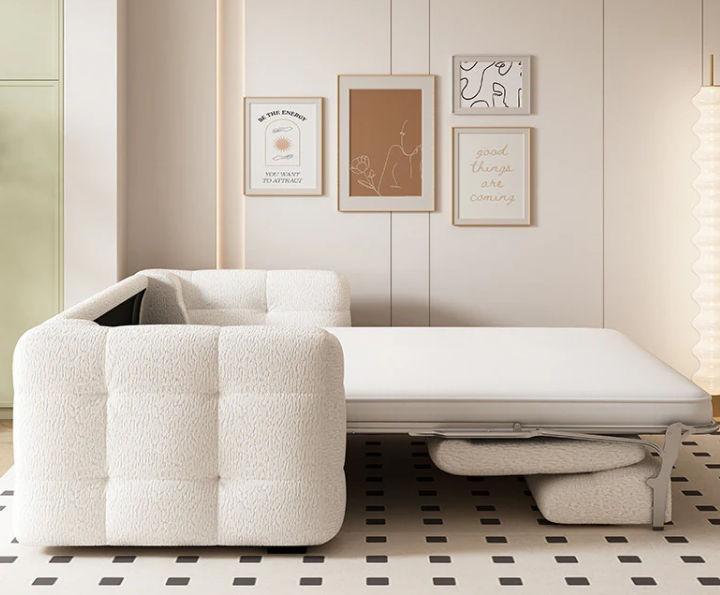
Many people use the terms interchangeably, but there is an important difference between a typical sofa bed and what furniture designers call a sleeper sofa.
A basic sofa bed usually relies on its cushions to form the sleeping surface. The backrest may fold down, or the seat may extend outward to create a larger area. While this works for occasional use, the sleeping surface is still made from the sofa’s cushions.
A sleeper sofa takes the concept further. Inside the frame is a pull-out mattress, often supported by a folding metal bed frame. When opened, the mattress creates a flat sleeping surface that is closer to a traditional bed.
For anyone who expects guests regularly—or plans to sleep on the furniture themselves—a sleeper sofa can make a noticeable difference.
A Practical Example: Sleeper Sofa With Built-In Mattress
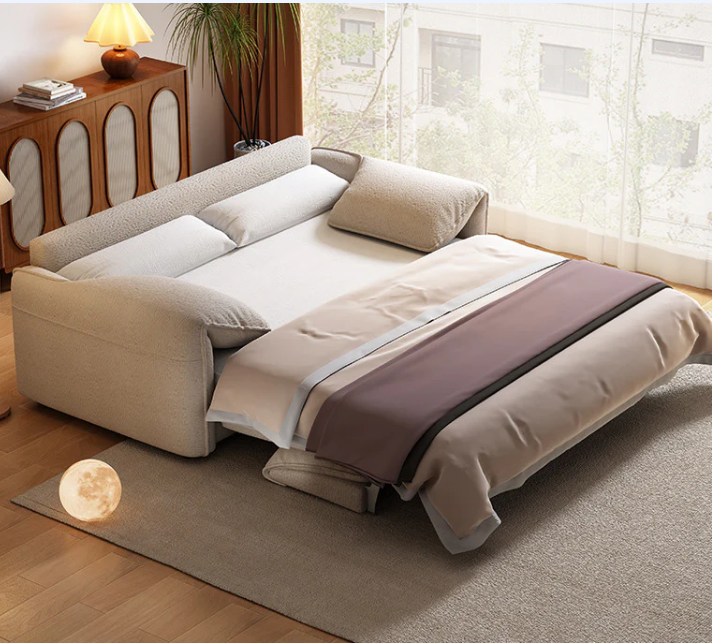
Some modern designs combine the flexibility of a sofa with the comfort of a mattress. A good example is a sleeper sofa that incorporates a pull-out mattress within the frame itself.
For instance, this sleeper sofa includes a 3.9-inch mattress that folds neatly inside the sofa when not in use. When extended, it creates a flat sleeping surface supported by a metal frame rather than relying on seat cushions.
Designs like this are particularly useful in compact apartments or multi-purpose living rooms. During the day, the furniture functions as a regular couch. At night, it can transform into a bed that provides more consistent support than a typical sofa.
Because the mattress is integrated into the structure, it also avoids the cushion gaps and uneven surfaces that often make couch sleeping uncomfortable.
What Actually Makes a Sofa Comfortable for Sleeping
If you plan to sleep on a sofa regularly—or host overnight guests—it helps to pay attention to a few specific features.
Mattress thickness is one of the most important factors. Thin sleeping surfaces tend to compress quickly, which reduces support over time. Many people prefer models with at least 3 to 5 inches of mattress thickness for better comfort.
This is one reason many shoppers now look specifically for sleeper sofas with mattress, which offer a more consistent sleeping surface than traditional convertible couches.
Frame stability also matters. A sturdy metal frame can support the mattress evenly and prevent sagging when the bed is fully extended.
Overall length is another key detail. A sleeping surface close to 78–80 inches allows most adults to lie flat without curling their legs.
Finally, upholstery durability is worth considering. Convertible furniture is opened and closed frequently, so fabrics and stitching need to withstand repeated movement.
Sleeping on a Couch Works—But Not for Long
Sleeping on a couch occasionally is perfectly normal. For a single night, most sofas will do the job.
But the discomfort many people experience after repeated nights on the couch isn’t accidental—it’s the result of furniture designed for sitting rather than sleeping.
Convertible seating has evolved to address that gap. By extending the sleeping surface or incorporating a mattress into the frame, modern designs offer a far better balance between comfort and practicality.
For small apartments, guest rooms, or multi-purpose living spaces, furniture that combines seating and sleeping can be surprisingly useful. The key is choosing a design that recognizes the difference between a couch and a bed—and tries to bridge it thoughtfully.