When the Gap in Your Smile Finally Stops Being the First Thing You Notice
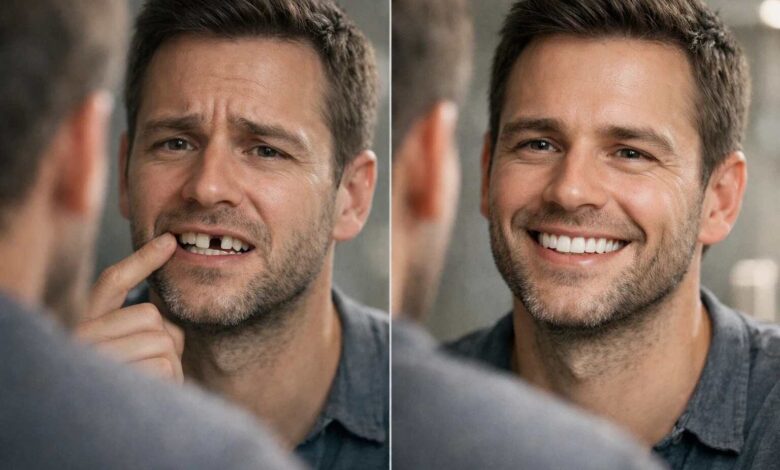
Ask anyone living with a visible gap in their smile what they notice first when they look in the mirror, and the answer is almost always the same. Not the teeth that are still there. Not the parts of their face they might otherwise feel good about. The gap. It has a way of drawing the eye that seems disproportionate to its physical size.
This is not a failure of perspective. It is a very human response to asymmetry and absence. The brain registers what is missing more readily than what is present, and in something as socially significant as a smile, that tendency becomes particularly strong.
The Gap That Occupies More Space Than It Should
Beyond the mirror, the gap tends to make itself felt in other ways. It influences what people eat and how they eat it. It shapes the way they speak, sometimes causing a subtle change in pronunciation that the person becomes hyperaware of. It affects their willingness to smile fully, to laugh openly, to engage without a layer of self-consciousness running underneath everything else.
The gap takes up mental space that has nothing to do with its physical dimensions. People who have lived with one for an extended period often describe a kind of constant low-level awareness, a background hum of self-monitoring that they have come to accept as normal.
What Changes When It Is No Longer There
The relief that follows a successful permanent restoration is often described in strikingly similar terms by different people. They stop noticing. The mirror becomes ordinary again. The foods they had quietly avoided come back. The smile in photographs stops being something to manage.
What surprises many people is how quickly the new normal settles in. Once the restoration is in place and the initial adjustment period has passed, the replacement simply becomes part of the smile. It does not feel foreign. It does not require conscious accommodation. It functions, looks, and behaves like a tooth because, structurally, it has been designed to do exactly that.
The Moment It Stops Being a Feature
There is a specific moment that many patients describe, usually some weeks or months after treatment, when they realise they have gone an entire day without thinking about their teeth. For people who spent years thinking about them every time they spoke, ate, laughed, or caught their reflection, that moment carries genuine weight.
It is the point at which the restoration stops being a solution to a problem and becomes simply part of who they are. That transition, from conscious correction to effortless normalcy, is what most people are really seeking when they decide to act.
Moving Forward With a Complete Picture
For Australians weighing their options, the market for dental implants Melbourne patients can access has developed significantly. Practitioners are working with improved materials and refined techniques, and patients are arriving with more considered questions about function, aesthetics, and long-term outcomes.
The decision to address a gap is rarely purely cosmetic. It involves oral health, bone structure, social confidence, and the quality of daily experience in ways that compound over time. Treating it as a complete picture rather than an isolated aesthetic concern tends to produce both better decisions and better outcomes.
When the gap stops being the first thing you notice, everything else about the smile becomes visible again. That rebalancing is, for many people, long overdue.