The EDC Mechanical Pencil: A Precision Tool for Modern Professionals
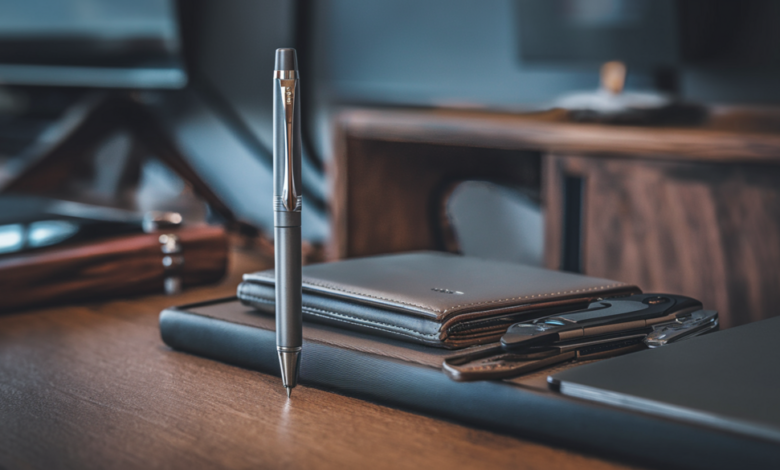
The concept of Everyday Carry has evolved from a niche hobbyist interest into a mainstream philosophy about preparedness and intentional living. At its core, EDC represents the carefully curated collection of items we carry daily—tools chosen not for novelty, but for their ability to solve real problems efficiently. Among these essentials, the mechanical pencil occupies a unique position: it’s simultaneously utilitarian and refined, a precision instrument that bridges the gap between analog craftsmanship and modern engineering.
Unlike disposable pens or traditional wooden pencils that require constant sharpening, a quality mechanical pencil delivers consistent performance across thousands of uses. For architects sketching initial concepts, engineers marking up technical drawings, or writers who prefer the tactile feedback of graphite on paper, these instruments offer reliability that digital tools still struggle to replicate. This article explores what makes mechanical pencils indispensable for professionals and enthusiasts alike—from their manufacturing intricacies to the innovations that continue to push the category forward.
From Patent to Pocket: The Mechanical Pencil’s Journey
The mechanical pencil’s origins trace back to 1822, when the first patent for a refillable pencil mechanism was filed. What began as a simple solution to the inconvenience of sharpening has transformed into a sophisticated category of precision instruments. Early designs were crude by today’s standards—basic lead holders with rudimentary advancement mechanisms—but they established a principle that remains central to the format: consistency.
Throughout the 20th century, manufacturers refined these mechanisms dramatically. The introduction of clutch systems, ratchet-based advancement, and eventually automatic lead rotation represented genuine engineering breakthroughs. Modern mechanical pencils incorporate materials and tolerances once reserved for precision instruments. Today’s models feature components machined to tolerances measured in microns, ensuring that each click advances the lead by exactly the intended distance.
This evolution wasn’t driven by aesthetics alone. Technical professions demanded tools that could produce uniform line weights for drafting and design work. Artists required instruments that wouldn’t interrupt their creative flow with sharpening breaks. The mechanical pencil answered both needs, becoming standard equipment in architecture firms, engineering departments, and design studios worldwide.
Engineering Precision: How Quality Mechanical Pencils Are Made
The manufacturing process behind a premium mechanical pencil reveals why these tools command respect among professionals. Unlike mass-produced disposables, quality models undergo production sequences that prioritize precision at every stage.
The process typically unfolds through these critical phases:
- Design Engineering: Engineers develop the internal mechanism, calculating spring tensions, clutch tolerances, and lead advancement ratios. This stage determines whether a pencil will perform reliably after thousands of clicks or fail prematurely.
- Material Specification: Premium models use aerospace-grade aluminum, brass, or stainless steel for barrels and mechanisms. These materials provide the dimensional stability necessary for consistent performance across temperature variations and extended use.
- Precision Machining: CNC machines mill components to exacting specifications. The clutch mechanism that grips and releases the lead operates within tolerances of 0.01mm—precision that ensures smooth operation without lead breakage or slippage.
- Assembly and Calibration: Skilled technicians assemble mechanisms by hand, testing lead advancement and retraction. Spring tensions are calibrated to provide tactile feedback without requiring excessive force.
- Quality Validation: Each pencil undergoes cycle testing, simulating months of typical use. Manufacturers verify that mechanisms operate smoothly through thousands of advancement cycles without degradation.
This manufacturing rigor explains the performance gap between premium and budget models.
Why Professionals Choose Mechanical Over Traditional
The advantages of mechanical pencils extend beyond mere convenience. For professionals whose work demands precision, these tools offer capabilities that traditional wooden pencils simply cannot match.
Key performance benefits include:
- Consistent Line Weight: Technical drawings require uniform line widths. A 0.5mm mechanical pencil produces a 0.5mm line from first use to last, eliminating the variable line weights that occur as wooden pencils wear down between sharpenings.
- Uninterrupted Workflow: Sharpening breaks disrupt concentration and creative momentum. Mechanical pencils eliminate these interruptions, allowing sustained focus during critical work sessions.
- Material Longevity: Quality mechanical pencils are built for decades of service. Metal barrels resist wear, precision mechanisms maintain their tolerances, and the only consumable component is the lead itself.
- Environmental Efficiency: A single mechanical pencil replaces hundreds of wooden pencils over its lifetime. For organizations conscious of their environmental footprint, this represents a meaningful reduction in waste.
- Lead Grade Flexibility: Different tasks demand different lead hardnesses. Mechanical pencils accept leads ranging from 4H (hard, for precise technical work) to 6B (soft, for artistic shading), allowing one tool to serve multiple purposes.
- Ergonomic Refinement: Premium models feature knurled grips, balanced weight distribution, and cushioned lead advancement mechanisms that reduce hand fatigue during extended use.
These advantages prove particularly valuable in engineering contexts, where precision isn’t optional.
Selecting an EDC Mechanical Pencil for Daily Carry
Choosing a mechanical pencil for everyday carry requires balancing several competing priorities. The ideal EDC pencil must be robust enough to survive pocket carry, refined enough for professional use, and reliable enough to function without fail when needed.
Essential characteristics to evaluate include:
- Grip Ergonomics: Extended writing sessions reveal poor grip design quickly. Look for knurled metal grips or textured rubber sections that provide secure purchase without causing pressure points.
- Structural Durability: EDC items endure constant jostling, drops, and pressure. Metal construction—particularly brass or aluminum—provides the impact resistance necessary for pocket carry.
- Mechanism Reliability: The lead advancement system must function smoothly under varying conditions. Premium mechanisms use metal components rather than plastic gears that can strip or bind.
- Lead Size Versatility: While 0.5mm and 0.7mm are most common, consider your typical use cases. Technical work benefits from finer leads (0.3mm or 0.5mm), while general writing favors the durability of 0.7mm or 0.9mm.
- Pocket-Friendly Dimensions: The pencil should carry comfortably without excessive bulk. Retractable tip designs protect the lead sleeve and prevent pocket damage.
Models like the Pentel GraphGear 1000, Everyman, and Rotring 600 have earned reputations among EDC enthusiasts for their combination of precision engineering and practical durability. The Uni Kuru Toga introduces an innovative lead rotation mechanism that maintains a consistently sharp point—a feature that appeals to those who value both performance and clever engineering.
Innovation in Mechanical Pencil Design
Recent years have seen mechanical pencil design evolve beyond incremental improvements into genuinely innovative territory. Manufacturers are addressing long-standing limitations while introducing features that expand what these tools can accomplish.
Notable innovations reshaping the category include:
- Active Lead Rotation Systems: The Uni Kuru Toga’s rotating mechanism addresses a fundamental limitation of mechanical pencils—the tendency for leads to develop flat wear surfaces. By rotating the lead slightly with each stroke, the system maintains a conical point that produces consistent line width.
- Lead Break Protection: Zebra’s DelGuard technology uses a spring-loaded sleeve that retracts when excessive pressure is applied, preventing the lead breakage that plagues aggressive writers.
- Precision Sleeve Designs: Engineering pencils like the Rotring 800 feature fixed sleeves that allow the lead to be positioned against straightedges and templates—essential for technical drafting work.
- Material Experimentation: Premium manufacturers are incorporating carbon fiber, titanium, and exotic wood into pencil construction, creating instruments that function as both tools and statement pieces.
Finding Your Ideal Writing Instrument
Selecting the right mechanical pencil ultimately comes down to understanding your specific requirements and use patterns. The pencil that serves an architect’s needs differs substantially from what a field researcher or student might prioritize.
Consider these factors during your selection process:
- Grip Comfort and Control: Test how the pencil feels during extended use. Metal knurling provides excellent grip but can feel aggressive during long sessions. Rubber grips offer cushioning but may degrade over time.
- Build Quality and Materials: Examine the construction closely. Metal threads, brass internal components, and precision-machined parts indicate a pencil built for longevity rather than disposability.
- Lead Diameter Selection: Match lead size to your typical tasks. Fine leads (0.3-0.5mm) excel at detailed work but break more easily. Thicker leads (0.7-0.9mm) provide durability for general writing and sketching. To learn more, check out this detailed guide.
- Weight and Balance: A well-balanced pencil reduces hand fatigue. Some users prefer substantial weight for control; others favor lightweight designs for extended sessions.
- Aesthetic Alignment: Your EDC items reflect your personal approach to tools and preparedness. Choose a design that resonates with your aesthetic preferences, whether that’s industrial minimalism or refined craftsmanship.
- Lead Availability: Verify that replacement leads are readily available. Proprietary lead systems can leave you stranded when supplies run low.
The mechanical pencil market offers options spanning from utilitarian workhorses to precision instruments that command collector interest. By clarifying your priorities and testing multiple models, you can identify the tool that will serve reliably for years to come.
The Enduring Appeal of Analog Precision
In an era dominated by digital tools, the mechanical pencil’s continued relevance speaks to fundamental human preferences for tactile feedback and direct control. These instruments don’t require batteries, software updates, or cloud connectivity—they simply work, reliably and predictably, whenever needed.
The best mechanical pencils represent more than writing instruments. They embody a design philosophy that values precision, durability, and thoughtful engineering. Whether you’re an engineer requiring exact line weights for technical drawings, an artist seeking uninterrupted creative flow, or simply someone who appreciates well-crafted tools, a quality mechanical pencil delivers performance that digital alternatives struggle to replicate.
The path to finding your ideal EDC pencil involves experimentation. Test different lead sizes, grip styles, and mechanisms to discover what works for your specific needs. Pay attention to build quality and manufacturer reputation—a well-made mechanical pencil will serve faithfully for decades, making it one of the most cost-effective tools in your everyday carry rotation.
As you explore options, remember that the best tool is the one you’ll actually use. Choose a mechanical pencil that feels right in your hand, suits your typical tasks, and aligns with your approach to everyday carry. The right choice will become an indispensable part of your daily toolkit—a precision instrument ready whenever inspiration or necessity demands.