SaaS Video in 2026: What’s Actually Changed

Something has quietly shifted in how SaaS buyers consume video.
It is not that they are watching less. They are watching more than ever. But what they trust has changed. What stops them from scrolling has changed. And what kind of content makes them feel confident enough to take the next step has changed, too.
Most SaaS marketing teams have not caught up with this yet. They are still producing the same kind of video they were making two years ago, polished animations, professional voiceovers, carefully scripted explainers, and wondering why the results feel flat.
This is not a production quality problem. It is a trust problem.
Here is what is actually happening in 2026, and what it means for how you make video.
Buyers Are Spending Less Time With You Than Ever
Here is a number worth sitting with.
Research from 2026 shows that SaaS buyers now spend less than 20% of their purchase journey talking to vendors. The other 80% happens without you. They are reading reviews, watching comparison videos, talking to peers, and forming opinions in spaces you cannot control.
By the time someone books a demo or starts a trial, they have usually already decided how they feel about you.
This means your video is not just a marketing tool anymore. It is often the first real impression a buyer has of your company. And it is doing that job in an environment where the buyer has already watched ten other videos from your competitors.
The question is not “do we have a video?” The question is, “Does our video make a buyer feel something different from everything else they have already seen?”
The Trust Equation Has Flipped
For years, polished production was shorthand for credibility. A well-made product demo video with clean animation and professional audio signalled that a company was serious and worth paying attention to.
That shorthand no longer works the way it used to.
Buyers in 2026 have seen enough beautifully produced videos from products that did not deliver. High production value no longer means high product value in their minds. If anything, an overly polished video can feel like something is being dressed up rather than shown honestly.
What is building trust now is something very different: real people, real voices, and real experiences.
User-generated content, which means actual customers talking about their experience in their own words, is outperforming studio-produced brand content in almost every engagement metric. Real customers talking plainly on camera are generating four times higher click-through rates than polished branded ads.
This is not just a consumer trend. It is happening in B2B too.
The most trusted SaaS videos in 2026 feel like a conversation, not a broadcast. They feature practitioners and real users. They acknowledge that the product is not perfect for everyone. They show the actual interface rather than a stylised version of it.
That honesty is the new production value.
AI Has Changed Who Makes Video, Not Just How
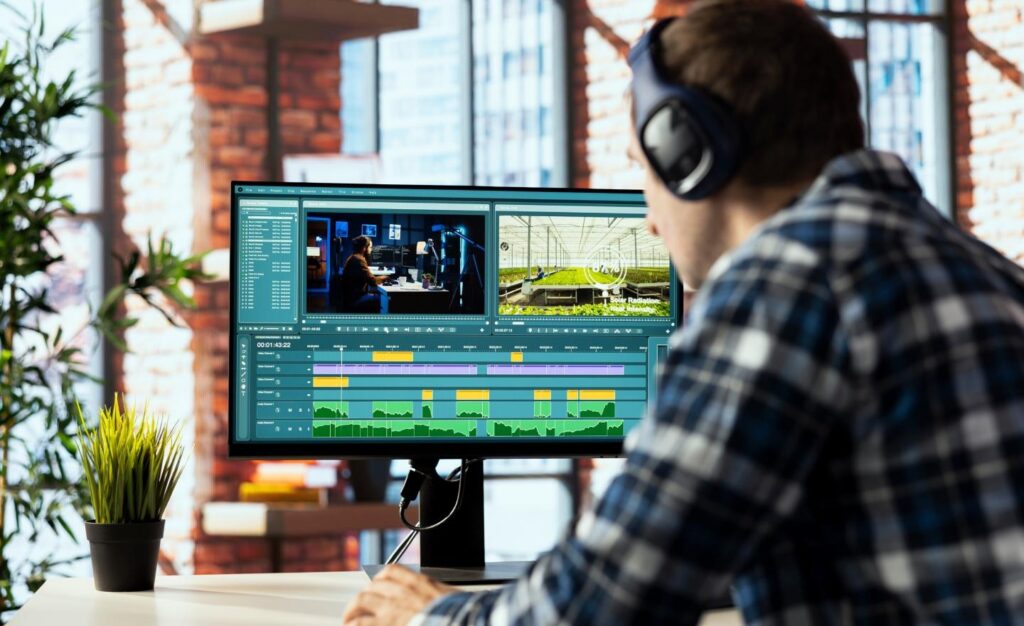
Almost every video team is using AI now in some capacity. Scripts drafted faster. Edits automated. Multiple versions generated for different audiences without doubling the workload.
For lean marketing teams, this is a genuine advantage.
But AI has also created a specific new problem. It has made it very easy to produce content that sounds like content. Technically correct. Properly structured. And completely forgettable.
The teams using AI well in 2026 are using it for the parts that do not require judgment. The heavy lifting of editing, captioning, reformatting, and creating variations. They are keeping human thinking on everything that actually matters: the specific opening line that will make a real person stop scrolling, the honest acknowledgement of the problem the product actually solves, the voice and personality that makes a brand feel like it was built by people who care.
The teams struggling are the ones who outsourced all of that to AI as well. Their videos move. They are clean. And they connect with no one.
The New Job of SaaS Video Is Consistency, Not Perfection
Here is the structural shift that most SaaS teams are still getting their heads around.
Two or three years ago, a SaaS company might make four or five polished videos a year and call it a video strategy. That model is not keeping up with how buyers consume content anymore.
Buyers now expect a company to show up consistently. They want to see regular content from real people inside the business. Product updates explained by someone who built the feature. Customer stories told in an interview format. Short clips of the product doing something useful. All of it feels current, human, and like it was made for them.
The winners in 2026 are not the ones with the biggest production budgets. They are the ones who figured out how to publish something genuinely useful every week without it taking over the business.
That shift, from high-cost and infrequent to lower-cost and consistent, is the most important change in SaaS video right now. And most companies are still on the wrong side of it.
What the Top SaaS Video Teams Are Actually Doing
After looking at what separates the SaaS companies getting real results from video in 2026, a few clear habits stand out.
They lead with practitioners, not spokespeople. The most credible content features people who actually use or build the product talking about it in their own words. Not an actor reading a script. Not a polished presenter hitting all the right points. Someone who genuinely knows the thing they are talking about.
They make videos for specific people, not general audiences. Personalization in 2026 does not mean putting a first name in an email. It means making a sixty-second video that speaks to one specific type of buyer about their specific situation. The teams doing this well have different videos for different industries, different company sizes, and different stages of the buying journey.
They treat every piece of content as a building block, not a one-off. A customer interview becomes a testimonial clip, a social post, a quote on the pricing page, and an asset in the sales follow-up email. One piece of raw content gets turned into five or six useful things. That is how lean teams stay consistent without burning out.
They test and update rather than set and forget. The best video libraries are living things. They change when the product changes. When the messaging evolves. When a new buyer type becomes important. A video that was working eighteen months ago might be quietly hurting you today.
The One Thing Worth Remembering
The biggest mistake a SaaS explainer video company can make with video in 2026 is still trying to make one impressive video and hoping it does everything.
One video cannot speak to every buyer at every stage of their journey. It cannot build awareness and close a deal and onboard a new customer at the same time.
What is working is a smaller set of well-thought-out videos, each one made for a specific person at a specific moment, with a specific thing it needs to make them feel or believe.
That thinking has not changed. But the way buyers are making decisions around it, the trust signals they respond to, the formats they engage with, and the volume they expect, all of that is shifting faster than most teams are moving.
The companies that pay attention to those shifts, and adjust what they make accordingly, are the ones building video strategies that actually grow with their business.
The team at What A Story works with SaaS companies to build that kind of strategy, starting from where buyers are in 2026, not where they were two years ago.