Luxury House in Florida: Why Premium Property Is Outperforming the Broader Market in 2026
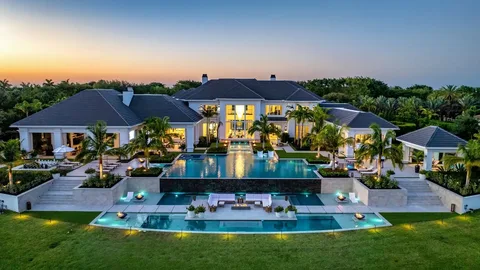
The Florida property market is telling two very different stories in 2025 — and for buyers focused on the premium segment, the data is compelling. While the broader residential market is experiencing modest price adjustments and rising inventory, the luxury tier is demonstrating a resilience that sets it apart from the rest of the state. A Florida House priced above $1 million is not only holding its value but, in the most sought-after locations, selling faster than at almost any point in recent years.
Luxury homes accounted for 7.5% of all Florida residential sales in February 2025, up from just 5% in February 2023. That two-percentage-point rise over 24 months reflects a structural shift in buyer composition — one driven by domestic tax migration, international capital inflows, and a growing concentration of high-net-worth individuals choosing Florida as their primary base rather than a seasonal destination.
How the Florida Luxury Market Is Performing in 2025
The headline numbers for the premium segment diverge sharply from the statewide picture. While Florida’s overall median closed price for single-family homes stood at $408,805 in Q3 2025 — down a marginal 0.55% year-on-year — the luxury tier has followed a distinctly different trajectory.
| Metric | Broader Market (Q3 2025) | Luxury Segment (2025) |
| Median closed price | $408,805 | $1M+ threshold |
| Year-on-year price change | -0.55% | Stable to rising |
| Share of total sales | 92.5% | 7.5% (Feb 2025) |
| Median days on market | 74 days | 75 days (under $1M: 64 days) |
| Price cuts (Feb 2025) | 22% | 13.6% |
| Inventory supply | 4.6 months (SFH) | Constrained in top locations |
Naples–Marco Island stands out as the standout data point of 2025. Premium homes in this enclave are selling 23.5% faster year-on-year, driven by a combination of post-hurricane demand recalibration, adjusted pricing expectations, and a concentration of buyers who prioritise lifestyle certainty over yield. Million-dollar listings account for 35.8% of all active inventory in the Naples market — the highest proportion of any Florida metro — and that inventory has grown substantially, giving qualified buyers genuine choice without the frenzy that defined 2021 and 2022.
Nationally, the total value of private real estate reached $48.1 trillion in Q4 2024, a 7% year-on-year increase and nearly double the figure recorded in 2016. Homeowner equity climbed to $34.7 trillion — up 8.8% year-on-year. These macro figures underpin the confidence that high-net-worth buyers bring to the Florida luxury market: property at scale remains a proven long-term store of wealth.
What Is Driving Demand for Premium Florida Homes
Three structural forces are sustaining demand for luxury residential property across the state, and each is well-documented in the 2025 data.
Domestic tax migration continues at pace. Florida has no state income tax, a competitive advantage that becomes more financially significant as income levels rise. Founders, financiers, and senior executives from New York, California, and Illinois continue to redomicile to Florida, bringing with them the purchasing power to absorb the premium end of the market without financing constraints. In South Florida, a high proportion of luxury transactions close in cash, meaning the mortgage rate environment is largely irrelevant to this buyer cohort.
International capital is flowing in. Latin American buyers account for the largest share of international residential purchases in Florida, drawn by dollar-denominated assets, rule-of-law certainty, and year-round climate. European buyers are an increasingly active secondary group, particularly in the $1M–$3M range. In South Florida’s urban core — Brickell, Edgewater, and Sunny Isles Beach — international demand supports both new-development pre-sales and resales in legacy buildings, with many transactions occurring entirely off-market.
Corporate and business ecosystem densification. Miami’s emergence as a serious hub for hedge funds, family offices, and technology firms has changed the nature of premium residential demand in the city. Buyers are not purchasing occasional-use assets; they are acquiring primary residences to support year-round professional lives, which drives demand for larger floor plates, private lift access, staff quarters, and amenity programmes that meet the standards of a full-service hotel.
The Most Active Premium Markets and What Buyers Are Purchasing
Florida’s luxury residential market is geographically concentrated, with distinct characteristics in each of the state’s leading premium submarkets.
- Naples–Marco Island: The strongest performer in 2025 by days-on-market velocity, with premium homes selling 23.5% faster year-on-year. The market is characterised by waterfront single-family homes, branded condominium projects, and gated communities. Buyers here are predominantly domestic, with a strong retiree and second-home component.
- Miami–Brickell–Edgewater: South Florida’s urban core attracts the most internationally diverse buyer base in the state. Branded residences — including projects from globally recognised hotel operators — dominate new-development activity, offering buyers certainty on service standards and governance. Waterfront and bay-view properties command the tightest ask-to-close ratios.
- Sunny Isles Beach: The oceanfront corridor north of Miami Beach functions as a showroom for branded luxury living. A range of flagship developments offers buyers configurations from efficient two-bedroom units to full-floor penthouses. The area’s emphasis on private beach clubs, children’s programming, and on-property dining makes it particularly attractive to multigenerational purchasing households.
- Palm Beach: Ultra-prime single-family product here operates in a category of its own, with scarcity, provenance, and land value anchoring prices independent of broader market conditions. Cash transactions dominate, and new supply is structurally constrained by geography and planning restrictions.
- Sarasota–Siesta Key: Consistently among the strongest performers for single-family price growth in the mid-luxury range, with well-established communities including Palmer Ranch offering buyers access to Siesta Key Beach and proximity to quality healthcare infrastructure.
For buyers researching verified listings across all of these markets, Florida-Real.Estate provides a comprehensive and regularly updated catalogue covering the full range of Florida’s premium residential inventory.
What Buyers Need to Know Before Purchasing a Luxury Home in Florida
Due diligence at the premium end of the market requires a more forensic approach than a standard residential purchase. The key considerations in 2025 include:
Structural integrity and reserve compliance. Florida’s post-Surfside milestone inspection requirements and Structural Integrity Reserve Study regulations have reshaped the condominium purchase process. Buildings that have completed their studies, funded reserves, and communicated five-year capital plans are trading at a premium over those that have not.
Transaction structure for international buyers. Foreign nationals purchasing Florida property must obtain an Individual Taxpayer Identification Number for tax purposes and should take early advice on FIRPTA withholding obligations, which apply when a non-US person sells a US real estate asset. Many high-net-worth international buyers structure acquisitions through US entities or trusts to optimise both tax position and estate planning outcomes.
The convergence of a stabilising broader market, a demonstrably resilient luxury tier, easing mortgage rates, strong international buyer activity, and a policy environment that consistently favours high-net-worth residents makes 2025 a well-supported moment to acquire premium residential property in Florida. For buyers with clarity on location, product type, and long-term objectives, the data available across the state’s leading luxury markets points consistently towards both capital preservation and the prospect of sustained appreciation over a medium-term holding period.