Can an English Enrichment Class Improve Short Attention Spans in Kids?
Getting a young child to sit still and focus on a single task can often feel like an impossible challenge for parents. If you find yourself constantly redirecting your child’s attention back to their homework or a book, you are certainly not alone. With digital distractions at an all-time high, many children struggle to maintain concentration for extended periods. However, the solution to this modern parenting hurdle might not lie in stricter rules or removing screens entirely, but rather in changing how your child interacts with language. By immersing children in structured, interactive language environments, parents can help their kids naturally build cognitive stamina.
Why an English enrichment class is the key to better focus
Some educational heuristics suggest attention span may increase with age, but there is no universally accepted rule that defines attention span as “two to three minutes per year of age.” Some organizations, including Brain Balance, offer general estimates for attention span by age, but these ranges are not universally agreed upon in developmental psychology. Unfortunately, maintaining that level of concentration is becoming increasingly difficult. Continuous performance tests measure sustained attention, but there is no widely accepted finding that children average a 29.6-second attention span in general learning contexts.
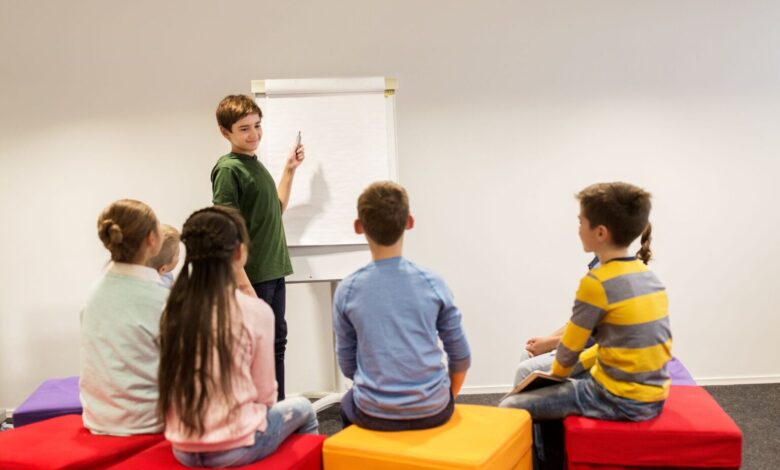
Enrolling your child in an English enrichment class provides a structured environment designed to stretch that cognitive muscle. Unlike standard rote memorization, these classes require active listening, critical thinking, and continuous participation. When children learn new vocabulary and grammatical structures, their brains are forced to filter out irrelevant information and zero in on the immediate task. This constant cognitive exercise gradually extends their ability to concentrate.
The Science Behind Language Learning and Concentration
Language acquisition is one of the most complex tasks the human brain undertakes. It involves auditory processing, memory recall, and pattern recognition. When children are actively engaged in language learning, they are simultaneously training their brains to hold focus.
The cognitive boost of active communication
Some research suggests a relationship between language development and aspects of attention and executive function, but the strength and direction of this link can vary. Research from Cornell University and other institutions suggests that bilingualism or language learning may be associated with improvements in aspects of executive function, though findings are mixed and context-dependent. This system is responsible for directing attention, planning, and ignoring distractions. By participating in an English enrichment class, children may practice skills such as understanding context, following instructions, and expressing responses, which can support attention development over time.
Interactive storytelling captures wandering minds
Reading a textbook silently can easily lead to a wandering mind. Interactive storytelling transforms passive reading into a dynamic experience. When educators use expressive voices, props, and pacing techniques, they can help maintain children’s interest and engagement. The child must pay close attention to understand the plot, anticipate what happens next, and answer comprehension questions. This back-and-forth interaction prevents the child from tuning out, effectively teaching them how to sustain their focus over longer intervals.
How Lorna Whiston Nurtures Focus Through Engagement
When learning feels like a chore, children naturally tune out. To combat this, educational approaches must prioritize genuine engagement. Lorna Whiston understands that the secret to holding a child’s attention lies in making the learning process interactive, meaningful, and deeply enjoyable.
Multisensory learning environments
Children learn best when they can use multiple senses simultaneously. Lorna Whiston utilizes a multisensory approach that integrates visual, auditory, and kinesthetic elements into every lesson. Rather than just staring at a worksheet, a child might trace letters in the sand, sing a phonics song, or act out a scene from a storybook. Engaging multiple senses at once prevents boredom and keeps the brain actively processing information, which naturally extends the child’s attention span.
Developing 21st-century skills through inquiry
Focus is much easier to maintain when a child is genuinely curious about the outcome. Inquiry-based tasks encourage children to ask questions, solve problems, and collaborate with their peers. By prioritizing 21st-century skills like critical thinking and creativity, Lorna Whiston ensures that children are not just passive recipients of information. They become active explorers in their educational journey. A sense of ownership over learning can increase motivation and may help some children sustain attention and complete tasks.
Practical Tips for Parents to Support Focus at Home
While an English enrichment class provides a fantastic foundation, parents play a crucial role in reinforcing these skills outside the classroom. Here are several actionable strategies to help build your child’s cognitive stamina at home.
Create a dedicated reading routine
Consistency is vital for building habits. Establish a specific time each day for reading, completely free from digital distractions. Start with short, manageable sessions—perhaps just five or ten minutes—and gradually increase the duration as your child’s focus improves. Ask open-ended questions about the story to ensure they are actively listening and comprehending the material.
Break tasks into manageable chunks
A large assignment can easily overwhelm a child, leading to immediate disengagement. Break homework or household chores down into smaller, bite-sized steps. Use a visual timer so your child knows exactly how long they need to focus before they earn a short break. This technique, similar to the Pomodoro method used by adults, makes prolonged focus feel much more achievable.
Encourage mindful observation games
You can turn focus-building into a fun activity. Play games like “I Spy” or memory-matching cards that require visual scanning and sustained attention. These simple, low-tech games train the brain to concentrate on specific details, which translates directly to better focus during academic tasks.
Frequently Asked Questions (FAQ)
At what age should my child start language enrichment?
Children can benefit from language enrichment as early as 18 months old. Early exposure to interactive language play helps establish foundational neural pathways for both communication and attention. Programs designed for toddlers focus heavily on multisensory experiences and socialization, which naturally build the capacity to sustain attention during structured activities.
How do I know if my child’s attention span is normal?
Keep the “two to three minutes per year of age” rule in mind. A four-year-old focusing for eight to twelve minutes on a drawing is perfectly normal. However, if your child cannot complete a simple, age-appropriate task without constant redirection or if they struggle to follow basic instructions, they may benefit from targeted cognitive and language exercises.
Can excessive screen time affect my child’s focus?
While screens themselves are not inherently evil, excessive consumption of short-form, rapid-fire content can condition the brain to expect constant dopamine hits. This may make slower-paced learning feel less engaging for some children compared to fast-paced digital content. Limiting recreational screen time and replacing it with interactive language activities can help “reset” their baseline for stimulation.
Building a Foundation for Lifelong Success
Helping your child develop strong attention skills is an important part of their overall learning and development. The ability to concentrate is the bedrock upon which all other academic and social skills are built. By understanding the profound connection between language acquisition and cognitive control, parents can make informed decisions about their child’s educational path.
Taking proactive steps now will equip your child with the mental resilience they need to tackle complex subjects later in life. Consider exploring interactive language programs and implementing structured reading routines at home. With the right support system, engaging learning activities, and patience, you can help your child gradually improve their ability to sustain focus.