Industrial Laser Cutting: Precision, Speed, and Versatility for Modern Fabricators
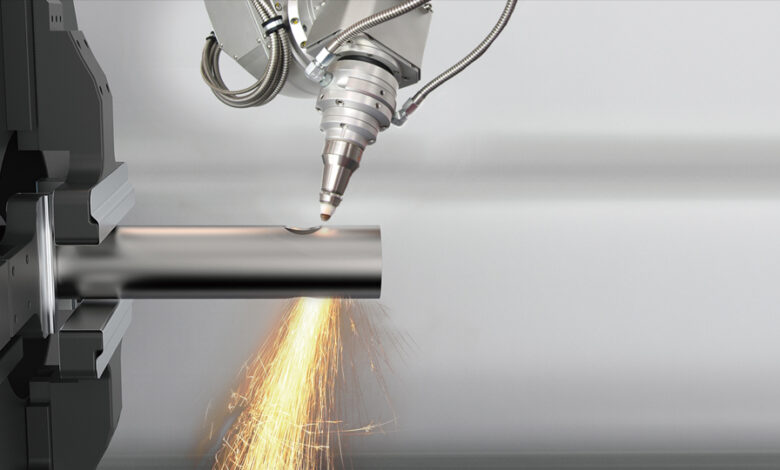
Traditional saws and plasma torches can’t handle it when it comes to getting intricate parts with no burrs. Industrial laser cutting is a technology that harnesses a laser beam to cut with great accuracy through material, by melting, burning, or vaporising it. The width of the cut is very small, sometimes below 0.2mm, referred to as the ‘kerf’. The precision means that engineers are able to fit more parts on a single sheet of metal, decreasing waste and cost. Additionally, the edge of the cut is clean and smooth from the laser cutting process, which typically does not need to be post-processed. In this article, we examine five reasons why laser cutting is the current benchmark for fabrication shops in Australia: unbeatable accuracy, edge quality, processing speed, versatility of materials processed, and minimal distortion. From automotive, aerospace, signage, and general engineering, industrial lasers cutting can enhance the production capabilities of your work.
1. Unbeatable Cutting Accuracy
The spot size of an industrial lasers cutting machine is generally only 0.1mm to 0.3mm. This enables the extremely close packing of components on a sheet, which saves on raw material costs. Most importantly, industrial lasers cutting technology can guarantee the positional tolerance of ±0.05mm to ±0.1mm, depending on the machine and material. In fields such as medical device production, electronics, or other high-accuracy components, this degree of precision is critical. Create interlocking pieces, fine mesh patterns, and very small holes that would be impossible with mechanical die cutting or plasma.
2. Exceptional Edge Quality
Mechanical cutting processes, such as shearing, sawing, and punching, will remain burr, rough edges, and some micro-cracks. These flaws frequently need a secondary deburring or grinding process, which takes extra labour hours and costs. A clean, square edge and a little recast layer are achieved in laser cutting. The width of the zone of heat-affected material is very small, retaining the mechanical properties of the material near the cut area. When using an industrial laser cutting system, the work is cleared without debris, and parts can be immediately used for subsequent welding, painting, or assembly. If the parts are visible, such as architectural panels or decorative grills, then no edge finishing is needed for the parts produced by laser cutting. This one advantage alone can help you save tons of time in your production process and save on labour expenses, making laser cutting a very cost-effective process even for high-volume production.
3. High-Speed Processing
Today’s industrial lasers cutting machines operate at incredibly fast speeds. They are capable of making intricate designs in seconds, as compared to punch presses, which are unable to do this at a similar rate. This speed can be used to provide customers with quick prototypes using no expensive tooling changes. The industrials laser cutting process is equally effective with only one custom bracket or one thousand identical washers. It offers flexibility to enter into employment and switch to another without losing momentum.
4. Versatility Across Materials
The versatility of materials processed by industrials laser cutting systems is one of its biggest advantages. The machine can be used to cut mild steel, stainless steel, aluminium, brass, copper, even plastics or wood – all with the same machine, just different powers. The versatility of the laser cutting process makes it a useful tool for job shops that receive a variety of job demands. Don’t use multiple saws for multiple materials.
5. Minimal Material Distortion
In traditional cutting processes, friction causes thin sheets to warp. Laser cutting is non-contact cutting; that is, the machine does not contact the metal. This eliminates mechanical stress and bending. Industrial laser cutting is used to cut an item without disturbing its structural integrity in delicate applications such as intricate signage or thin-gauge electronics. With Industrial Laser Cutting, your parts will remain flat and true in the original design.