The 4 Most Effective Types of Product Demo Videos
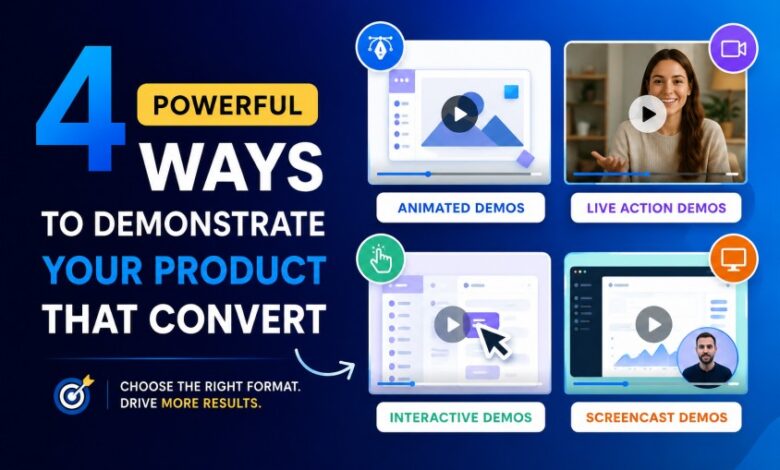
Not every product demo video serves the same purpose.
Some are designed to generate awareness, while others help prospects evaluate features, understand workflows, or make purchasing decisions.
The right format depends on your audience, product complexity, budget, and stage of the buyer journey.
In this guide, we’ll explore the four most effective types of product demo videos and when to use each one.
Whether you’re launching a SaaS platform, introducing a new feature, or supporting your sales team, these examples can help you choose the right approach.
1. Animated Product Demo Videos
Animated product demo videos are among the most popular formats for software and SaaS companies.
Instead of relying on raw screen recordings, these videos combine UI visuals, motion graphics, transitions, illustrations, and storytelling to explain how a product works.
The result is a polished and engaging experience that keeps viewers interested while simplifying complex concepts.
This format works particularly well when:
- Your software has multiple workflows or advanced features.
- You want to simplify technical concepts.
- The product is still evolving and doesn’t require live footage.
- You’re targeting a broad audience that may not be familiar with your solution.
Animated demos allow companies to highlight key functionality without overwhelming viewers with every detail. Through visual storytelling, they focus attention on outcomes rather than menus and buttons.
Benefits of Animated Product Demo Videos
- Professional and visually appealing
- Easy to update when products change
- Great for websites, product pages, and presentations
- Ideal for explaining abstract concepts
Many successful SaaS brands use animated product demo videos because they communicate value quickly while maintaining a premium brand image.
2. Live Shoot Product Demo Videos
Live shoot product demo videos showcase a product being used in a real-world environment.
Unlike animation, these videos feature real people, real scenarios, and authentic interactions with the product. This makes them highly effective for building trust and demonstrating practical applications.
For physical products, live-action demonstrations help viewers understand size, functionality, usability, and quality.
For software products, live shoots often include customer testimonials, presenter-led walkthroughs, or workplace scenarios showing how teams use the solution.
This format works best when:
- Human interaction is part of the product experience.
- You want to build credibility and trust.
- Customer success stories play a key role in the buying decision.
- Real-world context enhances understanding.
Benefits of Live Shoot Product Demo Videos
- Creates stronger emotional connections
- Builds authenticity and trust
- Demonstrates real-life use cases
- Helps prospects visualize ownership or usage
For many B2B companies, combining live-action footage with software demonstrations creates a powerful product demo video that feels both informative and relatable.
3. Interactive Product Demo Videos
Interactive product demos take engagement to another level.
Instead of simply watching a video, users can actively explore the product experience themselves. They can click through interfaces, navigate workflows, and experience features at their own pace.
Think of it as a self-guided product tour that allows prospects to understand the product before scheduling a sales call or signing up for a free trial.
Interactive demos are becoming increasingly popular among SaaS companies because modern buyers prefer researching independently before talking to sales representatives.
These demos are particularly effective for:
- Product-qualified lead generation
- Mid-to-bottom funnel prospects
- Sales enablement initiatives
- Enterprise software evaluations
Benefits of Interactive Product Demo Videos
- Higher engagement compared to passive videos
- Better product understanding
- Reduced friction in the buying process
- Improved lead qualification
Because users spend more time exploring the product, interactive demos often provide valuable insights into which features attract the most interest.
Many companies use interactive product demos as part of their website experience, email campaigns, and sales outreach programs.
4. Screencast Product Demo Videos
Screencast product demo videos are the simplest and most cost-effective option.
These videos involve recording your screen while walking viewers through the product interface. They’re commonly created using tools like Loom, Vimeo Record, or screen recording software.
While they may lack the visual polish of animated or live-action videos, screencasts can still be highly effective when clarity and speed matter more than production quality.
This format is commonly used for:
- Feature announcements
- Customer onboarding
- Internal training
- Sales follow-ups
- Product updates
Screencast demos work especially well when viewers already have some familiarity with the product and simply need guidance on how specific features work.
Benefits of Screencast Product Demo Videos
- Fast and affordable to produce
- Easy to update regularly
- Authentic product experience
- Perfect for educational content
Startups and growing SaaS companies often begin with screencast videos before investing in larger-scale production projects.
How to Choose the Right Product Demo Video
Choosing the right demo format depends on your goals.
Choose Animated Demos If:
- You need a polished marketing asset.
- Your software is complex.
- You want maximum visual engagement.
Choose Live Shoot Demos If:
- Trust and credibility are critical.
- Real-world usage matters.
- Human storytelling adds value.
Choose Interactive Demos If:
- You want prospects to explore independently.
- Your sales cycle involves product evaluation.
- You want to improve your lead qualification.
Choose Screencast Demos If:
- The budget is limited.
- Speed is a priority.
- You need onboarding or training content.
Many successful companies don’t rely on just one format. Instead, they create a product demo video strategy that combines multiple approaches across different stages of the customer journey.
For example, an animated demo may attract attention, an interactive demo may support evaluation, and a screencast may help with onboarding after purchase.
Why Product Demo Videos Matter
Today’s buyers expect to see products before they buy them.
A well-crafted product demo video reduces confusion, highlights key benefits, and helps potential customers understand exactly how a solution fits into their workflow.
For SaaS businesses, product demos often become one of the most valuable assets across marketing, sales, and customer success teams.
They can increase engagement, shorten sales cycles, improve product adoption, and help prospects make informed decisions faster.
Most importantly, they answer the questions buyers care about:
- What does the product do?
- How does it work?
- Will it solve my problem?
- Is it easy to use?
When these questions are answered visually, conversion rates often improve significantly.
Final Thoughts
A product demo video is more than a feature walkthrough – it’s a powerful communication tool that helps prospects understand, trust, and ultimately choose your product.
Whether you create an animated demo, a live-action showcase, an interactive experience, or a simple screencast, the goal remains the same: demonstrate value clearly and convincingly.
The best product demo videos don’t focus solely on features. They focus on outcomes, user experience, and the real-world benefits customers can achieve.
Use these four formats as inspiration for your next project, and choose the approach that best aligns with your audience, budget, and business goals.
A well-executed product demo video can be the difference between a prospect leaving your website and becoming your next customer.