Choosing the Right Fire Extinguisher: A Guide for Your Home, Office, & Car
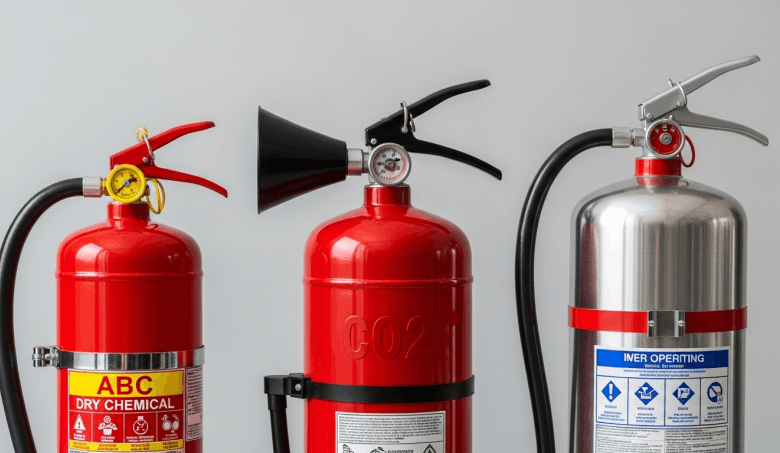
When a fire breaks out, your first instinct is to grab the nearest fire extinguisher. But did you know that using the wrong type of extinguisher can be ineffective, or in some cases, catastrophically dangerous? Using a water-based extinguisher on a kitchen grease fire or an electrical fire can spread the flames or cause electrocution.
This is why understanding the different types of fire extinguishers is not just helpful—it’s a critical part of your safety plan. This guide will demystify fire extinguisher ratings and help you choose the correct extinguisher for your home, office, and car, ensuring you have the right tool when you need it most.
Know Your Enemy: Understanding the Classes of Fire
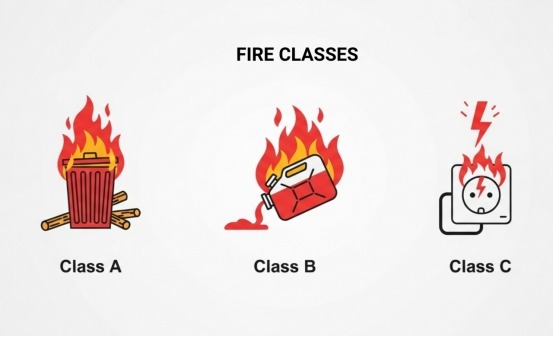
Before you can pick an extinguisher, you must first understand the “fuel” the fire is consuming. Fires are classified by their fuel source, and the classification label (A, B, C) is printed directly on the side of every extinguisher.
Class A: Common Combustibles
These are fires fueled by solid materials like wood, paper, cloth, trash, and plastics. This is the most common type of fire in a home or office.
Class B: Flammable Liquids
These are fires fueled by flammable liquids such as gasoline, oil, paint, solvents, and kitchen grease.
Class C: Energized Electrical Equipment
These fires involve live electrical equipment like appliances, wiring, circuit breakers, and power tools. The “C” classification means the extinguisher’s agent is non-conductive.
Fire Extinguisher Showdown: A Comparison
Understanding the fire classes makes choosing an extinguisher simple. Here are the most common types you’ll encounter.
1. ABC Dry Chemical Extinguishers
- Best for: Class A, B, and C fires.
- This is the workhorse and the “all-in-one” solution. A dry chemical fire extinguisher sprays a fine powder that smothers the fire, separating the fuel from oxygen.
- Pros: Extremely versatile, highly effective, and tackles all common fire types.
- Cons: The powder is messy and can be corrosive to electronics after the fire is out.
2. Carbon Dioxide (CO2) Extinguishers
- Best for: Class B and C fires.
- These extinguishers spray carbon dioxide, which displaces oxygen to smother the fire and is extremely cold, cooling the fuel.
- Pros: Leaves no residue, making it the ideal choice for sensitive electronics, server rooms, and labs.
- Cons: Not effective on Class A fires (wood/paper). The gas dissipates quickly, so the fire can re-ignite.
3. Water-Based (Water Mist) Extinguishers
- Best for: Class A fires ONLY.
- These use water to cool the fuel, breaking the fire triangle.
- Pros: Highly effective on paper and wood.
- Cons: NEVER use on a grease fire (it will cause an explosion of flames) or an electrical fire (risk of electrocution).
Where to Place Them: A Location-Based Guide
Having the right extinguisher means nothing if it’s not nearby.
- Home: The single best fire extinguisher for home use is the ABC Dry Chemical type. Its versatility is non-negotiable in a home environment where a fire could start from a forgotten pot (Class B), a faulty wire (Class C), or a lit candle (Class A). Place one in the kitchen (near an exit, not next to the stove) and one in the garage.
- Car: A fire extinguisher for car is a must-have. A compact ABC Dry Chemical extinguisher is the best choice, as it can handle fires from flammable liquids (gas, oil) and electrical issues.
- Office: For general hallways and breakrooms, the ABC Dry Chemical is the standard. For areas with expensive computers or servers, a CO2 extinguisher should be provided to protect the equipment.
Certified Protection: LESSO’s Fire Extinguisher Range
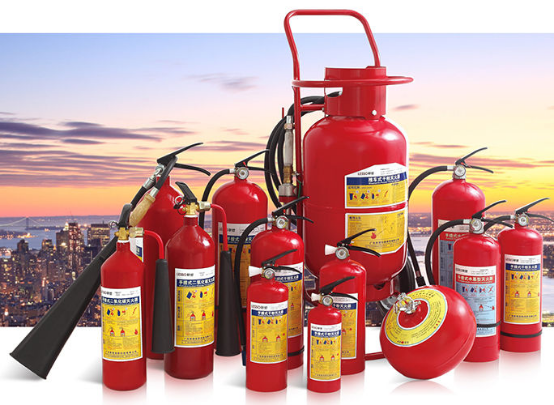
Choosing a certified, high-quality extinguisher is just as important as choosing the right type. LESSO offers a complete range of professional-grade, portable fire extinguishers engineered for reliability and compliance.
1. LESSO Portable Dry Powder Fire Extinguisher
This is the versatile, multi-purpose ABC Dry Chemical extinguisher that is essential for both home and commercial use.
LESSO provides clear guidance on inspection: check the pressure gauge (it must not be in the red zone) and ensure it is professionally inspected and refilled according to its service life. This commitment to safety standards demonstrates trustworthiness.
2. LESSO Portable CO2 Fire Extinguisher
Ideal for protecting valuable assets, this CO2 extinguisher is the “clean” solution. It is designed for simplicity, ease of use, and high fire-extinguishing ability. It’s the perfect choice for areas with flammable liquids, gases, or sensitive electronics where residue would cause significant damage.
3. LESSO Portable Water Mist Fire Extinguisher
This is a high-efficiency, specialized tool for specific risks.
- Specialized Use: This is not a simple water extinguisher. It uses an advanced AFFF (Aqueous Film-Forming Foam) agent to effectively put out Class A (solid) and Class B (non-water-soluble liquid) fires.
- Professional Grade: As LESSO’s information states, this is a new, highly efficient solution best suited for enterprises, factories, oil depots, and ships, demonstrating a deep understanding of varied fire-risk environments.
Conclusion
While specialized extinguishers like CO2 and Water Mist have crucial roles in commercial and industrial settings, the safety of your home relies on versatility. In a panic, you don’t have time to wonder if the fire is electrical or grease-based.
For this reason, the ABC dry chemical fire extinguisher is the best fire extinguisher for home and personal car use. It covers all common household risks, offering the most practical, reliable, and essential protection for you and your family. Ensure your home is protected with a certified, multi-purpose extinguisher, and learn how to use it.