eSIM vs Roaming: Which Travel Connectivity Option Is Right for You?
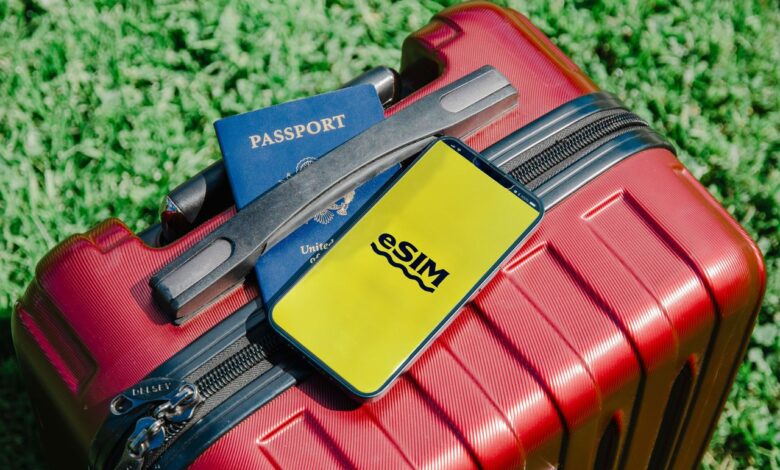
Staying connected while travelling internationally is easier than ever, but choosing the right option can still be confusing. International roaming, a local physical SIM and an eSIM can all provide mobile data abroad, yet each works differently.
Roaming lets you continue using your home mobile service overseas, while a local SIM gives you access to a network in the country you’re visiting. An eSIM offers a digital alternative, allowing you to add a travel plan without physically changing the SIM card in your phone.
The best choice depends on several factors, including your destination, trip length, expected data usage and how much preparation you’re willing to do before travelling.
Let’s look at how each option works and when it may make sense.
How Can You Stay Connected While Travelling?
How Does International Roaming Work?
International roaming allows your existing mobile provider to connect your phone to a partner network when you travel abroad. Instead of purchasing a separate plan, you continue using your current mobile service overseas.
For many travellers, convenience is the main benefit. You don’t need to visit a mobile shop, replace your SIM or arrange a new number. If international roaming is already included in your plan, you may simply need to enable the feature before or after arriving at your destination.
However, roaming costs and allowances differ between providers. Some plans include a certain amount of international data, while others offer travel passes or charge separately for data usage.
Roaming can therefore work well for short trips, particularly when your existing plan provides enough international data.
Advantages of roaming:
- No need to change your SIM
- Your usual mobile number stays available
- Minimal setup is required
- Convenient for short journeys
Potential drawbacks:
- International rates vary between providers
- Additional data can become expensive
- Coverage and allowances depend on the destination
- Multi-country trips may involve different roaming rules
What Is a Local Physical SIM?
A local physical SIM is another traditional option for getting mobile service abroad. After arriving in your destination, you purchase a SIM from a local network operator, insert it into your phone and select an available package.
One of the biggest advantages is potentially lower local pricing. If you’re staying somewhere for several weeks or months, a local plan may offer good value.
A local SIM can also provide a local telephone number, which may be useful for contacting local businesses, making reservations or using services that require a domestic number.
The trade-off is convenience. You’ll need to locate a provider, purchase the SIM and possibly complete identification or registration requirements. You’ll also need to remove or replace your existing physical SIM.
Advantages of a physical SIM:
- Competitive local plans may be available
- Can provide a local number
- Suitable for longer stays
- Widely supported by mobile phones
Potential drawbacks:
- Requires physically changing SIM cards
- You need to find a local provider
- Registration requirements can apply
- Less convenient when visiting several countries
What Is an eSIM?
an embedded SIM built into compatible smartphones, which lets you download a mobile plan as a digital profile. Instead of inserting a plastic SIM card, you download and activate a mobile plan digitally.
For travellers, this can make the preparation process much easier. You can arrange your connectivity before leaving home rather than looking for a mobile provider after landing.
On compatible devices, your existing physical SIM can often remain installed while the eSIM handles your travel data.
Advantages of an eSIM:
- Travel plans can be arranged before departure
- No physical SIM card is needed
- Switching between plans is easier
- Your regular SIM can often remain active
- Convenient for trips covering several countries
Potential drawbacks:
- Your smartphone needs eSIM support
- Initial installation may require a few setup steps
- Some plans are data-only
- Available coverage and allowances differ by destination
eSIM io provides travel connectivity options designed around different destinations, trip durations and data requirements.
eSIM vs Roaming: Which Offers Better Value?
Comparing the Cost
There isn’t a single answer when it comes to price because your total cost depends on your destination and how much data you consume.
Roaming can be excellent value when your existing mobile package already includes international data. However, once you go beyond the included allowance, extra charges may apply depending on your provider.
An eSIM provides another way to manage travel connectivity. Instead of relying entirely on your domestic provider’s international rates, you can select a travel plan based on your destination and expected usage.
With eSIM io, travellers have access to pay-as-you-go, fixed-term and unlimited daily options. Pay-as-you-go can be useful if your data consumption is difficult to predict. Rather than committing to a specific package in advance, you can pay based on the data you actually use.
Travellers who expect heavier usage can also choose unlimited daily options for periods ranging from one to 30 days.
Which Option Works Best for Multi-Country Trips?
The difference becomes more obvious when an itinerary includes several destinations. If you’re spending two weeks in a single country, purchasing a local SIM may be straightforward. Once installed, you can continue using the same local network throughout your stay.
However, changing SIM cards every time you cross a border can quickly become inconvenient.
Roaming may already include several countries, but it’s important to check your provider’s terms before travelling. Different destinations can fall into different roaming zones.
An eSIM can simplify this process because you can arrange travel connectivity digitally without repeatedly replacing a physical SIM.
eSIM io’s OneSIM technology is designed for international travel. Once installed, it is designed to detect your location and switch connectivity as you move between supported destinations, reducing the need to install a new eSIM for every country.
Best for travelling across several countries: eSIM
Best for an extended stay in one country: Local physical SIM
Best for the simplest setup: Roaming
What If You Aren’t Sure How Much Data You’ll Use?
Data consumption can be difficult to predict while travelling. Navigation, video calls, social media, translation tools, music and streaming can all increase your usage. Someone who expects to use their phone only occasionally may discover that they need considerably more data than anticipated.
On the other hand, buying a large package just in case can leave you paying for data you never use. Different eSIM options can help accommodate different usage patterns. eSIM io offers pay-as-you-go options for users who don’t want to commit to a fixed allowance.
For travellers who prefer not to keep checking their remaining data, unlimited daily plans provide another option. Fixed plans can also be useful if you already know approximately how much data you’ll need for a particular destination or period.
Making Your Travel Data Go Further
If you’re planning to use an eSIM for your next trip, it’s also worth considering whether an introductory offer can help reduce the overall cost of getting connected.
New eSIM io users can use the 50BONUS promo code when topping up to receive 50% bonus credit. For example, a $20 top-up gives you an additional $10 in bonus credit, providing $30 in total credit to use within the app.
This can be useful if you’re trying eSIM connectivity for the first time or simply want some additional credit available for maps, messaging, browsing and other travel needs.
Combined with flexible options such as pay-as-you-go, fixed plans and unlimited daily plans, travellers can choose an approach that matches both their itinerary and expected data usage.
What If Your Trip Dates Change?
Travel arrangements don’t always remain the same. Flights can be rescheduled, holidays can be extended and additional destinations can be added to an itinerary.
Some travel eSIM features can make these changes easier to manage. eSIM io’s Custom Plan Activation Date allows users to purchase a plan ahead of time and choose when they want it to begin.
Eligible plans can also use the Pause Plan feature. If the plan has used no more than 200 MB after activation, it can be paused once and resumed later. This can be useful when your travel schedule changes unexpectedly.
What Happens to Your Unused Balance?
Another consideration is what happens to money left in your account after a trip.
With eSIM io’s Lifetime io Balance, credit added to the account does not expire. This means unused credit can remain available for another trip instead of being lost after a set period.
Which Travel Connectivity Option Should You Pick?
Roaming May Be Best If:
- You’re travelling for a short period
- Your existing plan includes enough international data
- You want to avoid additional setup
- Keeping your current mobile service is important
A Physical SIM May Be Better If:
- You’re staying in one country for a longer period
- Local pricing is your main priority
- You need a local phone number
- You don’t mind purchasing and installing a SIM after arrival
An eSIM May Be the Better Choice If:
- You want to arrange mobile data before travelling
- Your itinerary includes multiple countries
- You want to keep your physical SIM installed
- You want more control over your travel data
- You prefer flexible pay-as-you-go, fixed or unlimited options
Final Thoughts
Choosing between roaming, a physical SIM and an eSIM ultimately comes down to your individual travel plans. Roaming is often the easiest solution if your existing mobile provider already includes a suitable international allowance. A local physical SIM can be attractive for travellers spending a longer period in one country and looking for local rates.
An eSIM can offer a convenient middle ground. You can arrange your connectivity before departure, avoid handling physical SIM cards and select a plan based on your destination and expected data usage.
For travellers visiting multiple countries, features such as eSIM io’s OneSIM technology can make staying connected more convenient by reducing the need to change plans as you move between destinations.
Before choosing an option, consider your itinerary, trip duration, expected data consumption and how much flexibility you want. The right connectivity solution can make international travel considerably easier.
READ ALSO: eSIMs and Virtual Phone Numbers: Two Tools Changing How People Stay Connected


