Heat Exchanger Coating vs. Full Replacement: A Cost-Benefit Analysis for US Facility Managers
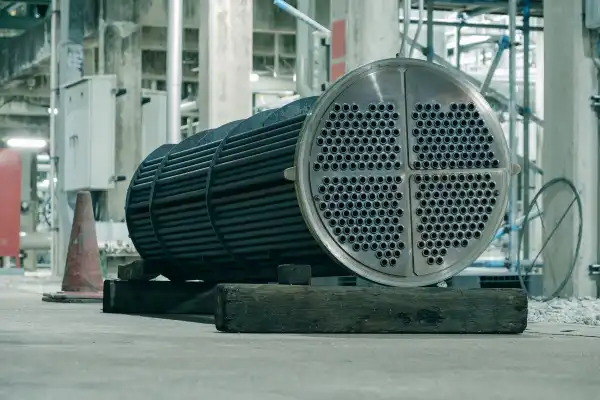
At some point, most facility managers face the same decision: a heat exchanger is underperforming, showing signs of corrosion or fouling, and the question becomes whether to repair and protect it or pull it out entirely and start fresh. Neither choice is inherently right. The correct answer depends on the equipment’s condition, the operational demands of the system, and the realistic cost of both paths over time.
What makes this decision difficult is that the upfront numbers rarely tell the full story. A full replacement looks clean on paper — new equipment, known specs, a fresh warranty. But the actual cost of replacement extends well beyond the unit price. Similarly, coating as a protective intervention sounds like a conservative fix, but when applied correctly to the right equipment at the right time, it can meaningfully extend service life and prevent the conditions that make replacement unavoidable in the first place.
This analysis is intended to give facility managers a grounded framework for evaluating both options — not to advocate for one over the other, but to lay out what each path actually involves in terms of cost, downtime, risk, and long-term system reliability.
What Heat Exchanger Coating Actually Involves
Heat exchanger coating is a protective surface treatment applied to the internal or external surfaces of a heat exchanger to resist corrosion, prevent fouling, and extend the operational lifespan of the unit. It is not a patch repair or a cosmetic procedure. When properly specified and applied, it changes the surface chemistry of the equipment, reducing the adhesion of contaminants and slowing the electrochemical processes that cause metal degradation over time.
Facilities that have explored this option in depth — particularly those dealing with chilled water systems, HVAC equipment, and process cooling — often find that heat exchanger coating can be a cost-effective intervention when the underlying structure of the equipment is still sound. The coating addresses the mechanism of failure rather than waiting for that failure to become irreversible.
The process typically involves surface preparation, cleaning to remove existing fouling or oxidation, and then application of a protective material suited to the operating environment. The type of coating used — whether epoxy-based, polymer, or another formulation — depends on the fluid being processed, the temperatures involved, and the specific degradation mode the facility is trying to prevent.
When Coating Is the Right Intervention
Coating is most appropriate when the heat exchanger’s core structure — the tubes, headers, and shell — remains mechanically sound but the surfaces have begun to corrode or accumulate scale and biological fouling. In this situation, the degradation is a surface problem, not a structural one, and applying a protective barrier addresses the actual source of performance loss.
Facilities operating in coastal environments, areas with aggressive water chemistry, or industrial settings where the fluid side contains particulates or mild chemical content often see early corrosion that doesn’t reflect the remaining service life of the equipment. Coating in these scenarios preserves the investment already made in the equipment and buys additional years of reliable operation without the disruption of full replacement.
Coating is also a reasonable option when a facility is planning a larger system upgrade in the medium term. Protecting a functioning heat exchanger now — rather than replacing it — allows the facility to defer capital expenditure until a point when the broader system work justifies it. That kind of planning flexibility has real financial value, particularly in facilities with constrained capital budgets or multi-year infrastructure plans.
When Coating Is Not Sufficient
There are conditions under which no surface treatment will provide meaningful benefit. If a heat exchanger has developed through-wall corrosion, significant tube cracking, or structural deformation from thermal stress or mechanical damage, coating cannot restore its integrity. In these cases, the failure mode is not surface degradation — it is a loss of structural function, and that requires either component-level repair or full replacement.
Facilities should also be cautious about applying protective coatings to equipment that has been repeatedly patched or that has run beyond its design life under heavy load. The coating will only perform as well as the surface it adheres to. If that surface is compromised at a level that surface preparation cannot fully correct, the long-term outcome of the coating may be poor, and the facility may end up facing replacement anyway within a shorter timeline than expected.
The Real Cost of Full Replacement
Full replacement is often treated as the definitive solution — the option that eliminates uncertainty. In practice, however, replacement is the most expensive path, not just because of the equipment cost itself, but because of everything surrounding it. Facility managers who have gone through the replacement process typically describe it as a six-to-twelve-week process at minimum, when procurement, installation scheduling, system draining, and recommissioning are all factored in.
The equipment cost alone can range considerably based on system size and configuration, but that figure represents only a portion of the total outlay. Crane and rigging fees, contractor labor, permit requirements in some jurisdictions, disposal of the old unit, and system recommissioning work all add to the final number. When those costs are aggregated, replacement consistently comes in at a multiple of what a protective coating intervention would cost for the same equipment.
Downtime as a Cost Category
For facilities where the heat exchanger supports a critical process — a data center cooling loop, a manufacturing line, a hospital mechanical system — downtime is not an inconvenience. It is a direct operational cost. Replacement requires extended downtime, often scheduled during off-peak periods, which creates its own planning burden and sometimes requires temporary cooling arrangements to keep operations running during the work.
Coating, by contrast, typically requires a shorter outage window. The surface preparation and application process is more contained than a full equipment swap. While no protective treatment eliminates downtime entirely, the downtime associated with a coating application is generally measured in days rather than weeks. For facilities where every hour of uptime has tangible value, this difference is not trivial.
Capital Planning and Budget Cycles
Large capital expenditures for equipment replacement typically require a different approval process than maintenance and protective treatment expenditures. In many organizations, replacement triggers a capital review cycle that can add months to the decision timeline. A coating application, categorized as a maintenance intervention, often moves through approval more quickly and draws from a different budget line — one that may have more flexibility in the near term.
This distinction matters operationally. A heat exchanger that has begun to show early corrosion can deteriorate quickly if the decision to replace it gets delayed in a capital approval process. A coating intervention that falls within maintenance authority can be approved and executed faster, protecting the equipment during a period when replacement may not yet be financially or procedurally possible.
Comparing the Two Paths Over a Realistic Time Horizon
The comparison between coating and replacement becomes clearer when evaluated over a defined period — typically five to ten years, which aligns with most facilities’ infrastructure planning cycles. Over that horizon, the question is not simply what each option costs today, but what each option costs in total when maintenance, performance degradation, and eventual end-of-life decisions are all included.
A heat exchanger that receives a protective coating at the right point in its service life, applied correctly to a structurally sound unit, can reasonably extend service life by several years with continued monitoring. During that extended period, the facility avoids replacement costs, preserves system performance, and maintains operational continuity. The coating itself may need to be inspected and potentially reapplied depending on operating conditions, but those costs are typically modest compared to full replacement.
A replaced unit, on the other hand, starts a new depreciation cycle and carries new performance guarantees — but it also resets the capital investment clock. For facilities with aging infrastructure across multiple systems, triggering multiple replacements in a compressed timeframe creates significant financial pressure. Protective coatings used strategically across a fleet of aging heat exchangers can smooth out that capital demand by staggering the replacement timeline.
Risk and Reliability Considerations
Both paths carry operational risk, but the nature of the risk differs. Replacement introduces short-term installation risk — the possibility of commissioning issues, compatibility problems with an existing system, or delays in equipment delivery. Coating introduces a different kind of risk: if the coating is misspecified, poorly applied, or applied to equipment that was already too degraded, it may fail to perform as expected, and the facility may face the replacement decision sooner than planned.
According to guidance published by the U.S. Department of Energy, optimizing heat exchanger performance through maintenance interventions — including surface treatments — is a recognized approach to improving industrial energy efficiency and reducing lifecycle costs. The key factor in both paths is the quality of the assessment that precedes the decision. Facilities that conduct a thorough condition assessment before committing to either option are consistently better positioned than those that choose based on urgency alone.
How Facility Managers Should Frame the Decision
The coating versus replacement decision should be driven by a condition assessment, not by the cost of either option in isolation. Before any recommendation can be made — whether by a contractor, an in-house engineer, or a consultant — the physical state of the equipment needs to be understood. That means inspecting for structural integrity, measuring wall thickness where possible, evaluating the fouling history, and understanding the operating conditions the equipment has been subjected to.
Once the condition is known, the decision becomes more straightforward. Equipment that is structurally sound but surface-degraded is a candidate for heat exchanger coating. Equipment that has reached the end of its useful structural life should be replaced, and no protective treatment will change that outcome. The risk of the wrong decision in either direction — coating equipment that should be replaced, or replacing equipment that could have been preserved — is a risk that falls on the facility, not the contractor.
Facility managers who approach this decision with a documented condition assessment, a realistic view of total costs including downtime, and a defined planning horizon will consistently make better choices than those who treat it as a purely reactive maintenance call.
Conclusion
There is no universal answer to whether coating or replacement is the right choice for a heat exchanger that has begun to underperform. The answer depends on the equipment’s current condition, the operational demands of the system it serves, the facility’s budget cycle, and the realistic cost of downtime. What is clear is that treating the two options as fundamentally different in kind — one being a real solution and the other a temporary fix — misrepresents how both actually perform in practice.
Protective coatings, when properly specified and applied to appropriate equipment, are not a compromise. They are a deliberate, cost-conscious maintenance decision with a defined performance expectation. Full replacement, when genuinely necessary, is the correct choice — but it should be chosen because the equipment’s condition demands it, not because replacement feels more decisive.
Facility managers who build a structured evaluation process around this decision — one that begins with condition assessment, accounts for total costs across both paths, and aligns with the facility’s operational planning horizon — will find that the right answer becomes considerably easier to identify and defend internally.