Embroidery Machine Service Cost Breakdown: What US Shop Owners Are Actually Paying in 2025
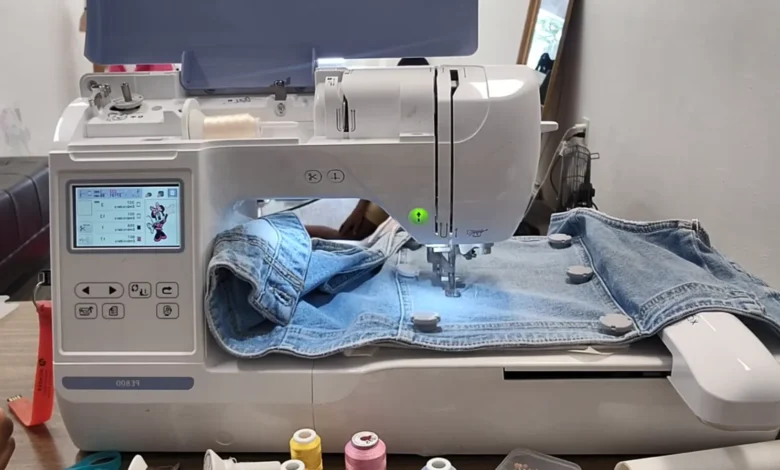
Commercial embroidery equipment runs hard. For shops producing custom apparel, uniforms, promotional goods, or industrial patches at any meaningful volume, the machines don’t stop — and neither do the wear patterns accumulating inside them. Hooks bend under thread tension. Rotary hooks collect lint in places that don’t announce themselves until a seam fails mid-run. Timing drifts slowly enough that operators often attribute quality issues to design files or thread quality before suspecting mechanical drift.
What makes service costs difficult to plan for isn’t the expense itself — it’s the unpredictability. A shop owner running a four-head commercial unit may go eighteen months without a major incident, then face two mechanical failures in the same quarter. Others run aggressive maintenance schedules and avoid unplanned downtime almost entirely, but carry higher fixed service costs as a result. Neither approach is wrong. The question is whether the cost structure is understood before decisions are made, not after a machine goes down during a rush order.
In 2025, embroidery machine service costs across the US have shifted in ways that affect independent decorators, mid-sized shops, and high-volume production facilities differently. Labor rates in skilled trades have risen. Parts lead times — particularly for imported components on Asian-manufactured machines — have lengthened in some regions. And the gap between shops that track service costs systematically and those that don’t has become more visible in margin calculations.
What Embroidery Machine Service Actually Costs in 2025
Service costs for commercial embroidery machines don’t follow a single pricing structure. They vary by machine type, age, brand, regional labor rates, and the condition of the machine at the time of service. Understanding embroidery machine service cost requires separating it into its real components: routine preventive maintenance, diagnostic labor, parts replacement, and in some cases, recalibration work that can only be done by a technician with brand-specific training.
For shop owners trying to build accurate operating budgets, a structured breakdown of embroidery machine service cost provides a useful baseline — one that accounts for machine complexity, maintenance history, and the type of service being performed rather than applying a flat estimate to every situation.
Preventive Maintenance vs. Reactive Repair
The distinction between scheduled maintenance and reactive repair matters more financially than most shop owners initially expect. Preventive maintenance — regular lubrication, hook timing checks, tension calibration, and component inspection — carries a relatively predictable cost when performed on a consistent schedule. Reactive repair, by contrast, involves diagnostic time, expedited parts sourcing in some cases, and often a higher labor investment because the technician is working backward from a failure rather than forward from a known baseline.
Shops that defer preventive maintenance to reduce short-term spending often find that the deferred costs return at a higher rate. A hook assembly that could have been cleaned and adjusted during a scheduled service visit may require full replacement if wear goes undetected. Timing issues caught early are typically adjustments; caught late, they can damage needle plates, throat plates, and presser feet simultaneously.
Multi-Head vs. Single-Head Service Pricing
Multi-head commercial machines — the six-head, eight-head, and twelve-head units common in production environments — involve more service time than single-head units, but not always proportionally more. A technician servicing a twelve-head machine is often performing the same sequence of tasks across each head, which creates some efficiency at the labor level. However, if individual heads are in different states of wear, service time increases and the cost structure changes accordingly.
Single-head machines used in smaller shops or for sampling work are less expensive to service per visit, but those shops often have less buffer against downtime. A single-head operation that loses its only machine to an unplanned repair loses its production capacity entirely until the machine is back online, which adds an indirect cost that doesn’t appear on the service invoice.
Regional Labor Rates and Their Effect on Total Service Cost
Skilled embroidery machine technicians are not evenly distributed across the US. Major production regions — the Southeast, parts of the Midwest, and established garment decoration markets in the mid-Atlantic — tend to have higher availability of trained technicians, which moderates labor rates somewhat through competition. In rural markets or less saturated regions, shops may have fewer service options, which can drive rates upward or extend response times in ways that create their own indirect costs.
On-Site vs. Depot Service Models
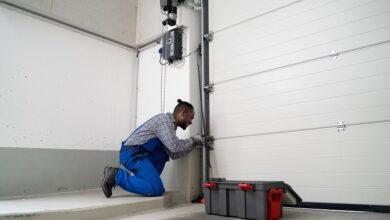
On-site service — where the technician comes to the shop — typically carries a higher labor rate than depot service, where the machine or components are shipped to a service center. For large multi-head machines that cannot be easily transported, on-site service is often the only practical option, and the travel component of technician costs becomes part of every service visit. For smaller machines or modular components, depot service can reduce per-visit cost but introduces lead time that affects production planning.
The choice between these models isn’t always financial. Some shops prioritize on-site service because it allows their operators to observe the work, ask questions, and better understand what the machine needs between visits. Others treat service as a logistics function and optimize purely for cost and turnaround time. Both approaches work, but they require different assumptions when building a service budget.
Parts Availability and Sourcing Costs in 2025
Parts costs have become a more significant variable in total service cost calculations over the past two years. For machines manufactured overseas — which represents a substantial share of the commercial embroidery equipment in US shops — parts availability depends on import timelines, distributor inventory, and in some cases the age of the machine relative to the manufacturer’s active parts support window.
Older machines that remain mechanically sound but fall outside active distribution support may require sourcing parts through third-party channels, which can introduce both cost variability and quality uncertainty. This is particularly relevant for shops running equipment that is ten or more years old but still productive — a common situation in smaller operations where capital investment cycles are longer.
How Service History Affects Cost Over Time
A machine with consistent, documented service history typically costs less to maintain over a multi-year period than one with gaps in its maintenance record. This isn’t only because well-maintained machines break down less often — it’s also because technicians working on a machine with clear service records can work more efficiently. They know what’s been replaced, what’s been adjusted, and where the machine is in its wear cycle. Without that history, diagnostic time increases and the risk of misdiagnosis rises.
According to the U.S. Small Business Administration, equipment maintenance records are considered a core component of operational cost management for small manufacturers — a category that includes most independent embroidery shops. Keeping accurate records of service visits, parts replaced, and observed wear patterns creates a cost management asset that compounds over time.
The Cost of Deferred Service
Deferring scheduled service is one of the most common ways embroidery shops inadvertently increase their long-term service costs. The logic seems straightforward in the short term — the machine is running, an order deadline is approaching, and scheduling a service visit feels like an unnecessary disruption. But the mechanical reality of commercial embroidery equipment doesn’t pause during production runs.
Hook timing that drifts slightly during a busy production period doesn’t correct itself. Lint accumulation in bobbin cases and hook assemblies continues between cleanings. Thread path components that are beginning to show wear continue wearing. Each of these conditions is inexpensive to address at an early stage and significantly more expensive once it contributes to a mechanical failure or a quality defect that results in production waste.
Building a Realistic Service Budget for Your Shop
A realistic service budget accounts for both the predictable and the unpredictable. Preventive maintenance visits — the frequency of which depends on production volume, thread types used, and machine age — form the predictable foundation. A contingency allocation for reactive repairs forms the unpredictable component. Shops that build both into their annual operating budget are better positioned to make clear-headed decisions when service needs arise rather than reacting to cost pressure in the moment.
The size of the contingency allocation varies by machine age and production intensity. Newer machines under warranty or active service agreements carry lower unplanned cost risk. Older machines in high-volume production environments carry more. Shops with multiple machines have some natural buffer — a repair on one head or one machine doesn’t necessarily halt all production — while single-machine shops need a larger contingency to account for full production loss during a repair.
Service Agreements vs. Per-Visit Billing
Some technicians and service providers offer annual service agreements that cover a defined number of preventive maintenance visits plus discounted rates on parts and reactive labor. These agreements provide cost predictability and often encourage more consistent service scheduling, which benefits the machine’s long-term condition. Per-visit billing offers flexibility but can result in service being deferred when cash flow is tight, which introduces the risks described above.
The right structure depends on how the shop owner thinks about cost management. Service agreements function more like insurance — the value isn’t always visible until something goes wrong. Per-visit billing feels more controllable but places more responsibility on the operator to maintain discipline around scheduling.
Closing Observations
Embroidery machine service cost is not a fixed number, and treating it as one leads to budget surprises that are almost entirely avoidable. The shops that manage service costs most effectively in 2025 are doing so through consistency — consistent maintenance scheduling, consistent documentation, and consistent decision-making about when to service rather than when to wait.
The mechanical complexity of modern commercial embroidery equipment, combined with the production pressures most shops operate under, makes service planning a genuine operational priority rather than an administrative one. Understanding what drives service costs — labor rates, parts availability, machine age, maintenance history, and service model — gives shop owners the information they need to make decisions that protect both their equipment and their margins over time.
For shops currently evaluating their service cost structure or preparing for a new budget cycle, the most useful starting point is an honest assessment of the current maintenance record and the age and condition of the equipment in use. From that baseline, realistic cost projections become possible — and the unpredictable becomes, at least partially, manageable.