Vibration Online Monitoring vs. Traditional Route-Based Inspection: Which Saves More Money?
Maintenance budgets in industrial facilities are under constant pressure. Equipment failures that interrupt production carry costs far beyond the repair itself — lost output, expedited parts sourcing, unplanned labor, and in some cases, safety incidents that take weeks to fully resolve. For maintenance engineers and reliability managers, the question is rarely whether to monitor rotating equipment, but how to do it in a way that is both financially defensible and operationally sound.
Two approaches dominate the conversation: continuous online monitoring systems that collect data automatically at regular intervals, and traditional route-based inspection programs where technicians physically visit equipment on a scheduled cycle to collect readings manually. Both methods aim to detect developing faults before they become failures. But they operate on very different assumptions about time, labor, and acceptable risk — and those differences have real consequences for the cost of running a plant reliably.
Understanding How Each Approach Works in Practice
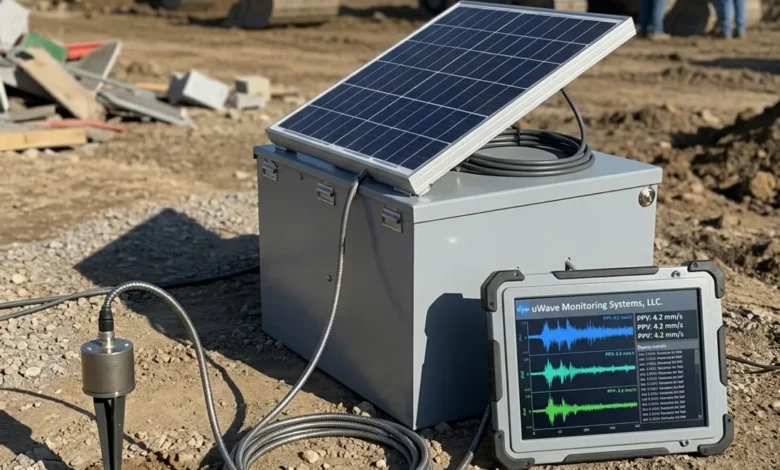
Vibration online monitoring refers to permanently installed sensor systems that continuously capture vibration data from rotating equipment — motors, pumps, fans, compressors, gearboxes — and transmit that data to a central platform for analysis. Because measurements are taken automatically and consistently, the system can detect subtle changes in machine condition as they develop, often days or weeks before a fault becomes visible or audible. When properly configured, vibration online monitoring provides a continuous record of machine behavior that supports both real-time alerts and long-term trending analysis.
Route-based inspection, by contrast, relies on trained technicians who carry portable data collectors and walk a defined path through the facility on a fixed schedule — typically weekly, biweekly, or monthly, depending on the criticality of the equipment. At each point, the technician connects a sensor, records a reading, and moves on. The data is later uploaded to analysis software and reviewed, often in batches.
The Measurement Gap in Route-Based Programs
The core limitation of route-based inspection is not the quality of the data collected — it is the gaps between collection events. If a machine begins developing a fault shortly after a scheduled inspection, that fault has the full duration of the inspection interval to progress before anyone captures a new reading. In fast-developing failure modes, such as bearing cage fractures or lubrication breakdown under high load, the window from early detection to catastrophic failure can be shorter than a monthly inspection cycle allows.
This does not mean route-based programs are ineffective. For lower-criticality equipment with slower fault progression, scheduled inspections are often entirely adequate. The problem arises when facilities apply the same inspection frequency to high-criticality assets where the cost of an unplanned failure is significantly higher than the cost of more frequent monitoring.
Consistency and Human Variability in Manual Inspections
Route-based programs introduce a variable that online systems do not: the human element. Measurement quality in manual programs depends on technician training, adherence to proper sensor placement, consistent use of the correct measurement parameters, and careful documentation. When any of these factors shift — through staff turnover, time pressure, or simple fatigue — the reliability of the data degrades in ways that are difficult to detect until a fault is missed.
Online systems eliminate this variability entirely. The sensor is fixed, the measurement parameters are set during installation, and data collection happens the same way every time regardless of workload or staffing. For facilities managing dozens or hundreds of measurement points, this consistency has compounding value over time.
Direct Cost Comparison: Labor, Infrastructure, and Failure Events
A straightforward cost comparison between the two approaches requires looking at three categories: the cost of running the program itself, the cost of failures that each approach fails to prevent, and the secondary costs created by each method’s operational requirements.
Route-based programs appear cost-effective at first because they require no permanent sensor infrastructure. A portable data collector and a skilled technician can cover a large number of measurement points without significant capital expenditure. However, the labor cost of maintaining a comprehensive manual program across a large facility is substantial. Technician time spent walking routes, collecting data, uploading readings, and reviewing reports represents a recurring operational cost that scales directly with the number of measurement points and inspection frequency.
Capital Cost vs. Operational Cost Over Time
Online monitoring systems require upfront investment in sensors, cabling or wireless infrastructure, data management platforms, and installation. For facilities evaluating the cost of switching from manual to automated monitoring, this initial expenditure can appear prohibitive. However, when modeled over a multi-year horizon, the ongoing labor costs of route-based programs often exceed the total cost of an installed online system — particularly when that labor calculation includes the administrative overhead of managing inspection schedules, calibrating portable equipment, and training replacement technicians.
The relevant comparison is not the purchase price of a sensor network against the cost of a data collector. It is the total cost of each approach over the expected service life of the equipment being monitored, including the cost of failures that occur because detection arrived too late.
The True Cost of a Missed Fault
Both monitoring approaches aim to prevent unplanned failures, but they do so with different levels of confidence. When a fault is missed in a route-based program — because the inspection interval was too long, the measurement was taken under atypical operating conditions, or a subtle change was overlooked during data review — the downstream costs can be significant.
A single unplanned failure event on a critical asset may involve emergency repair labor, expedited parts procurement at premium pricing, lost production during downtime, and potential collateral damage to connected equipment. When these costs are added together, they frequently exceed the annual cost of maintaining the monitoring program that failed to catch the fault. In some facility contexts, a single avoided failure event can justify the capital cost of an online monitoring installation entirely.
Where Route-Based Inspection Still Makes Sense
Route-based inspection programs are not obsolete. They remain a practical and cost-appropriate choice in specific operational contexts, and many facilities run hybrid programs that apply each method where it is best suited.
Manual inspection continues to make sense for equipment with the following characteristics:
• Lower criticality, where an unplanned failure does not significantly disrupt production or create safety risk
• Slower fault development curves, where a monthly or biweekly inspection interval provides sufficient early warning
• Locations where permanent sensor installation is technically impractical or cost-prohibitive given the asset’s replacement value
• Machines that are already nearing end of service life, where investment in permanent monitoring infrastructure is difficult to justify
In these cases, a well-managed route-based program staffed by experienced technicians remains an appropriate and economically sound choice. The mistake is applying this approach uniformly across all equipment regardless of criticality or failure consequence.
Risk-Based Asset Tiering as a Practical Framework
Facilities that achieve the best financial outcomes from their condition monitoring programs typically apply a tiered approach, categorizing assets by criticality and assigning monitoring methods accordingly. This framework aligns monitoring investment with operational risk rather than distributing resources equally across equipment that carries very different consequences when it fails.
Under this model, the highest-criticality assets — those whose failure would halt production, create safety exposure, or require lengthy repair — receive continuous online monitoring. Mid-tier equipment receives more frequent manual inspection cycles. Lower-criticality equipment is maintained on standard scheduled intervals. The result is a program that concentrates monitoring resources where the financial and operational stakes are highest, rather than one that applies the same method uniformly and accepts the gaps that come with it.
This tiered approach is broadly consistent with reliability-centered maintenance principles, which are widely recognized across industrial sectors as a structured basis for aligning maintenance strategy with asset criticality. Organizations like the International Organization for Standardization have developed standards that support this kind of structured approach to asset management and condition monitoring program design.
Making the Decision Based on Operational Reality
The question of which monitoring approach saves more money cannot be answered in the abstract. It depends on the facility’s equipment profile, production consequences of downtime, available labor, and current failure history. A plant with a strong route-based program that has successfully managed its failure rate may see limited incremental benefit from migrating to online monitoring on lower-criticality equipment. A facility with recurring unexpected failures on key assets, or one experiencing staffing pressure that is reducing inspection consistency, is likely to find measurable financial benefit in migrating those assets to continuous monitoring.
What the comparison does make clear is that route-based inspection is not automatically the lower-cost option simply because it requires less capital investment. The full cost calculation must include the labor required to run the program consistently, the reliability of the data produced, and the financial exposure created by the gaps between inspections on assets where a missed fault carries serious consequences.
Conclusion
Neither vibration online monitoring nor route-based inspection is universally superior. Each serves a legitimate function in a well-designed maintenance program. The financial advantage of online monitoring is most pronounced on high-criticality rotating equipment, where the cost of a single missed fault can dwarf the investment required to install and maintain a continuous monitoring system. Route-based inspection retains its value where criticality is lower, fault development is slow, and inspection intervals are sufficient to provide reliable early warning.
For reliability and maintenance managers trying to make a defensible decision, the practical starting point is not choosing one method over the other across the entire facility. It is identifying the assets where monitoring gaps carry the highest financial and operational risk, applying continuous monitoring there first, and building outward from that foundation. That sequenced approach tends to produce clearer cost justification, faster returns on monitoring investment, and a more durable long-term maintenance strategy than either a blanket manual or blanket automated program can consistently deliver.